How to Recolor a Scientific Diagram with AI (Colorblind-Safe & Journal-Ready)
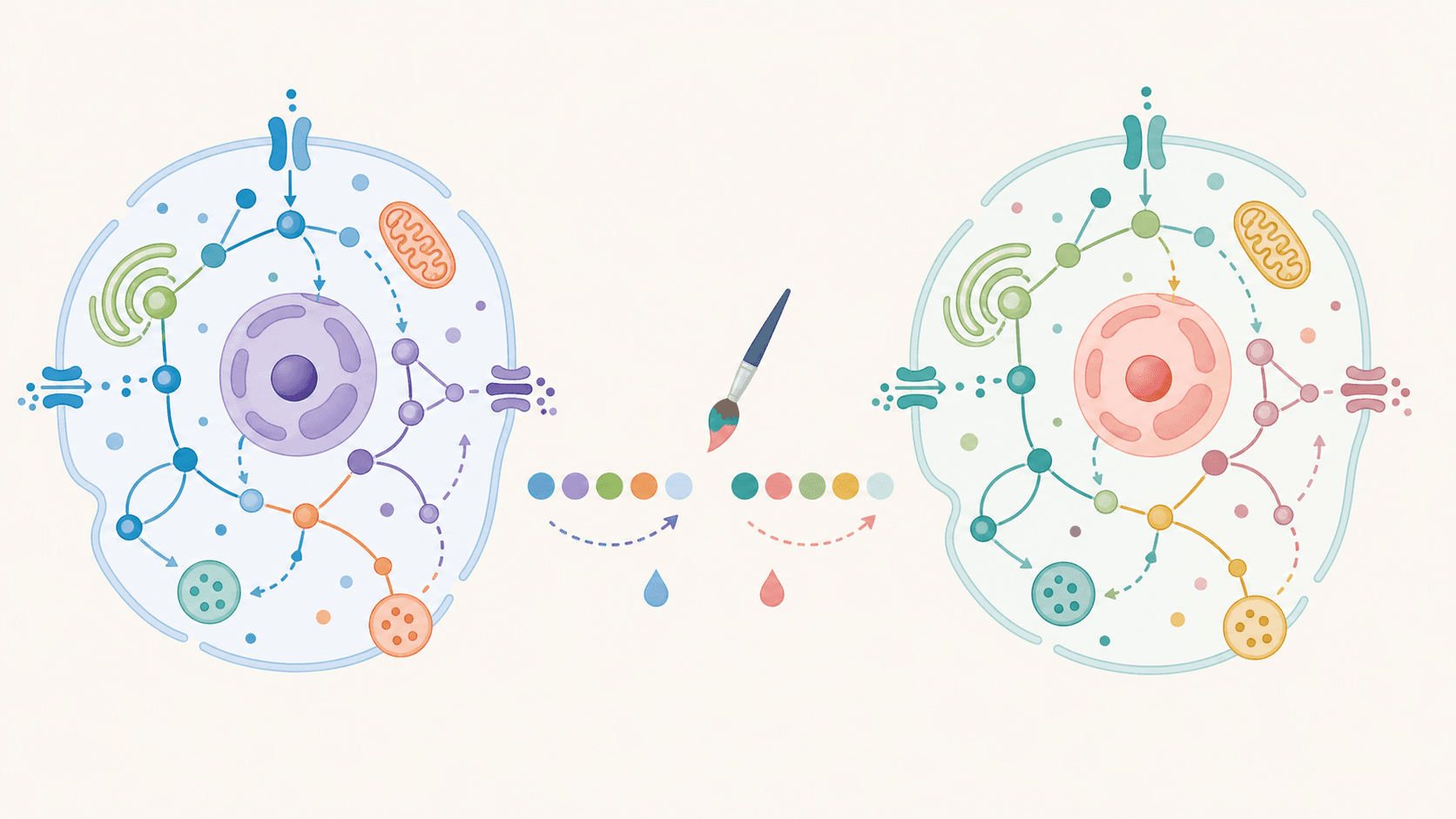
Recolor a scientific diagram by instructing the AI — match a journal color scheme, switch to a colorblind-safe Okabe-Ito palette, or highlight a single element. Change figure colors with AI in one sentence: no manual color picking, no redrawing, no hex codes.
The diagram is right, but the colors aren't: the journal wants a muted palette, a reviewer flagged that the red/green coding won't read for colorblind readers, or one pathway should stand out in blue. You don't need to redraw the figure or fiddle with hex codes — just tell the AI which colors to use, and it recolors the existing figure while keeping the layout, arrows, and labels intact. This guide shows you how to recolor a scientific diagram and change figure colors with AI, including switching to a colorblind-safe scheme, all from short instructions in the editor.
By the end of this guide you'll be able to:
Recolor a diagram online by describing the change in plain English — no color picker, no redrawing.
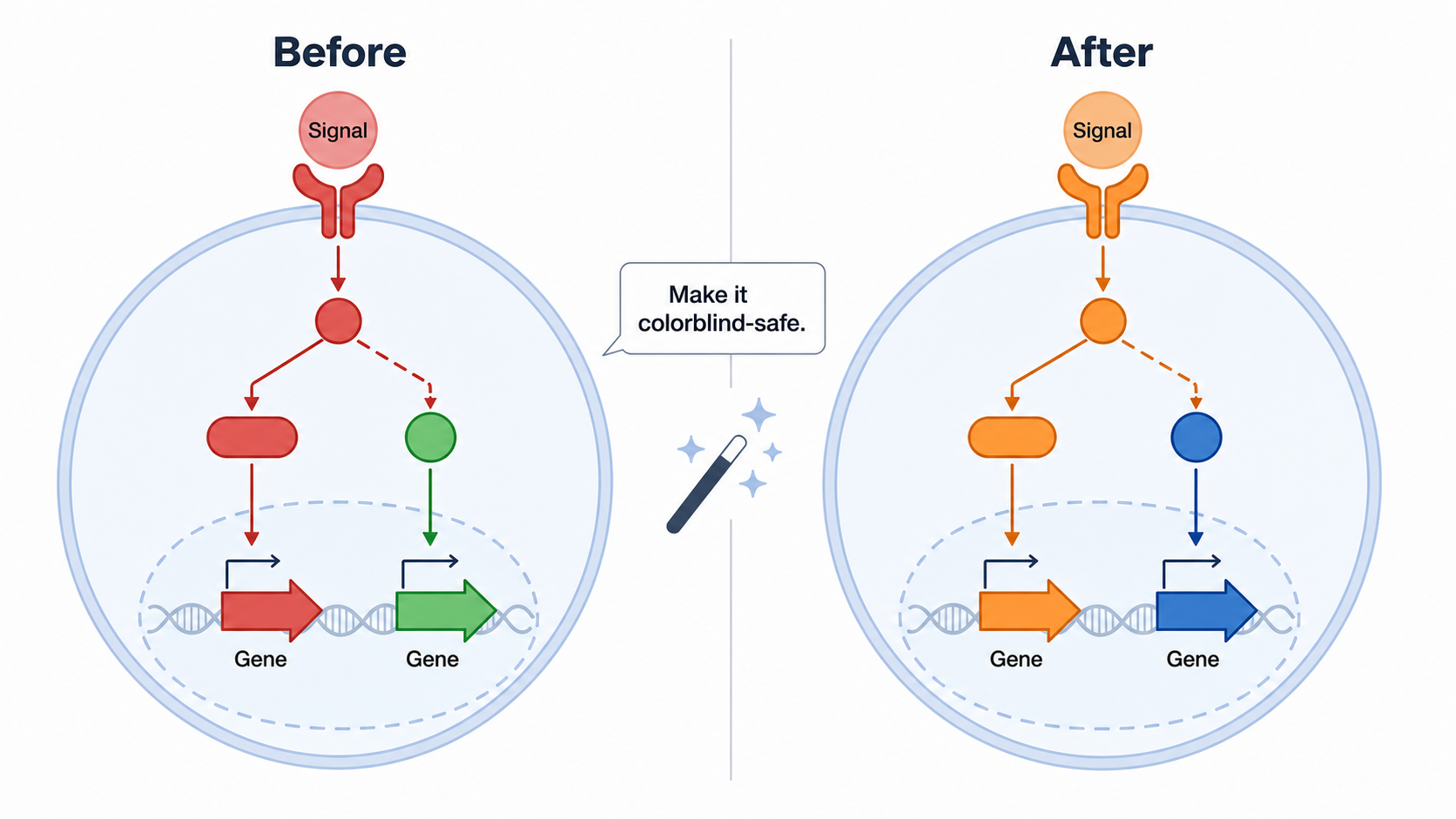
Switch any figure to a colorblind-safe figure using the Okabe-Ito palette in one instruction.
Match a journal color scheme or your lab's brand palette for publication-ready colors.
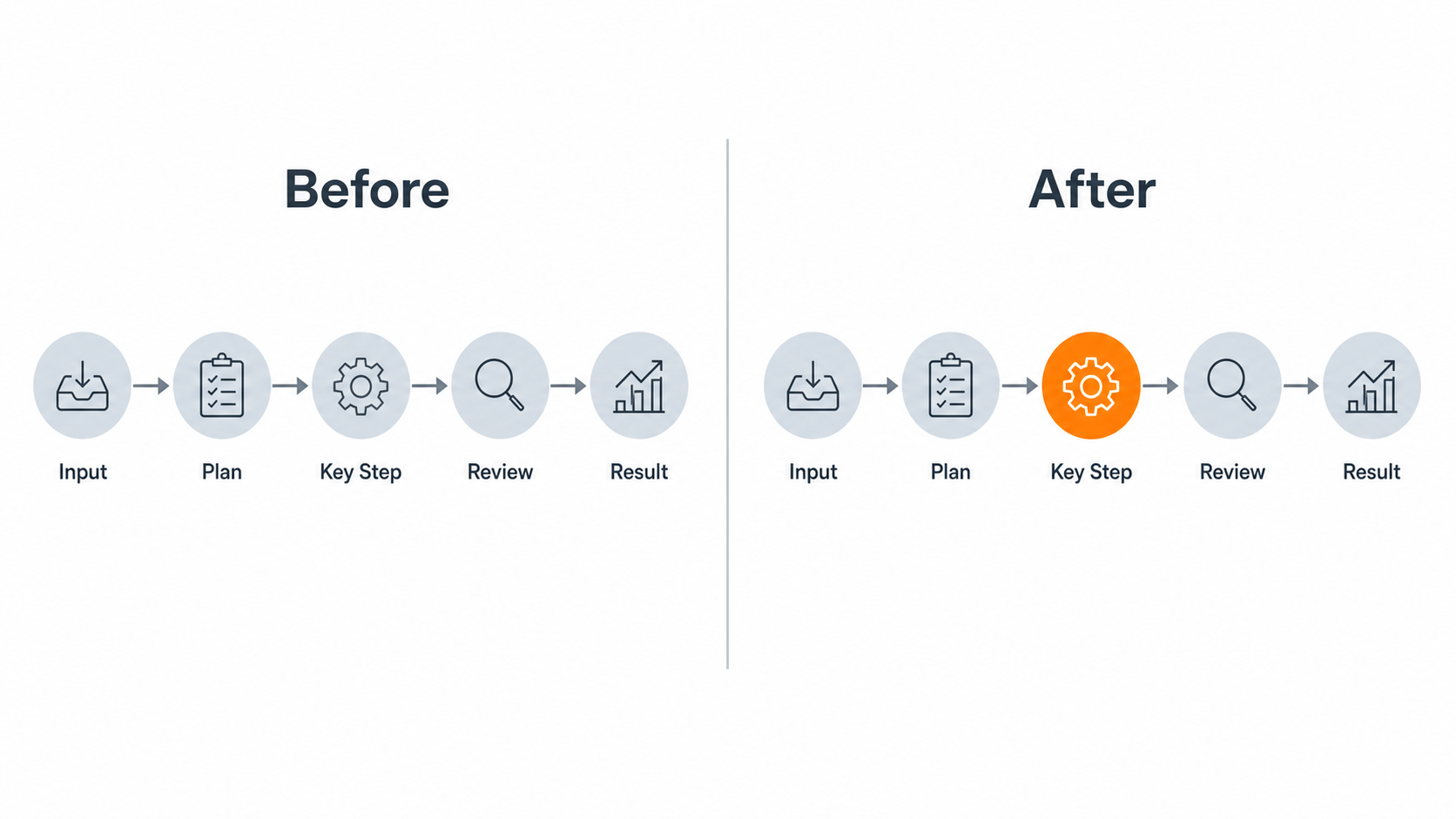
Highlight an element (a pathway, a rate-limiting step, one cell) while leaving everything else unchanged.
Avoid the common mistakes that make recolored figures drift, clash, or fail in grayscale.
Every change below is a short instruction in the SciDraw AI editor — your workspace for generating and refining figures. You describe intent; the AI repaints the existing figure.
Color carries meaning in scientific figures — it groups, highlights, and encodes. The wrong palette can break accessibility (red/green confusion affects roughly 8% of men and 0.5% of women), clash with a journal's house style, or bury your key result under a distracting hue. Recoloring is one of the most common figure edits in peer review and resubmission, and with an AI-native tool it's a single sentence, not a session in a design app.
There are three jobs recoloring usually does:
Accessibility — make the figure readable for colorblind viewers, in grayscale print, and on a projector.
Davie Chen is a researcher at the Faculty of Animation and Intermedia, University of Arts in Poznan, studying generative AI for scientific figure creation, patent illustration, and manuscript drafting. SciDraw AI is one of the research-to-product tools built from this work.
Thousands of researchers use SciDraw AI to make publication-ready figures for papers, grants, and journal submissions — in minutes, with no design skills.
Be specific about which element changes, which color it becomes, and what stays the same. Vague prompts recolor the wrong thing or quietly shift the whole figure.
❌ Vague: "change the colors"
✅ Targeted: "Recolor the apoptosis pathway in red and the survival pathway in blue; keep the layout, arrows, and labels exactly the same."
Open your figure in the editor and type the instruction. If the result isn't quite right, refine it — "make the blue softer" — instead of starting over.
Template: "Recolor [element] to [color or named palette]. Keep the layout, labels, and arrows unchanged."
Name the element in quotes ("recolor the 'mitochondrion'") so the AI targets the right part instead of repainting the whole figure.
Say what stays — "keep the layout, labels, and arrows the same" — to prevent drift while the colors change.
Ask for a named palette (Okabe-Ito, viridis-like, "muted journal") rather than listing a dozen hex codes; it's more reliable and easier to iterate on.
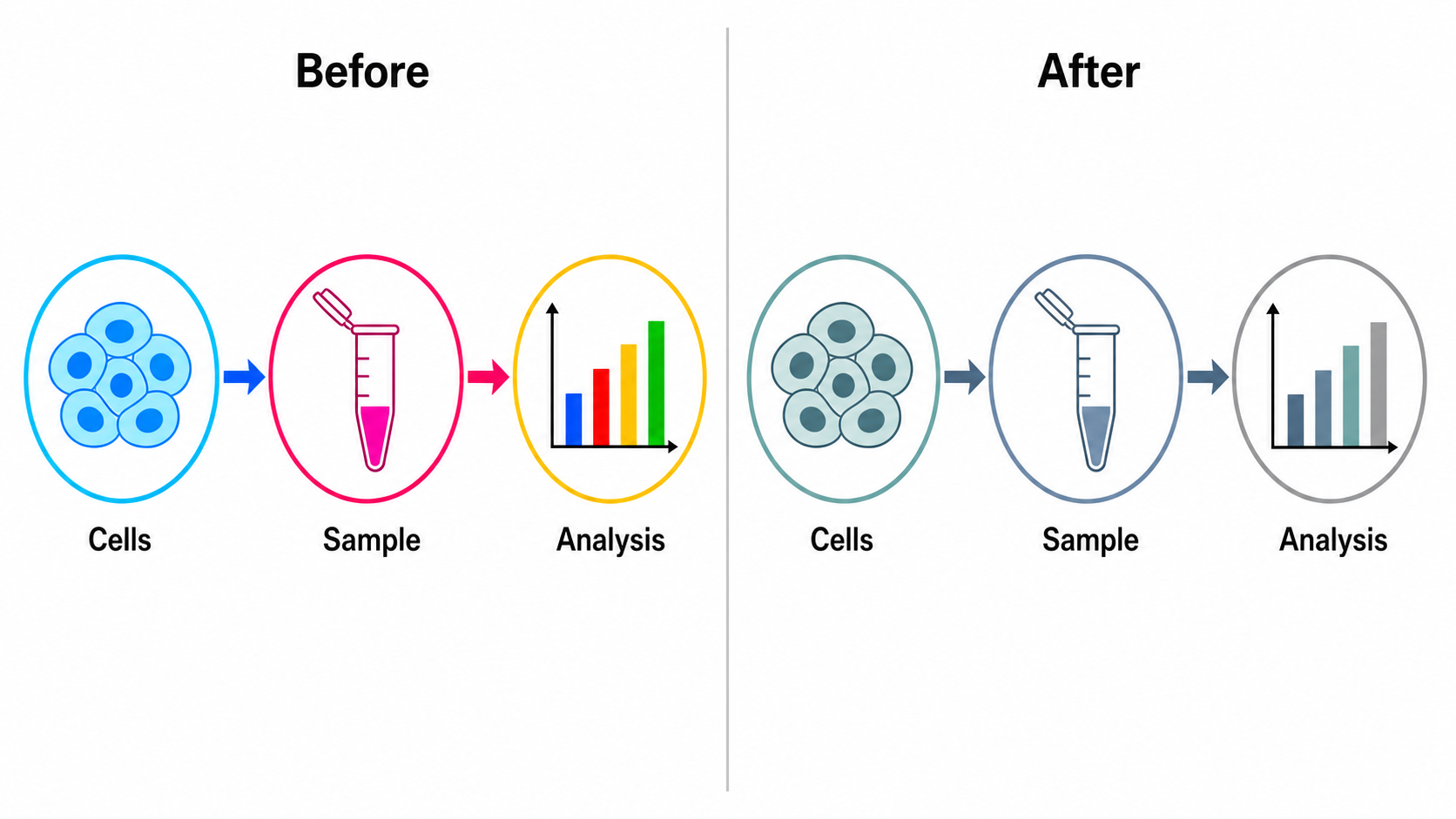
Pair color with a second cue. For true accessibility and grayscale print, ask the AI to "also distinguish the groups with line styles, fill patterns, or labels" so meaning survives even when color is removed.
Recolor in stages. Set the base palette first, then add the highlight, then fix contrast — small steps are easier to control than one giant instruction.
Iterate, don't restart. If a color is too strong, say "make the blue softer"; if the wrong thing changed, say "undo that and only recolor the membrane."
Test it in grayscale. Ask "show this in grayscale" (or check it yourself) to confirm the figure still reads when printed in black and white.
The whole figure changed, not just one part. Fix: name the exact element in quotes and add "leave everything else unchanged."
Layout or labels shifted during recolor. Fix: always include "keep the layout, labels, and arrows the same"; if it still drifts, recolor one element at a time.
"Colorblind-safe" but still red/green. Fix: name the palette ("Okabe-Ito") and explicitly say "do not place red next to green."
Colors look fine on screen but vanish in grayscale. Fix: pair color with patterns or labels, and verify in grayscale before exporting.
Palette clashes with the journal. Fix: ask for a "muted, publication-ready" or "Nature-style" scheme, or supply the journal's exact brand hex values.
Highlight is lost because everything is colorful. Fix: mute the rest ("make all other steps gray") so the highlight has room to stand out.
Once the colors are right, export the figure to editable SVG or PowerPoint (PPTX), or download a high-resolution image for your manuscript, slides, or poster. Because the file is vector, you (or a co-author) can still nudge a color downstream if a journal requests it.
How do I recolor a scientific diagram with AI?
Open the figure in the SciDraw AI editor and type an instruction like "recolor the apoptosis pathway in red, keep the layout and labels." The AI repaints the existing figure — no color picker, no redrawing, no hex codes required.
How do I make a colorblind-safe figure?
Ask the AI to "recolor using a colorblind-safe palette (Okabe-Ito)" and add "do not place red next to green." For full accessibility, also pair color with a second cue — patterns, line styles, or labels — so the figure still reads in grayscale.
What is the Okabe-Ito palette?
The Okabe-Ito palette is a set of eight colors designed to stay distinguishable for the most common types of color vision deficiency. It's a safe default for scientific figures — see our Okabe-Ito reference for the exact colors and when to use them.
Can I match a specific journal color scheme?
Yes. Ask for a "muted, Nature-style palette," request a "blue-and-gray journal color scheme," or paste the journal's or your lab's exact brand hex values and the AI will apply them across the figure for publication-ready colors.
Can I recolor just one element and leave the rest alone?
Yes — name the element in quotes and add "leave everything else unchanged," for example "make the cell membrane teal and keep everything else the same." To highlight it, also mute the surrounding elements to gray.
You don't need a design app to change figure colors with AI. Open your figure in the SciDraw AI editor and ask for a colorblind-safe, journal-ready, or highlighted palette — the AI recolors it for you in seconds, layout and labels intact.