Chemistry journals pioneered the use of TOC (Table of Contents) graphics, and today they remain essential for publication visibility. A well-designed chemistry TOC graphic can significantly boost your paper's readership and citations.
This guide provides specific examples, templates, and AI prompts for creating chemistry TOC graphics across all major subfields.
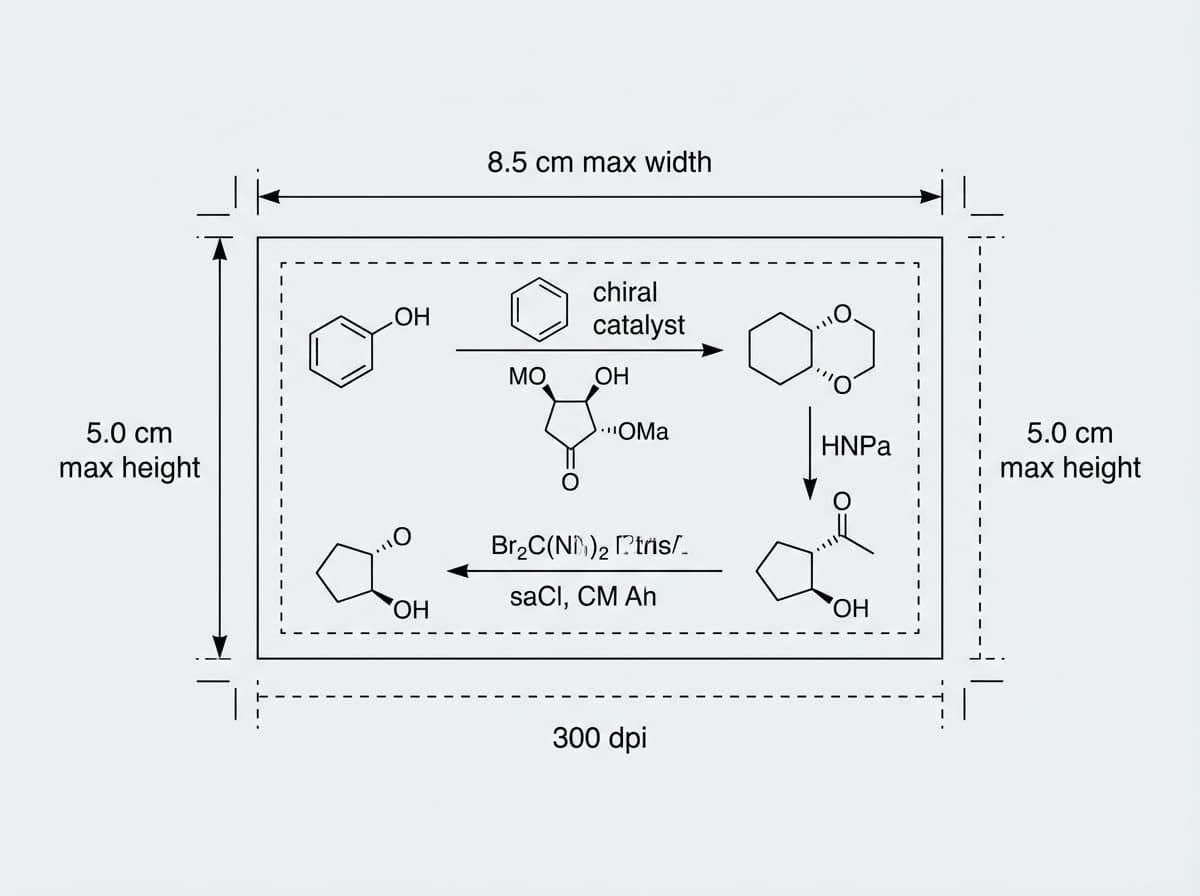
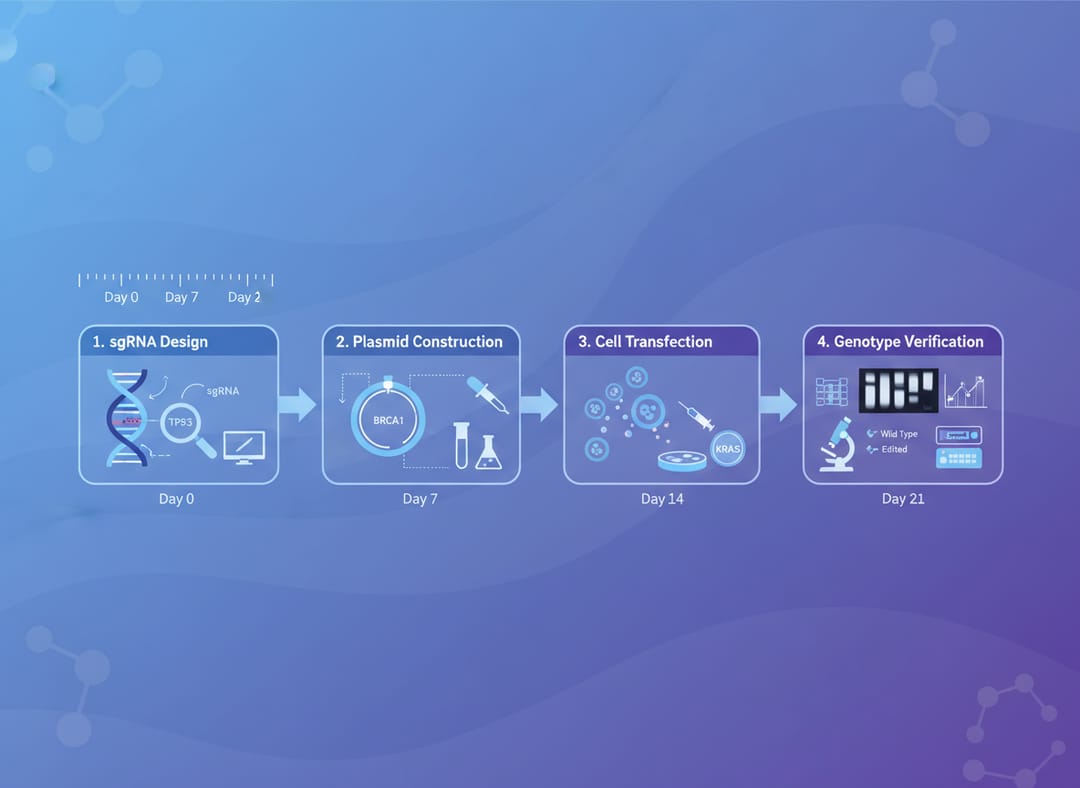 Professional chemistry TOC graphics combine scientific accuracy with visual appeal
Chemistry TOC Graphics Overview
What Makes Chemistry TOC Graphics Unique
Chemistry TOC graphics have specific requirements:
- Molecular accuracy: Structures must be chemically correct
- Reaction clarity: Transformations should be obvious
- Compact format: Typically 2:1 aspect ratio
- Visual hierarchy: Key molecules/concepts prominent
- Journal compliance: Meet specific publisher requirements
Publisher Requirements
| Publisher | Size | Format | Style |
|---|---|---|---|
| ACS | 3.25 × 1.75 in | TIFF/EPS | Clean, white background |
| RSC | 8 × 4 cm | TIFF | Flexible |
| Wiley | Varies | TIFF/JPEG | Journal-specific |
| Elsevier | 1328 × 531 px | JPEG/PNG | Clean design |
Organic Chemistry TOC Examples
Synthesis and Methodology
Total synthesis highlight:
Organic synthesis TOC graphic,
target natural product structure on right side,
retrosynthetic arrow pointing left,
key intermediates shown along pathway,
highlight key transformation in center,
reaction conditions "Pd(0), 80°C, 92% yield",
total synthesis publication style,
ACS format 3.25 × 1.75 inches
Methodology development:
New reaction methodology TOC graphic,
generic transformation scheme:
"Starting material A + Reagent B → Product C",
scope examples in corner (4-6 structures),
key features highlighted: "room temperature",
"air-stable", "broad scope",
organic letters style format
Asymmetric catalysis:
Asymmetric catalysis TOC graphic,
prochiral substrate on left,
chiral catalyst structure in center with arrow,
enantioenriched product on right,
ee value prominently displayed "98% ee",
transition state model inset,
stereochemistry clearly indicated
Mechanistic Studies
Reaction mechanism:
Mechanistic study TOC graphic,
catalytic cycle representation,
key intermediates around cycle,
rate-determining step highlighted,
evidence: "KIE = 3.2", "ρ = -1.8",
mechanistic chemistry style,
educational but publication-ready
Inorganic Chemistry TOC Examples
Coordination Chemistry
Metal complex synthesis:
Coordination compound TOC graphic,
central metal complex structure,
ligand binding highlighted with colors,
metal center: "[Cu(II)]" or "[Ru(III)]",
coordination geometry clear (octahedral/square planar),
applications icon (catalysis/sensing/medicine),
inorganic chemistry journal format
Organometallic chemistry:
Organometallic complex TOC graphic,
metal-carbon bonds clearly shown,
oxidative addition/reductive elimination arrows,
catalytic relevance indicated,
supporting ligands labeled,
organometallics journal style
Materials and Nanoscience
Nanoparticle synthesis:
Nanoparticle synthesis TOC graphic,
precursors on left: metal salt + reducing agent,
reaction vessel icon in center,
nanoparticles on right with size "15 ± 2 nm",
TEM-style image representation,
application context (catalysis/sensing),
nanomaterials TOC format
Physical Chemistry TOC Examples
Spectroscopy and Analysis
Spectroscopic study:
Spectroscopy research TOC graphic,
molecular structure with highlighted chromophore,
absorption/emission spectrum overlay,
wavelength values labeled "λmax = 450 nm",
photophysical process diagram,
PCCP or JPC style format
Computational chemistry:
Computational chemistry TOC graphic,
molecular orbital visualization,
energy level diagram,
key computational result highlighted,
method notation "DFT/B3LYP/6-311G**",
theoretical chemistry publication style
Kinetics and Thermodynamics
Kinetic study:
Kinetics research TOC graphic,
reaction coordinate diagram,
activation energy barrier labeled "Ea",
rate constants compared,
Arrhenius or Eyring plot inset,
physical chemistry journal style
Biochemistry and Chemical Biology TOC Examples
Enzyme and Protein Studies
Enzyme mechanism:
Enzyme mechanism TOC graphic,
protein active site representation,
substrate binding and transformation,
catalytic residues highlighted,
product release indicated,
biochemistry journal style,
JACS or Biochemistry format
Drug-target interaction:
Drug discovery TOC graphic,
target protein surface (simple representation),
drug molecule in binding pocket,
key interactions shown (H-bonds, hydrophobic),
IC50 value: "IC50 = 12 nM",
medicinal chemistry style
Bioconjugation and Chemical Biology
Bioconjugation chemistry:
Bioconjugation TOC graphic,
biomolecule (protein/antibody) on left,
chemical handle/linker in middle,
payload (drug/fluorophore/tag) on right,
conjugation chemistry highlighted,
chemical biology journal format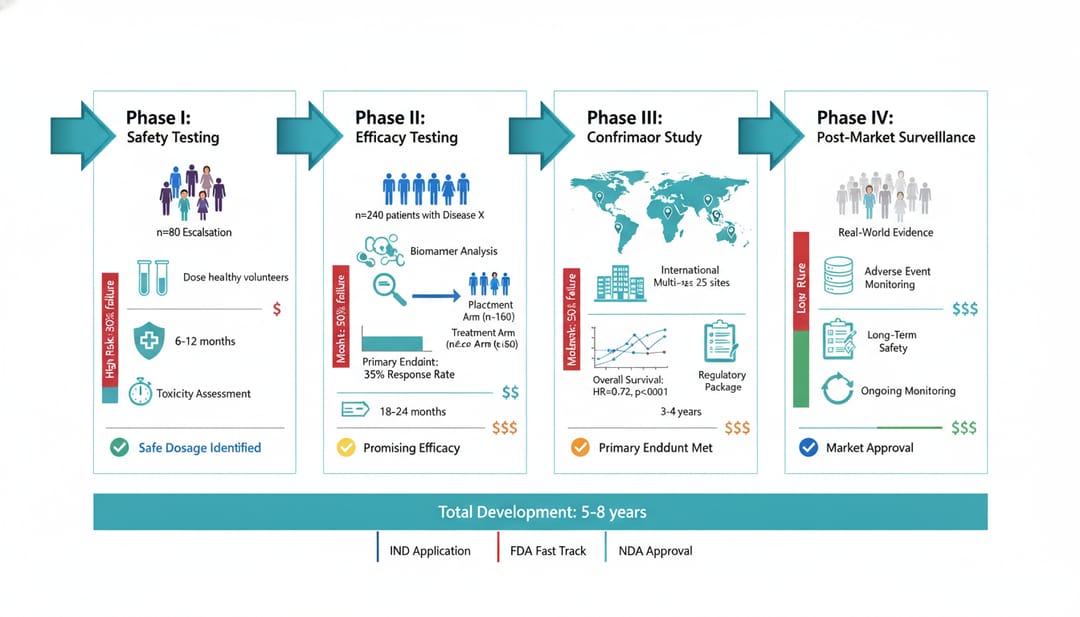 Effective TOC graphics balance information density with visual clarity
Materials Chemistry TOC Examples
Polymer Chemistry
Polymer synthesis:
Polymer chemistry TOC graphic,
monomer structure on left,
polymerization arrow with conditions,
polymer structure on right (repeat unit),
properties: "Mn = 25 kDa, Đ = 1.05",
application context,
macromolecules journal style
Self-assembly:
Self-assembly TOC graphic,
small molecules at top,
assembly process arrow,
supramolecular structure at bottom,
hierarchy of organization shown,
soft matter style illustration
Energy Materials
Battery materials:
Battery research TOC graphic,
electrode material structure,
Li-ion intercalation shown,
performance metrics: "capacity, cycle life",
cell diagram context,
energy materials journal format
Solar cells:
Photovoltaic material TOC graphic,
molecular structure of sensitizer/absorber,
device architecture schematic,
efficiency value "PCE = 15.2%",
J-V curve inset,
solar energy materials style
Creating Chemistry TOC Graphics with AI
Best Practices for Chemistry Prompts
Include these elements:
- Molecular structures (describe key features)
- Reaction arrows and conditions
- Numerical data (yields, selectivity, properties)
- Visual emphasis on key finding
- Journal-specific format
Prompt Template
[Subfield] chemistry TOC graphic,
[main concept/transformation/structure],
[key molecules/compounds described],
[numerical results highlighted],
[visual style specification],
[journal format: ACS/RSC/Wiley],
[aspect ratio, typically landscape 2:1]
Example Prompts by Category
Catalysis:
Catalysis TOC graphic for JACS,
cross-coupling reaction scheme,
aryl halide + boronic acid → biaryl product,
novel Pd catalyst structure shown,
"TON > 10,000" highlighted,
substrate scope examples (4 products),
clean white background, ACS format
Supramolecular:
Supramolecular chemistry TOC graphic,
host-guest complex illustration,
cage or macrocycle structure as host,
bound guest molecule highlighted,
binding constant "Ka = 10^6 M-1",
applications icon (sensing/catalysis),
chemistry of materials style
Analytical:
Analytical chemistry TOC graphic,
sensing mechanism illustrated,
analyte binding → signal change,
selectivity demonstration (bar graph style),
detection limit "LOD = 10 nM",
real sample application shown,
analytical chemistry journal format
Common Chemistry TOC Mistakes
1. Incorrect Stereochemistry
Problem: Wrong wedge/dash bonds, undefined stereocenters Solution: Double-check all stereochemistry; use proper conventions
2. Unclear Reaction Arrows
Problem: Direction of transformation unclear Solution: Use clear arrows with conditions above/below
3. Cluttered Structures
Problem: Too many molecules, unreadable at small size Solution: Simplify; show only key structures
4. Missing Key Data
Problem: No yields, selectivity, or performance metrics Solution: Include 1-2 key numerical results
5. Wrong Format
Problem: Dimensions don't match journal requirements Solution: Check guidelines before creating
Tools for Chemistry TOC Graphics
AI Generation (Concepts and Layouts)
- SciDraw AI: Best for overall TOC composition
- Generate layout, then add precise structures
Molecular Structures
- ChemDraw: Industry standard
- MarvinSketch: Free alternative
- RDKit: Programmatic generation
Recommended Workflow
- Concept with AI: Generate overall composition with SciDraw AI
- Structures separately: Draw molecules in ChemDraw
- Combine: Assemble in Illustrator/PowerPoint
- Export: Correct format for journal
Start Creating Your Chemistry TOC
Ready to create impactful chemistry TOC graphics?
- Visit SciDraw AI Drawing
- Use prompts from this guide as templates
- Customize for your specific chemistry
- Add precise molecular structures as needed
- Export in journal-required format
Make your next chemistry paper stand out with professional TOC graphics.
Related Guides
- Chemistry Diagram Generator — create chemistry figures, TOC graphics, and molecular visuals
- Reaction Mechanism Figure Generator — draft reaction mechanism figures for chemistry papers
- TOC Graphics Generator Guide — create publication-ready TOC images
- Free AI Graphical Abstract Maker — AI-powered visual abstract creation
- Chemistry Diagram Prompts — 40 prompts for molecular visualization
- Chemistry Reaction Mechanism Guide — illustrate reactions and electrocatalysis