Le strutture di Lewis rappresentano le fondamenta della chimica introduttiva. Saperle tracciare con sicurezza apre la porta a una comprensione più profonda del legame chimico, della geometria molecolare, della reattività e della spettroscopia. Che tu stia preparando un esame di chimica generale o ripassando le basi prima di affrontare la chimica organica, padroneggiare il metodo di Lewis ti porterà vantaggi per tutta la carriera scientifica.
Cosa imparerai in questa guida:
- L'algoritmo in 6 passaggi per disegnare qualsiasi struttura di Lewis
- Come contare correttamente gli elettroni di valenza (inclusi gli ioni)
- Come scegliere l'atomo centrale
- Come assegnare le cariche formali e usarle per selezionare la struttura migliore
- Come identificare e disegnare le strutture di risonanza
- Esempi completamente svolti per H₂O, CO₂ e NH₃
- Una tabella di riferimento con errori comuni e relative correzioni
- Come generare diagrammi di puntini elettronici di qualità editoriale con SciDraw AI
Cos'è una struttura di Lewis?
Una struttura di Lewis (detta anche diagramma a punti di elettroni o formula di Lewis) è una rappresentazione bidimensionale di una molecola o di uno ione poliatomico che mostra:
- Ogni elettrone di valenza come punto o come parte di una linea di legame
- Tutti i legami covalenti come linee (ogni linea = 2 elettroni condivisi)
- I doppietti non di legame (coppie di elettroni non leganti) come punti accoppiati intorno agli atomi
Introdotte per la prima volta da Gilbert N. Lewis nel 1916, queste rappresentazioni rimangono la notazione abbreviata più diffusa per visualizzare i legami chimici nei corsi di chimica generale e organica.
 Le coppie di elettroni condivise e di non legame sono il cuore di ogni struttura di Lewis.
Il metodo in 6 passaggi
Passaggio 1 — Contare il totale degli elettroni di valenza
Somma gli elettroni di valenza apportati da ogni atomo nella molecola. Per gli ioni, apporta le seguenti correzioni:
- Anione (carica negativa): aggiungi tanti elettroni quanti è il valore assoluto della carica
- Catione (carica positiva): sottrai tanti elettroni quanti è il valore assoluto della carica
Riferimento rapido: Elettroni di valenza = numero di gruppo per gli elementi del blocco principale (gruppi 1–18 secondo la numerazione IUPAC; per i gruppi 13–18, sottrai 10).
Esempi di conteggio:
| Molecola | Atomi | Calcolo elettroni di valenza | Totale |
|---|---|---|---|
| H₂O | 2 H + 1 O | (2 × 1) + 6 | 8 |
| CO₂ | 1 C + 2 O | 4 + (2 × 6) | 16 |
| NH₃ | 1 N + 3 H | 5 + (3 × 1) | 8 |
| SO₄²⁻ | 1 S + 4 O + 2 extra | 6 + (4 × 6) + 2 | 32 |
| NH₄⁺ | 1 N + 4 H − 1 | 5 + (4 × 1) − 1 | 8 |
Passaggio 2 — Scegliere l'atomo centrale
Posiziona al centro l'atomo meno elettronegativo e più versatile. Regole pratiche:
- L'idrogeno non è mai centrale (può formare un solo legame).
- L'atomo scritto per primo nella formula chimica è solitamente quello centrale (tranne H).
- In caso di dubbio, scegli l'atomo con la minore elettronegatività (escluso H): è spesso quello che ha bisogno del maggior numero di legami per completare il suo ottetto.
- Il carbonio è quasi sempre centrale nelle molecole organiche.
- Negli ossoacidi, l'atomo centrale è tipicamente l'elemento non-ossigeno (p. es., S in H₂SO₄, N in HNO₃).
Passaggio 3 — Tracciare lo scheletro e inserire i legami semplici
Collega gli atomi terminali all'atomo centrale con legami semplici (una linea ciascuno). Ogni legame utilizza 2 elettroni; sottraili dal totale.
In questa fase si stabilisce solo la connettività — i doppietti non di legame si inseriscono in seguito.
Passaggio 4 — Completare prima l'ottetto degli atomi terminali
Distribuisci gli elettroni rimanenti come doppietti non di legame agli atomi terminali (quelli legati a un solo altro atomo) finché ognuno ha 8 elettroni intorno a sé. L'idrogeno è l'eccezione: necessita di soli 2 elettroni (primo guscio completo).
Procedi dall'esterno verso l'interno:
- Porta gli atomi terminali all'ottetto (o duetto per H).
- Colloca gli elettroni rimanenti sull'atomo centrale.
Passaggio 5 — Completare l'ottetto dell'atomo centrale (formare legami multipli se necessario)
Controlla l'atomo centrale. Se ha meno di 8 elettroni:
- Sposta un doppietto non di legame da un atomo terminale adiacente per formare un legame doppio (o un secondo doppietto per un legame triplo).
- Ogni doppietto non di legame convertito in coppia di legame aggiunge 2 elettroni all'atomo centrale senza ridurre il conteggio totale.
Gli ottetti espansi sono consentiti per gli elementi del terzo periodo e oltre (p. es., S, P, Si, Cl) poiché dispongono di orbitali d accessibili. Lo zolfo in SF₆ può accogliere fino a 12 elettroni.
Passaggio 6 — Assegnare le cariche formali e verificare
La carica formale (CF) rivela se la tua struttura è la migliore:
Carica formale = (elettroni di valenza) − (elettroni di doppietti non leganti) − ½ × (elettroni di legame)
Criteri per la struttura migliore:
- Le cariche formali su tutti gli atomi sono il più vicino possibile a zero.
- Se non sono nulle, le cariche formali negative si trovano sull'atomo più elettronegativo.
- La somma di tutte le cariche formali è uguale alla carica complessiva della molecola o dello ione.
Se un'altra disposizione dà cariche formali più basse, ridisegna la struttura con quella disposizione.
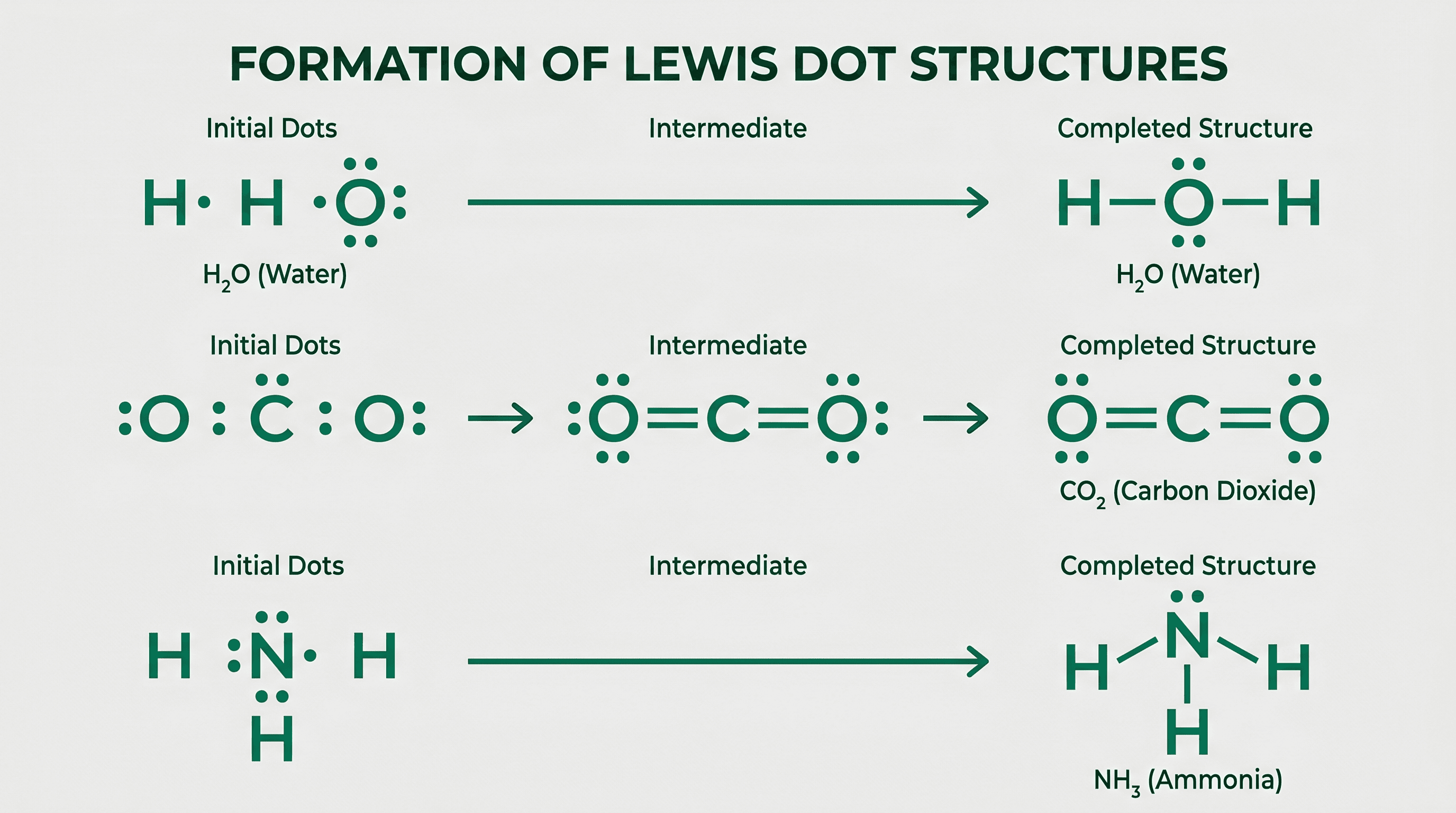
 Costruire una struttura di Lewis passo passo: scheletro, ottetti e poi legami multipli.
Esempio svolto 1 — Acqua (H₂O)
Passaggio 1: Totale elettroni di valenza = (2 × 1) + 6 = 8
Passaggio 2: L'ossigeno è centrale (H non può esserlo).
Passaggio 3: Disegna O con un legame semplice verso ciascun H. Elettroni usati = 2 × 2 = 4. Rimanenti = 8 − 4 = 4 elettroni.
Passaggio 4: Ogni H ha già 2 elettroni (soddisfatto). Posiziona i 4 elettroni rimanenti come 2 doppietti non leganti sull'ossigeno.
Passaggio 5: Controlla l'ossigeno — 2 legami (4 elettroni) + 2 doppietti non leganti (4 elettroni) = 8 elettroni. Ottetto completo. Non sono necessari legami multipli.
Passaggio 6: Cariche formali
- H: 1 − 0 − ½(2) = 0
- O: 6 − 4 − ½(4) = 0
Tutte le cariche formali sono zero. La struttura è corretta.
Struttura finale: O con 2 doppietti non leganti, legato a 2 atomi H.
Esempio svolto 2 — Anidride carbonica (CO₂)
Passaggio 1: Totale elettroni di valenza = 4 + (2 × 6) = 16
Passaggio 2: Il carbonio è centrale (elettronegatività inferiore a O in questo contesto, ed è elencato per primo).
Passaggio 3: 2 legami semplici C−O = 4 elettroni usati. Rimanenti = 12 elettroni.
Passaggio 4: Distribuisci doppietti non leganti agli ossigeni terminali. Ogni O necessita di altri 6 elettroni (3 doppietti non leganti). Ciò usa 6 × 2 = 12 elettroni. Rimanenti per C = 0.
Passaggio 5: Il carbonio ha solo 4 elettroni (2 legami semplici). Ne servono 8. Sposta un doppietto non legante da ciascun O per formare legami doppi: C=O su ciascun lato.
Ora ogni O ha 2 doppietti non leganti (4 e⁻) + 1 legame doppio (4 e⁻) = 8 elettroni. Il carbonio ha 2 legami doppi = 8 elettroni. ✓
Passaggio 6: Cariche formali
- C: 4 − 0 − ½(8) = 0
- Ogni O: 6 − 4 − ½(4) = 0
Perfetto — tutte le cariche formali zero. La struttura lineare O=C=O è corretta.
Esempio svolto 3 — Ammoniaca (NH₃)
Passaggio 1: Totale elettroni di valenza = 5 + (3 × 1) = 8
Passaggio 2: L'azoto è centrale.
Passaggio 3: 3 legami semplici N−H = 6 elettroni usati. Rimanenti = 2 elettroni.
Passaggio 4: Ogni H è già soddisfatto (2 elettroni). Posiziona i 2 elettroni rimanenti come 1 doppietto non legante sull'azoto.
Passaggio 5: N ha 3 legami (6 e⁻) + 1 doppietto non legante (2 e⁻) = 8 elettroni. Ottetto completo. ✓
Passaggio 6: Cariche formali
- N: 5 − 2 − ½(6) = 0
- Ogni H: 1 − 0 − ½(2) = 0
Tutte zero. La struttura è corretta. Il doppietto non legante su N spiega perché l'ammoniaca è una buona base di Lewis e un buon nucleofilo.
Carica formale e risonanza
Quando la carica formale è più importante
La carica formale diventa decisiva per le molecole con più disposizioni scheletriche valide. Consideriamo CO₃²⁻ (ione carbonato):
- Totale elettroni di valenza = 4 + (3 × 6) + 2 = 24
- Carbonio centrale, tre legami semplici verso l'ossigeno, poi doppietti non leganti...
Con soli legami semplici, C ha solo 6 elettroni — bisogna formare un legame doppio. Ma quale ossigeno lo riceve? Formalmente, tutte e tre le disposizioni danno strutture equivalenti. Questo porta alla risonanza.
Strutture di risonanza
Le strutture di risonanza sono più strutture di Lewis valide per la stessa molecola che differiscono solo nella collocazione degli elettroni (non degli atomi). La molecola reale è un ibrido di risonanza — una miscela quantistica di tutte le strutture contribuenti.
Regole fondamentali della risonanza:
- Le posizioni degli atomi non cambiano tra strutture di risonanza.
- Solo gli elettroni si spostano (doppietti non leganti e legami π).
- I contribuenti principali hanno cariche formali il più vicino possibile a zero, con cariche negative sugli atomi più elettronegativi.
- Tutte le strutture contribuenti devono avere lo stesso numero totale di elettroni.
Molecole comuni con risonanza:
| Molecola | Strutture di risonanza | Ordine di legame |
|---|---|---|
| O₃ (ozono) | 2 | 1,5 |
| CO₃²⁻ (carbonato) | 3 | 1,33 |
| NO₃⁻ (nitrato) | 3 | 1,33 |
| C₆H₆ (benzene) | 2 | 1,5 |
| SO₄²⁻ (solfato) | molte | ~1,5 |
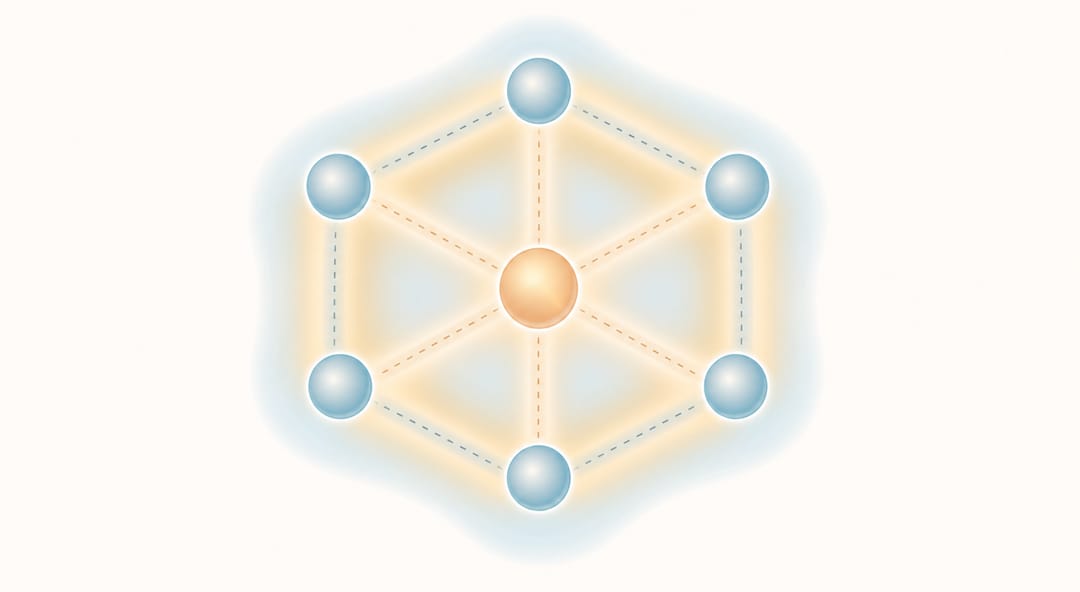 Risonanza: la molecola reale è una miscela ibrida di disposizioni elettroniche equivalenti.
Errori comuni e come correggerli
| Errore | Perché accade | Correzione |
|---|---|---|
| Conteggio errato degli elettroni di valenza | Dimenticare di correggere per la carica ionica | Rileggere la formula; aggiungere e⁻ per gli anioni, sottrarre per i cationi |
| Idrogeno posizionato al centro | Identificazione errata dell'atomo centrale | H è sempre terminale; si lega a un solo atomo |
| Ottetto incompleto sull'atomo centrale | Fermarsi dopo aver completato gli atomi terminali | Verificare il conteggio degli e⁻ dell'atomo centrale; formare legami doppi/tripli se necessario |
| Ottetto espanso su atomi del secondo periodo | Applicare le regole del terzo periodo a C, N, O, F | Solo gli atomi dal terzo periodo in poi (P, S, Cl, ecc.) possono superare 8 elettroni |
| Ignorare la verifica della carica formale | Assumere che la prima struttura valida sia la migliore | Calcolare sempre la CF; scegliere la struttura con cariche più vicine a zero |
| Dimenticare i doppietti non leganti su N, O, F | Concentrarsi solo sui legami | Dopo i legami, distribuire sempre gli elettroni rimanenti come doppietti non leganti |
| Strutture di risonanza con atomi spostati | Confondere la risonanza con gli isomeri | Nella risonanza si spostano solo gli elettroni — mai i nuclei |
Riferimento rapido: molecole comuni
| Molecola | Totale e⁻ di valenza | Legami | Doppietti non leganti sull'atomo centrale | Geometria |
|---|---|---|---|---|
| H₂O | 8 | 2 semplici | 2 | Angolata |
| NH₃ | 8 | 3 semplici | 1 | Piramide trigonale |
| CH₄ | 8 | 4 semplici | 0 | Tetraedrica |
| CO₂ | 16 | 2 doppi | 0 | Lineare |
| HCN | 10 | 1 semplice + 1 triplo | 1 su N | Lineare |
| H₂CO | 12 | 2 semplici + 1 doppio | 0 | Trigonale planare |
| PCl₅ | 40 | 5 semplici | 0 | Bipiramide trigonale |
| SF₆ | 48 | 6 semplici | 0 | Ottaedrica |
Dalle strutture di Lewis alla geometria molecolare
Una volta ottenuta una struttura di Lewis corretta, puoi applicare la teoria VSEPR (Valence Shell Electron Pair Repulsion, repulsione delle coppie di elettroni del guscio di valenza) per prevedere la geometria tridimensionale. L'idea chiave: sia le coppie leganti sia i doppietti non leganti si respingono a vicenda e occupano spazio.
- Conta i domini elettronici intorno all'atomo centrale (legami + doppietti non leganti).
- Usa il numero di domini per determinare la geometria elettronica.
- I doppietti non leganti occupano più spazio delle coppie leganti e comprimono gli angoli di legame.
Ad esempio, l'acqua ha 4 domini elettronici (2 legami + 2 doppietti non leganti) → geometria elettronica tetraedrica → geometria molecolare angolata con un angolo di legame di circa 104,5°, leggermente inferiore ai 109,5° del tetraedro ideale.
Disegnare strutture di Lewis per la ricerca
Per gli studenti alle prese con serie di esercizi, il disegno a mano è insostituibile. Tuttavia, ricercatori e docenti che hanno bisogno di diagrammi a puntini elettronici puliti e di qualità editoriale per articoli, poster o materiali didattici si trovano di fronte a una sfida diversa: ottenere rapidamente un diagramma dall'aspetto professionale.
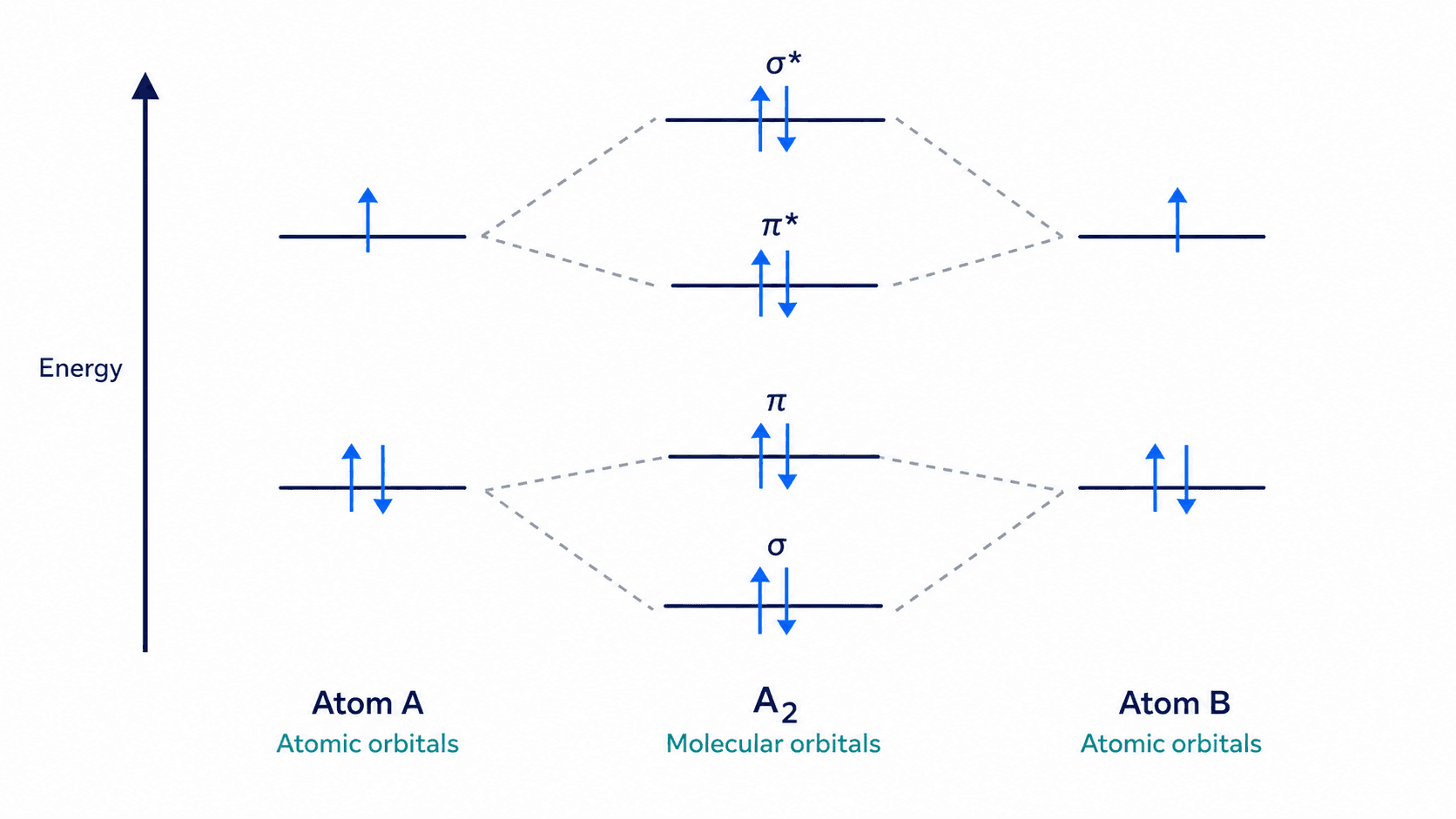
Il generatore di strutture di Lewis di SciDraw AI ti consente di descrivere una molecola in linguaggio naturale e di ricevere un diagramma disegnato con precisione, già stilizzato e pronto per essere inserito in un documento o in una presentazione. Il generatore di diagrammi chimici estende questa capacità agli schemi di reazione, ai diagrammi di orbitali molecolari e a rappresentazioni strutturali più complesse.
Questi strumenti sono particolarmente utili quando:
- Hai bisogno di uno stile coerente tra molte strutture in un unico documento
- Vuoi iterare rapidamente sulle illustrazioni di strutture di risonanza
- Stai preparando figure per articoli, tesi o materiali didattici
Domande frequenti
D: Qual è la differenza tra una struttura di Lewis e una formula di struttura? R: Una struttura di Lewis mostra esplicitamente ogni elettrone di valenza — come doppietti non leganti (punti) e coppie leganti (linee). Una formula semi-sviluppata (come CH₃OH) omette i doppietti non leganti e mostra generalmente la connettività senza tracciare ogni legame. Le strutture di Lewis forniscono più informazioni sulla distribuzione elettronica e sono essenziali per prevedere la reattività e la carica formale.
D: Un atomo può avere più di 8 elettroni in una struttura di Lewis? R: Sì, ma solo per gli elementi dal terzo periodo in poi (come S, P, Cl, Br, I, Xe). Questi atomi hanno orbitali d accessibili che consentono loro di espandere l'ottetto. Carbonio, azoto, ossigeno e fluoro sono strettamente limitati a 8 elettroni — non possono formare ottetti espansi.
D: Come faccio a sapere quando usare un legame doppio anziché uno triplo? R: Dopo aver distribuito i doppietti non leganti agli atomi terminali, se l'atomo centrale ha meno di 8 elettroni, sposta doppietti non leganti dagli atomi adiacenti per formare legami multipli. Spostare un doppietto crea un legame doppio (aggiunge 2 elettroni all'atomo centrale). Se ancora non basta, spostarne un altro per formare un legame triplo. Verifica sempre in seguito con il calcolo della carica formale.
D: Cosa significa una carica formale di −1 sull'ossigeno? R: Significa che quell'ossigeno in quella particolare struttura "possiede" un elettrone in più rispetto all'atomo neutro isolato. Una carica formale di −1 sull'ossigeno è comune e chimicamente ragionevole (l'ossigeno è elettronegativo). La carica formale non corrisponde alla distribuzione reale delle cariche — è uno strumento contabile per confrontare le strutture di risonanza.
D: Come si disegnano le strutture di Lewis per ioni poliatomici come il solfato (SO₄²⁻)? R: Segui gli stessi 6 passaggi. Per SO₄²⁻: totale elettroni di valenza = 6 + (4 × 6) + 2 = 32. Posiziona S al centro, traccia quattro legami semplici S−O (8 elettroni usati, 24 rimanenti). Completa i doppietti non leganti dell'ossigeno (3 coppie per O × 4 = 24 elettroni). Controlla S: ha 8 elettroni dai 4 legami. Formalmente, puoi anche spostare doppietti non leganti per formare legami doppi con S (ottetto espanso), il che minimizza le cariche formali. La struttura tra parentesi con carica 2− all'esterno è la notazione finale.
D: Le strutture di Lewis sono uguali alle formule strutturali in chimica organica? R: Rappresentano la stessa connettività, ma vengono visualizzate in modo diverso. In chimica organica, le formule strutturali (di Kekulé) mostrano i legami come linee e spesso omettono i doppietti non leganti per semplicità. Le strutture di Lewis mostrano esplicitamente tutti gli elettroni di valenza. Quando i doppietti non leganti sono importanti per la reattività (come quello sull'azoto nelle ammine o sull'ossigeno negli alcoli), i chimici li disegnano esplicitamente — il che costituisce essenzialmente una notazione di Lewis.
Pronto a generare diagrammi di strutture di Lewis puliti e accurati per le tue diapositive didattiche o figure di ricerca? Prova il generatore di strutture di Lewis di SciDraw AI e il generatore di diagrammi chimici — descrivi la tua molecola e ottieni un diagramma pronto per la pubblicazione in pochi secondi.