Cell Cycle Diagram Generator
Draw labeled cell cycle diagrams from a simple description
Turn a short prompt into a clean, accurate cell cycle diagram. Show interphase (G1, S, G2), the mitotic M phase, cytokinesis and checkpoints, then download a labeled figure ready for slides, notes or worksheets.
Cell cycle diagram examples
Start from a ready-made prompt and adapt it to your lesson or study topic
What is the cell cycle?
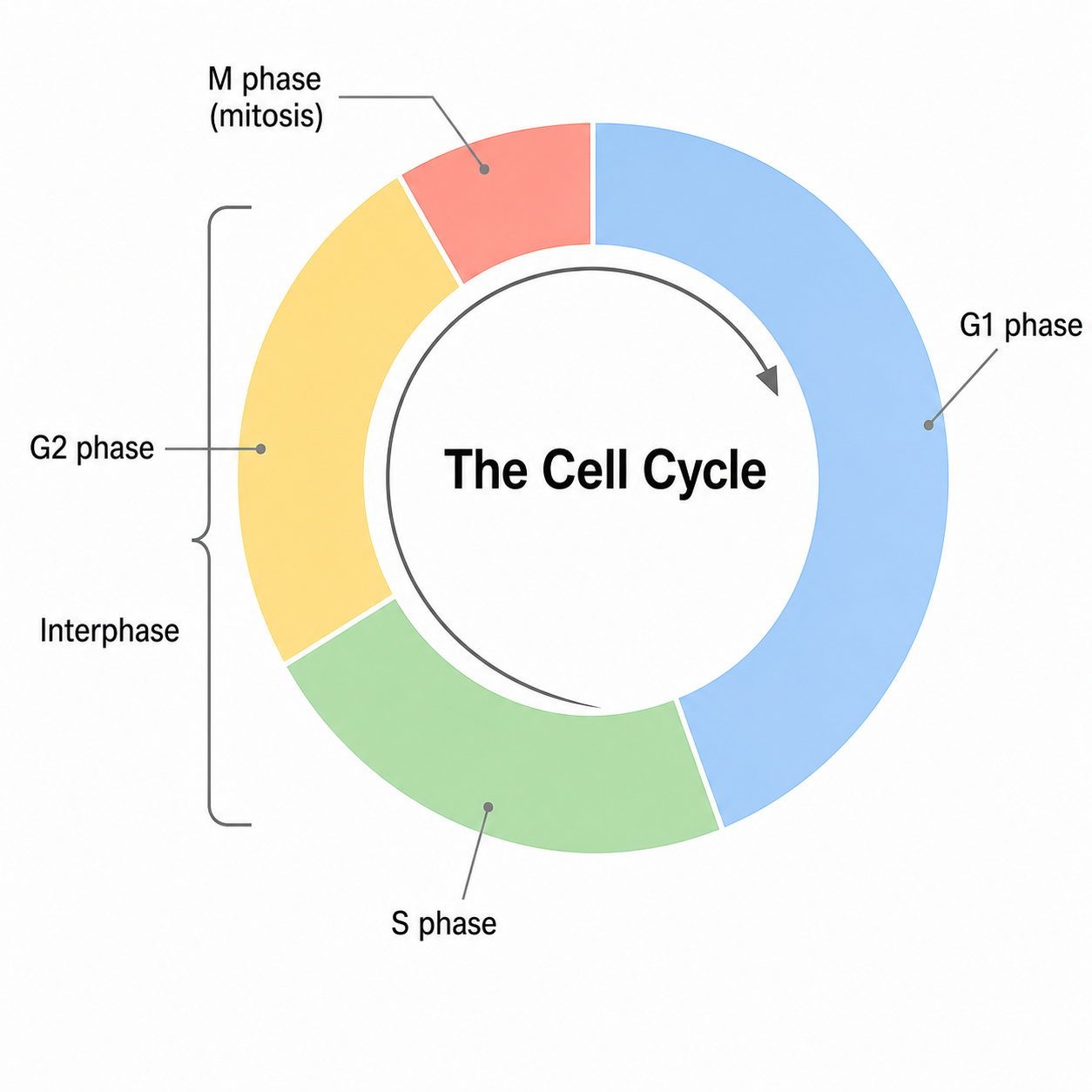
The cell cycle is the ordered series of events a cell goes through as it grows and divides into two daughter cells. It is split into interphase, when the cell grows and copies its DNA, and the mitotic (M) phase, when the nucleus and cell divide. Interphase itself has three parts: G1 (growth and normal function), S (DNA synthesis, when chromosomes are replicated) and G2 (final growth and preparation for division). The M phase covers mitosis, the separation of chromosomes into two nuclei, followed by cytokinesis, the splitting of the cytoplasm. This generator turns your description into a clean, correctly ordered diagram of these phases, so you can teach, study or revise the cell cycle without drawing it by hand.
Why use a cell cycle diagram generator?
- Save time: get a tidy, labeled figure in seconds instead of redrawing circles and arrows by hand.
- Keep phases accurate: present G1, S, G2 and the M phase in the correct order with clear boundaries.
- Match your lesson: focus on interphase, mitosis or checkpoints depending on what you are teaching.
- Make it readable: clean labels and colors help students see how the phases connect.
- Reuse everywhere: export figures for slides, handouts, worksheets and online study notes.
How to make a cell cycle diagram
Start by writing a short description of what you want to show, for example a full cycle overview, an interphase close-up or a checkpoint diagram. Name the phases you need (G1, S, G2, M) and any extras like cytokinesis, the G0 resting state or specific checkpoints, and say whether you want a circular loop, a legend or a directional arrow. Choose an aspect ratio that fits your slide or page and generate the diagram. Review the result for correct phase order and clear labels, then refine your prompt if you want different colors, more detail in the M phase or simpler wording. When it looks right, download the labeled figure and drop it straight into your lesson, study notes or worksheet.
Phases of the cell cycle
- G1 phase: the cell grows, makes proteins and organelles, and carries out normal functions.
- S phase (DNA synthesis): chromosomes are replicated so each will have two sister chromatids.
- G2 phase: the cell continues to grow and prepares the structures needed for division.
- M phase (mitosis): replicated chromosomes are separated into two identical nuclei.
- Cytokinesis: the cytoplasm divides, producing two separate daughter cells.
- Checkpoints: control points (G1, G2/M and spindle assembly) that regulate progression through the cycle.
Frequently asked questions
What are the phases of the cell cycle?
The cell cycle has two main stages: interphase and the mitotic (M) phase. Interphase is divided into G1 (growth), S (DNA synthesis) and G2 (preparation for division). The M phase covers mitosis, which separates the chromosomes, and is usually followed by cytokinesis, which divides the cytoplasm into two daughter cells. Some cells also enter G0, a resting state outside the active cycle.
How do I make a labeled cell cycle diagram online?
Write a short description of the diagram you need, name the phases (G1, S, G2, M) and any extras such as checkpoints or cytokinesis, then generate it. The tool produces a circular, clearly labeled diagram you can refine with another prompt and download as an image for slides, notes or worksheets, with no drawing software required.
What is the difference between interphase and mitosis?
Interphase is the longest part of the cell cycle, when the cell grows, performs its normal jobs and copies its DNA during the S phase. Mitosis is the much shorter M phase, when the duplicated chromosomes are split evenly into two new nuclei. Interphase prepares the cell, while mitosis carries out the actual division of the genetic material.
What are cell cycle checkpoints?
Checkpoints are control points that check whether the cell is ready to move to the next phase. The main ones are the G1 (restriction) checkpoint, which assesses size and DNA condition, the G2/M checkpoint, which verifies that DNA was copied correctly, and the spindle assembly checkpoint, which confirms chromosomes are properly attached before they separate. You can mark all of these in your diagram.
Is the cell cycle diagram generator free to use?
You can try the generator and create cell cycle diagrams within the limits of your SciDraw AI plan. Free credits let you produce diagrams to test the tool, and paid plans add more generations and higher resolution exports for heavier classroom or study use.
Can I use these diagrams for my class or course?
Yes. The diagrams are made for biology education and work well in lessons, presentations, lab handouts, worksheets and online study notes. Because you control the prompt, you can simplify or expand the diagram to match the level of your students, from introductory biology to exam revision.
Writing a paper, thesis or grant?
SciDraw AI also makes publication-ready research figures: graphical abstracts, mechanism figures, workflows and conceptual frameworks.
Explore More Tools
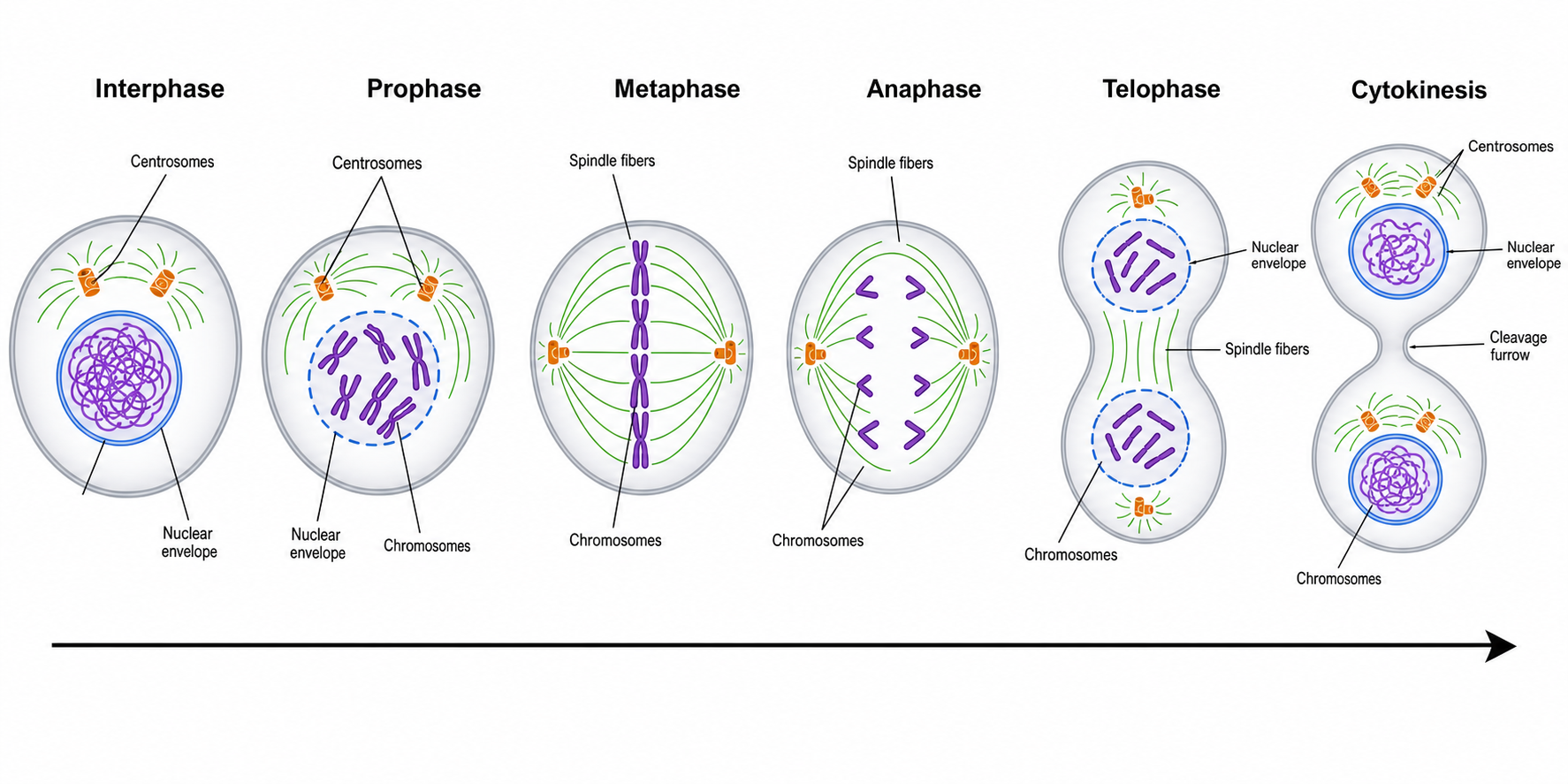
Mitosis Diagram Generator
Draw labeled phases of mitosis — prophase, metaphase, anaphase, telophase — in order.
Try it free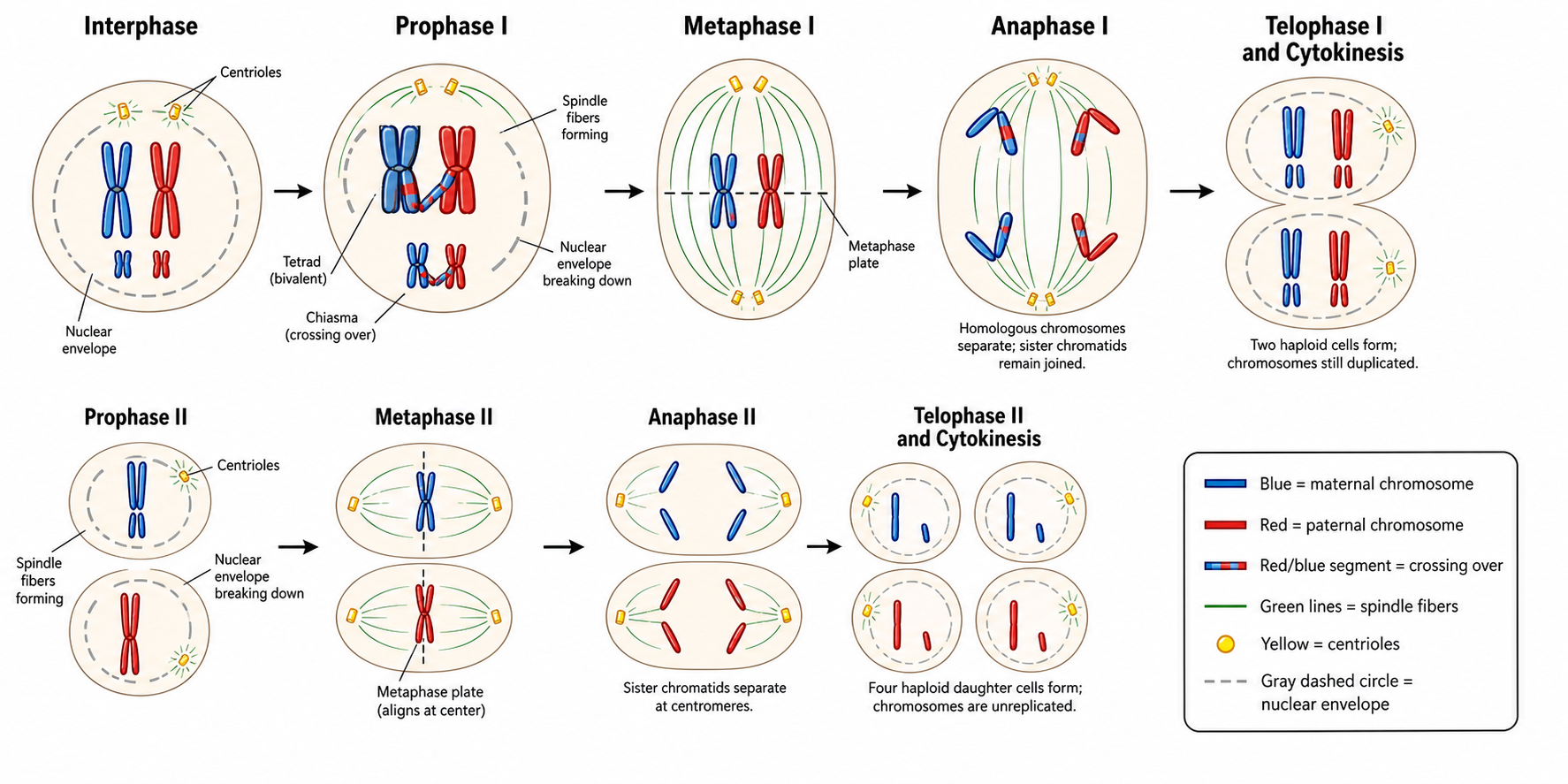
Meiosis Diagram Generator
Create labeled meiosis diagrams, the phases of meiosis I and II, and crossing over.
Try it free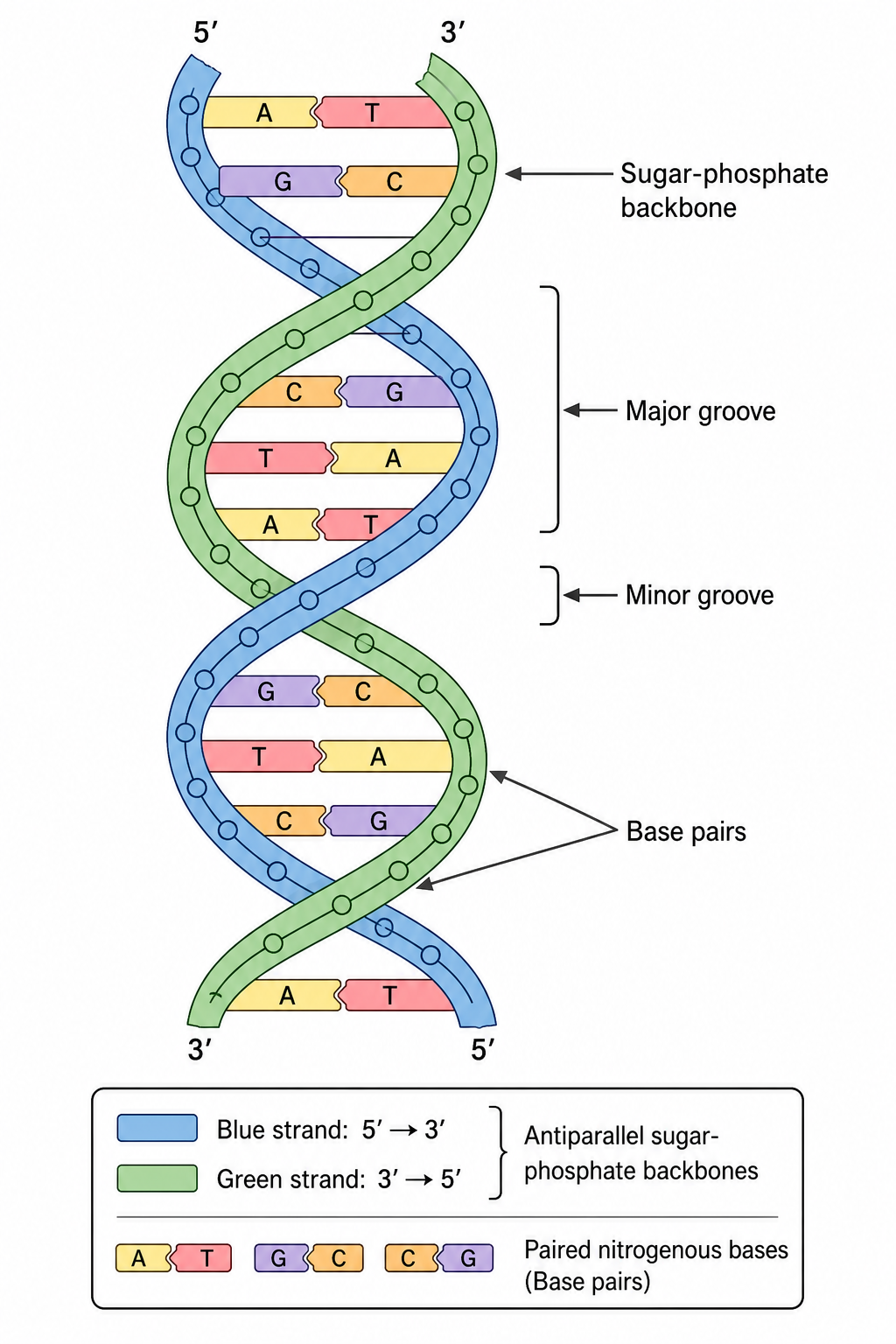
DNA Diagram Generator
Draw labeled DNA diagrams: double helix, base pairs, replication, and DNA vs RNA.
Try it freeMake your cell cycle diagram now
Describe the phases you want to show and get a clean, labeled cell cycle diagram ready for your class or study notes.