化学は視覚的な科学です。有機反応機構における電子の流れ、電極触媒セルの電極構造、あるいは超分子ホスト・ゲスト錯体の自己組織化を描写する場合でも、出版や査読には明確なイラストが不可欠です。
最近、SciDraw AIで300件以上の化学専門のイラストが作成されました。研究者が最も必要としているものには明確なパターンが見られます。反応機構、電極触媒の概略図、エネルギープロファイル図、そして分子構造の可視化です。このガイドでは、コミュニティからの実際の例と洗練されたプロンプトを使用して、各タイプについて解説します。
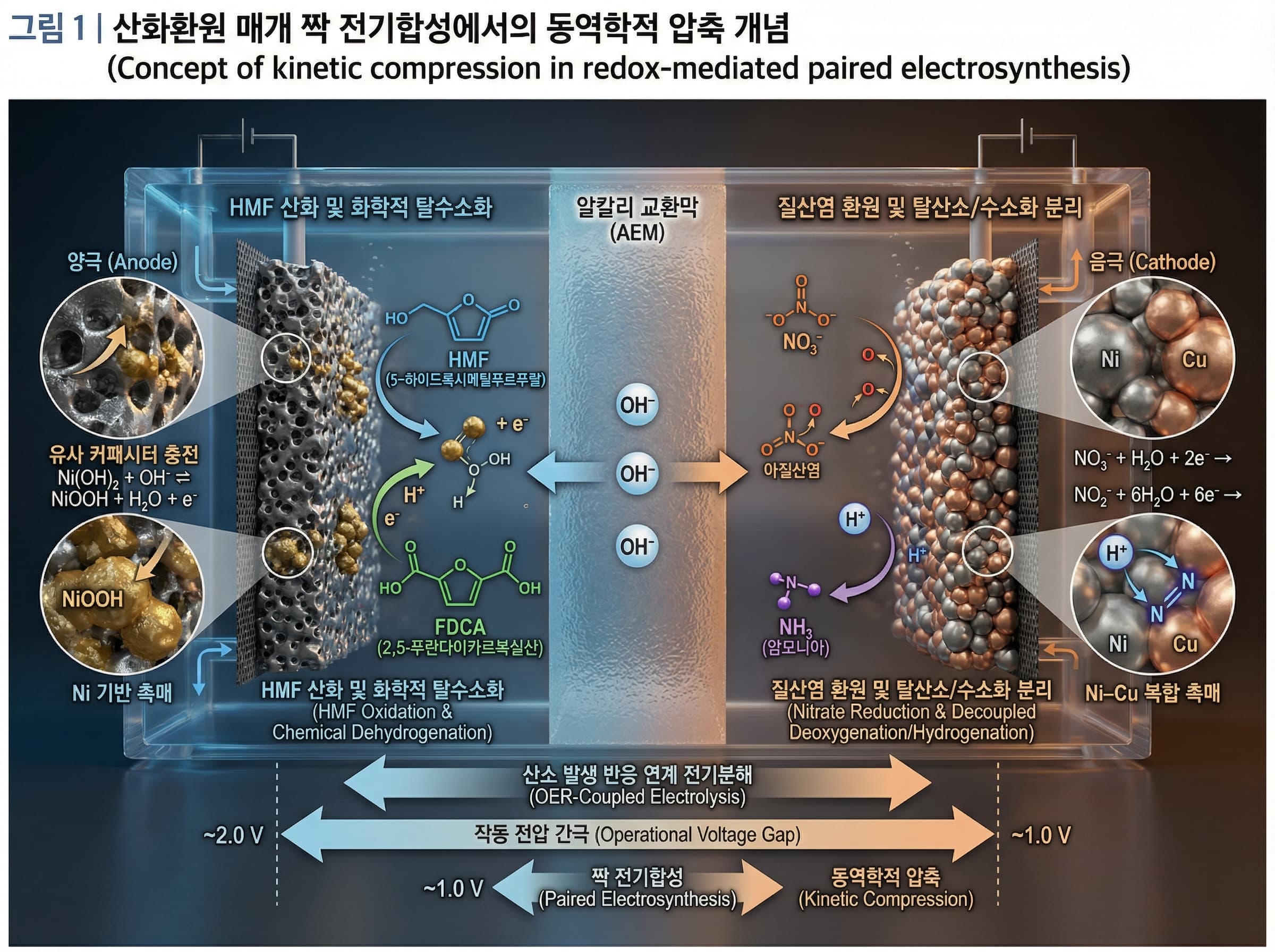
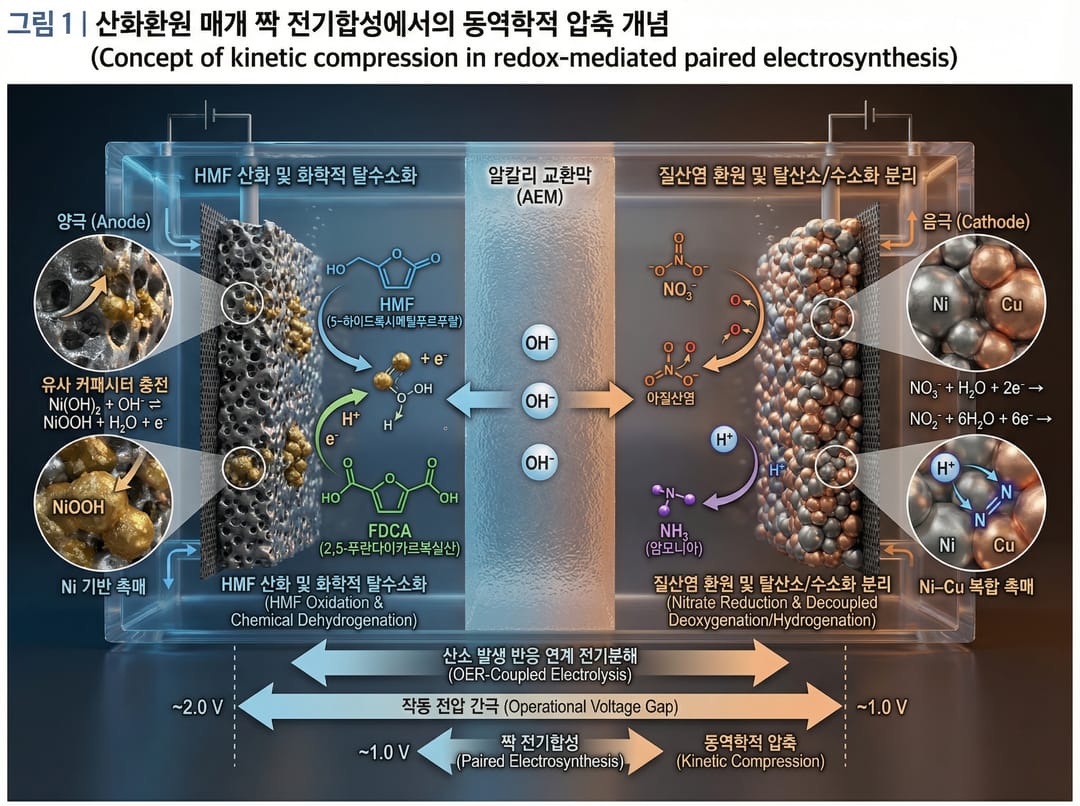 HMF酸化と硝酸塩還元を統合したアルカリ膜電極接合体 — 実際の研究者が作成したイラスト
最も人気のある化学イラストのトピック
実際の研究者のプロンプトのキーワード分析に基づくと、上位の化学テーマは以下の通りです:
- 反応機構(化学プロンプトの22%で「reaction」に言及)
- 水および溶液化学(17%で「water」または「solution」に言及)
- 表面化学および触媒(15%で「surface」に言及)
- 分子構造(11%で「molecular」に言及)
- エネルギー図(10%で「energy」に言及)
- 電気化学(頻出用語:「electrode」、「electrolysis」、「transfer」)
電極触媒と電気化学
電極触媒は、クリーンエネルギー研究の急増を反映して、最も急速に成長しているイラストトピックの一つです。
膜電極接合体(Membrane Electrode Assembly)
Figure 1: Concept of kinetic compression
in redox-mediated paired electrosynthesis.
Schematic representation of an alkaline membrane electrode assembly
integrating HMF oxidation and nitrate reduction.
Show anode (HMF → FDCA), cathode (NO₃⁻ → NH₃),
anion exchange membrane separating compartments,
electron flow in external circuit,
mediator redox cycling at each electrode.
Nature Chemistry style, clean vector illustration.
スーパーキャパシタの構造
GS-TCOP material assembled into a symmetric supercapacitor
using a KI-mixed H₂SO₄ redox electrolyte.
Show both electrodes with GS-TCOP coating,
separator membrane in center,
electrolyte ions (K⁺, I⁻, H⁺, SO₄²⁻) migrating,
charge storage mechanism at electrode-electrolyte interface,
Faradaic and non-Faradaic contributions labeled.
Electrochemistry journal style, cross-sectional view.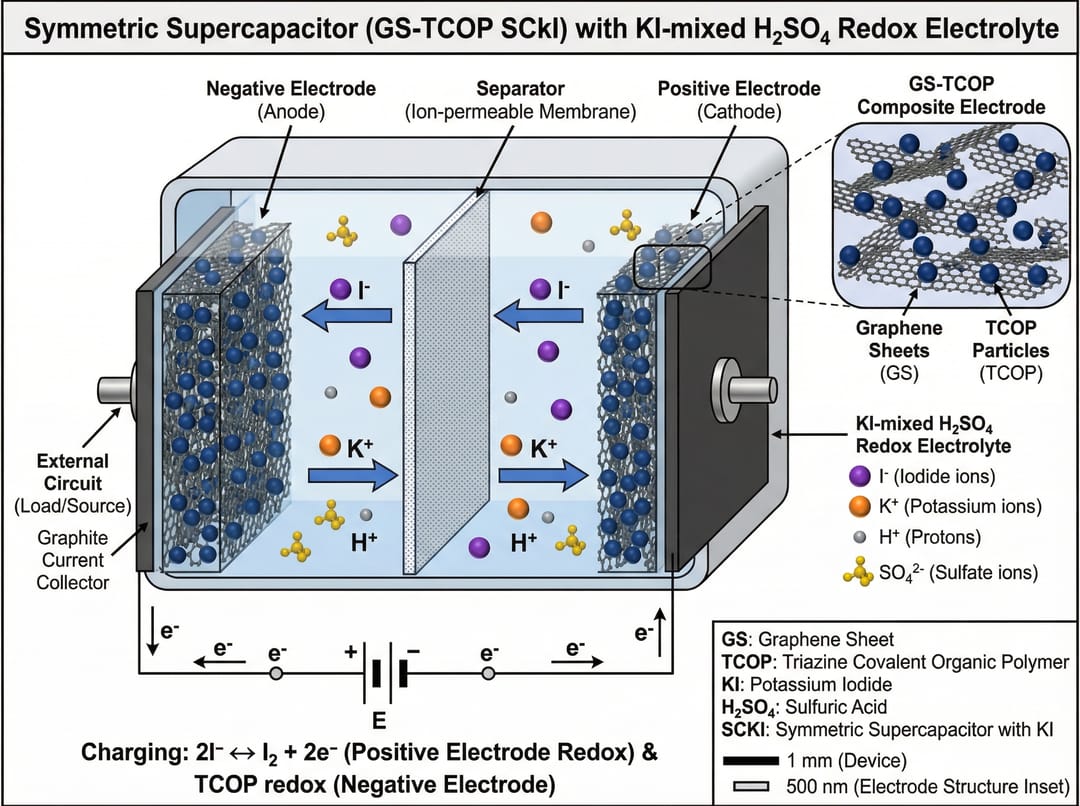 GS-TCOP材料とレドックス電解質を用いた対称型スーパーキャパシタ
CO₂還元のカソード設計
Schematic diagram for research project proposal.
Theme: construction of a cathode for electrocatalytic
carbon-nitrogen coupling of nitrite and carbon dioxide
to synthesize urea.
Show cathode material design, CO₂ and NO₂⁻ adsorption sites,
C-N bond formation at active sites,
urea product desorption,
Faradaic efficiency metrics.
Academic paper style for electrochemistry journal.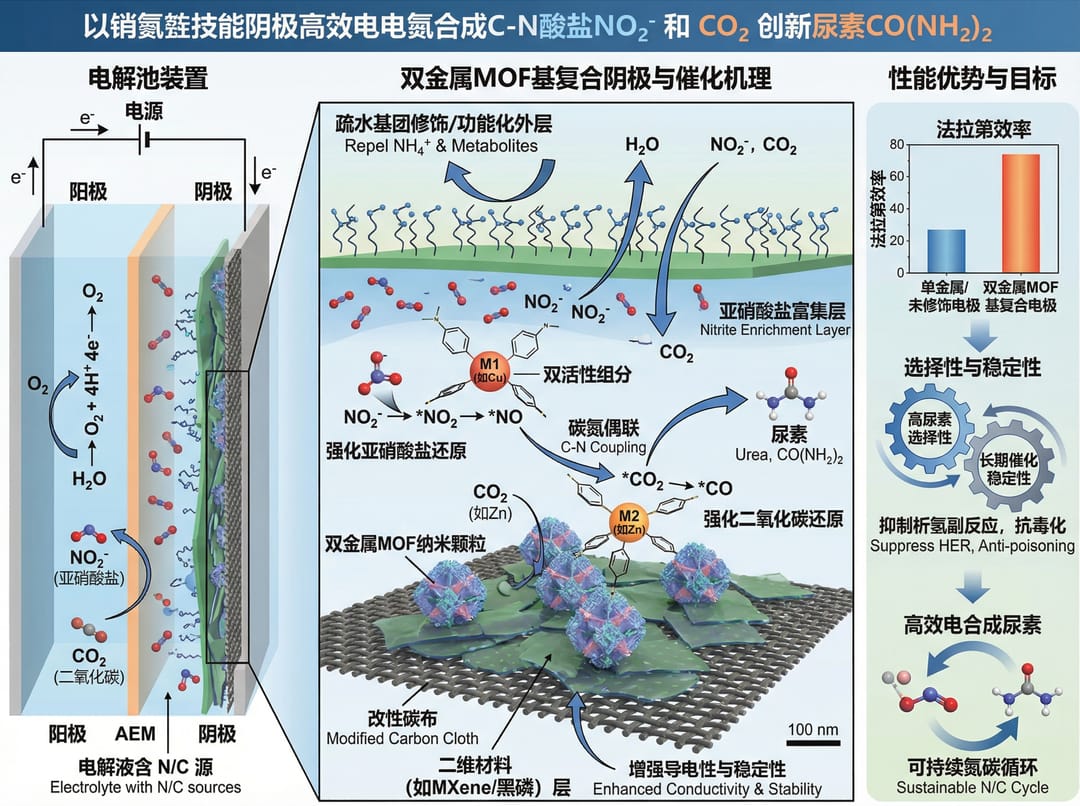 二酸化炭素と亜硝酸塩の電極触媒カップリングによる尿素合成のためのカソード設計
エネルギー図と反応座標
自由エネルギープロファイルは、計算化学や物理化学の論文において極めて重要です。
マルチパスのエネルギー比較
Unified Free Energy Profiles (ΔG coordinate graph).
Path 1 (Pure h-BN): Very high initial activation barrier,
Path 2 (Doped catalyst): Lower barriers at each step,
X-axis: reaction progress with labeled intermediates,
Y-axis: free energy (kcal/mol),
Transition states as peaks labeled TS1, TS2, TS3,
Activation energy Ea and ΔG° values annotated.
Clean scientific diagram, physical chemistry style,
suitable for addressing reviewer requests for activation barriers.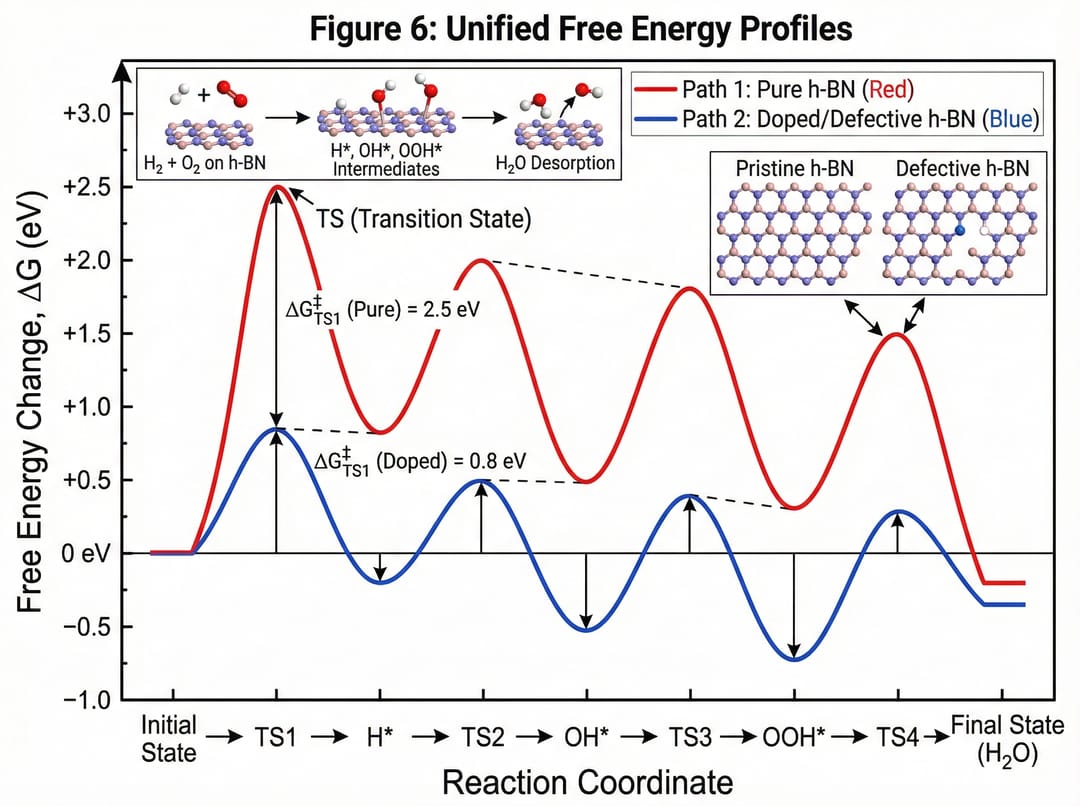 純粋なh-BNとドープされた触媒の経路を比較した統合自由エネルギープロファイル
分子構造と軌道の可視化
原子軌道のエネルギー準位
Color scientific illustration of Pauling's
approximate atomic orbital energy level diagram.
White background for clarity.
Clearly differentiate energy levels for
1s, 2s, 2p, 3s, 3p, 4s, 3d, 4p, 5s, 4d, 5p orbitals.
Show electron filling order with arrows,
Madelung rule diagonal lines,
orbital degeneracy indicated by spacing.
General chemistry textbook style.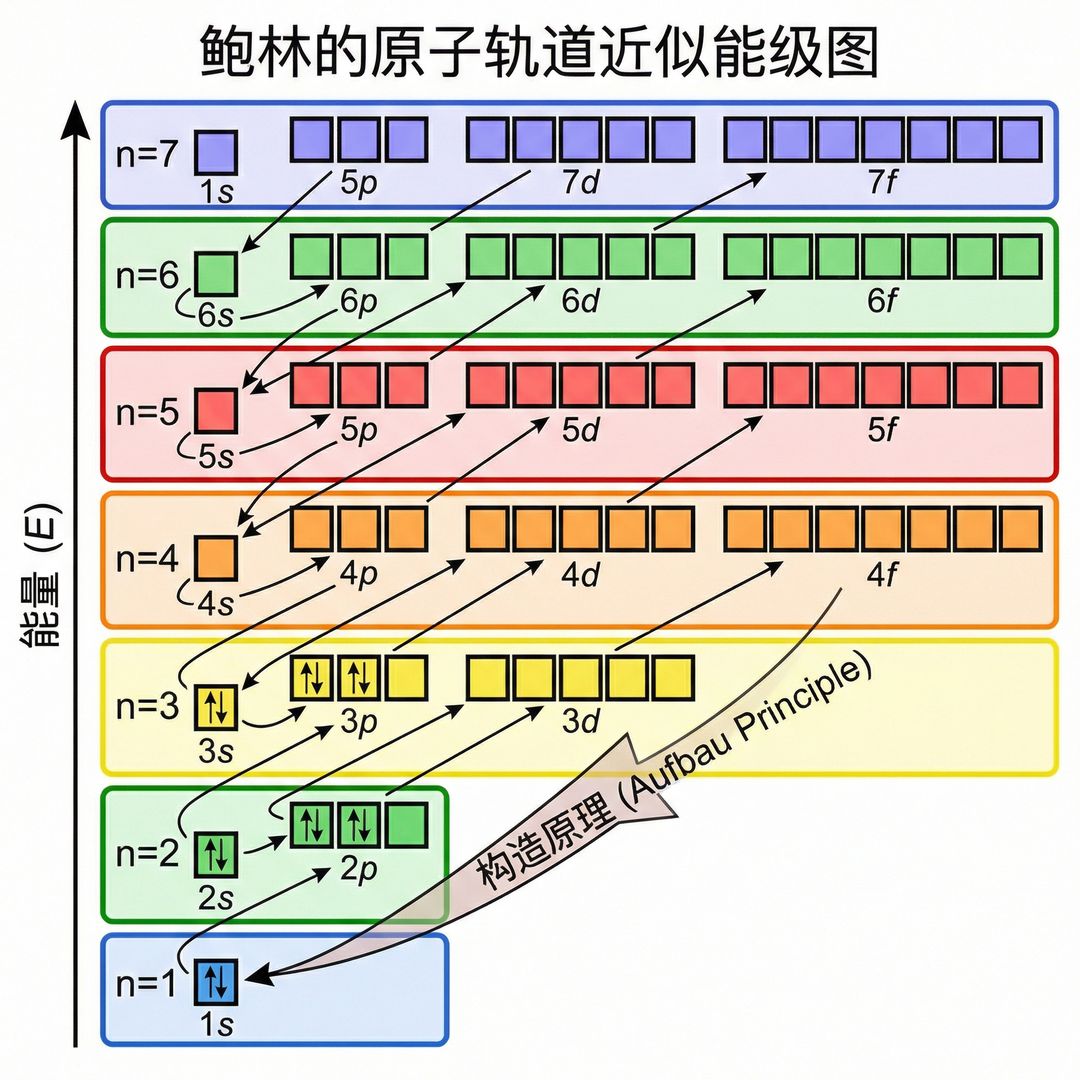 電子充填順序を示したポーリングの原子軌道エネルギー準位図
有機分子構造
Expanded structure of 2-methylbutane,
carbon atoms clearly highlighted and differentiated:
CH₃ (1°) | CH₃ (1°) - CH (3°) - CH₂ (2°) - CH₃ (1°).
Each carbon type color-coded:
primary (blue), secondary (green), tertiary (red).
Bond angles and hybridization labeled.
Organic chemistry textbook illustration style.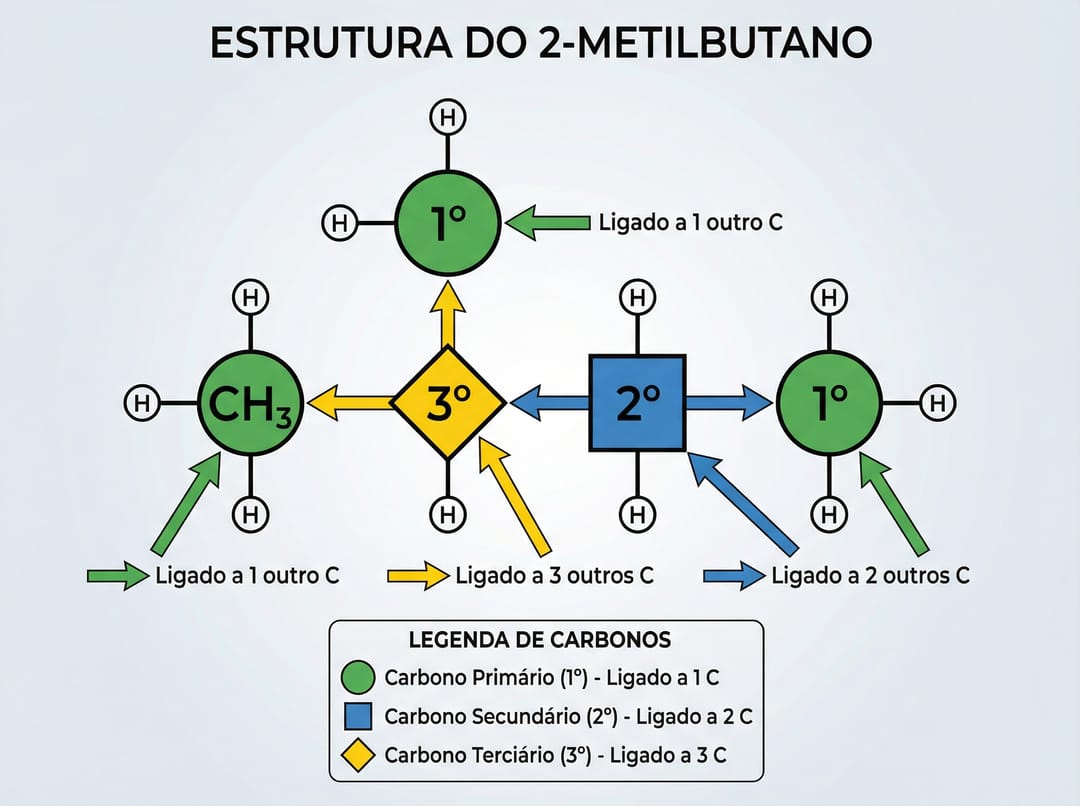 第1級、第2級、第3級炭素を色分けした2-メチルブタン
超分子および材料化学
ホスト・ゲスト錯体の設計
Generate image based on the following design concept:
Core Design Idea: α-CD + dynamic covalent amphiphiles,
emphasize the synergistic relationship
between cyclodextrin inclusion and dynamic covalent bonding.
Show host cavity encapsulating guest molecule,
reversible covalent bond formation at periphery,
self-assembly into vesicular structures.
Supramolecular chemistry journal style.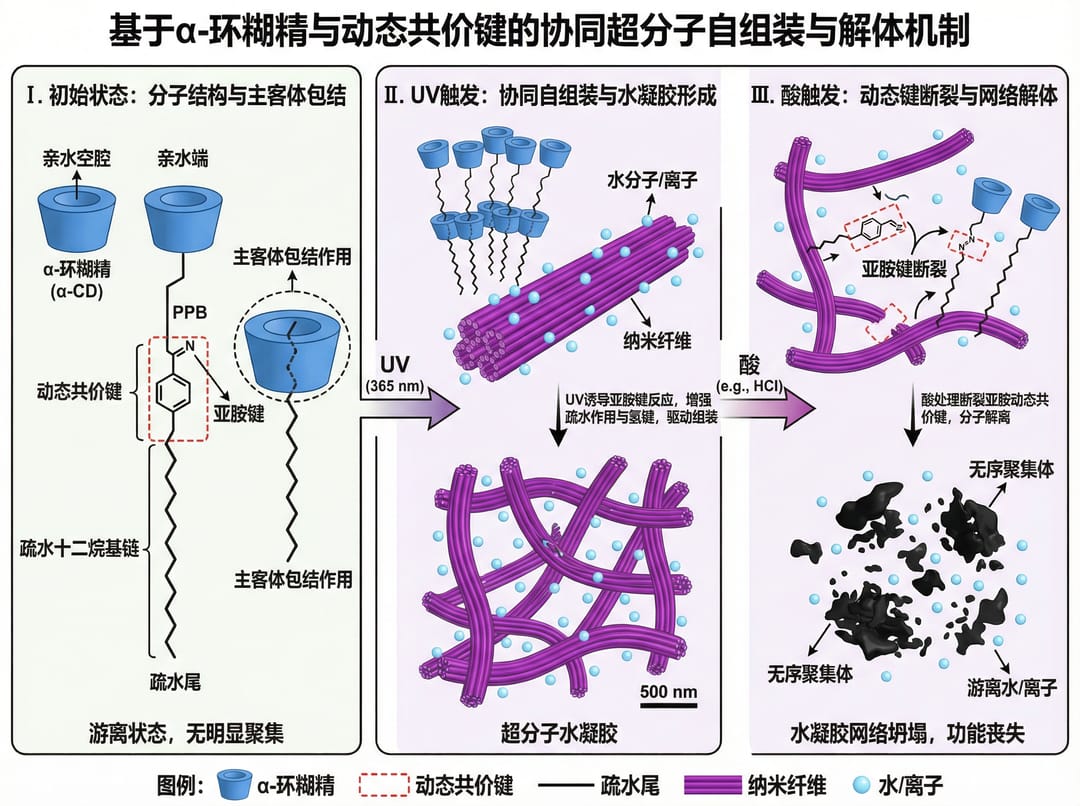 シクロデキストリンベースの動的共有結合性両親媒性分子の自己組織化
光触媒機構
Chemical structure of lignin and the photo-electron transfer
mechanism during photocatalysis of titanium dioxide (TiO₂).
Show TiO₂ band structure (valence band, conduction band),
UV light excitation generating electron-hole pairs,
electron transfer to lignin degradation products,
reactive oxygen species (ROS) generation pathway.
Physical chemistry / green chemistry journal style.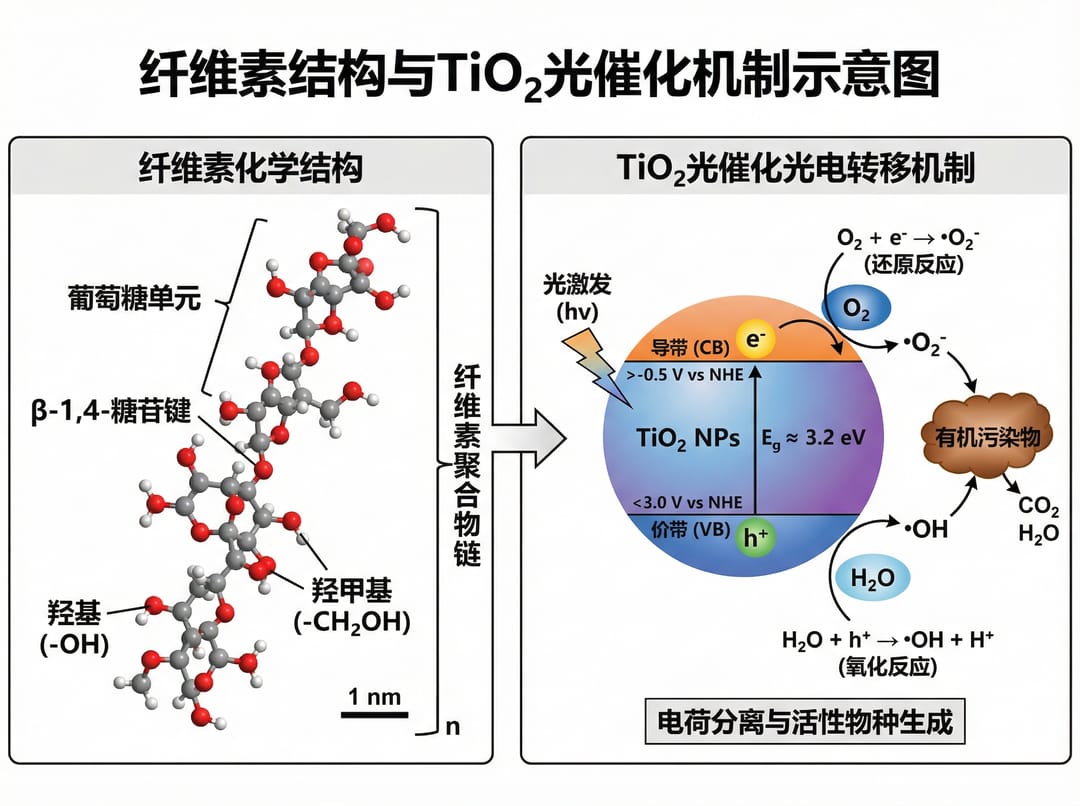 TiO₂によるリグニンの光触媒分解機構
実験プロトコルの図解
抽出およびキャラクタリゼーションのワークフロー
Extraction of Water-Soluble Total Polysaccharides workflow.
Fenugreek seeds pulverized and passed through 40-mesh sieve.
Steps: defatting with petroleum ether →
hot water extraction at 90°C →
ethanol precipitation (4:1 ratio) →
dialysis and lyophilization →
characterization (FTIR, NMR, SEC-MALLS).
Sequential flowchart with icons at each step.
Analytical chemistry methods section style.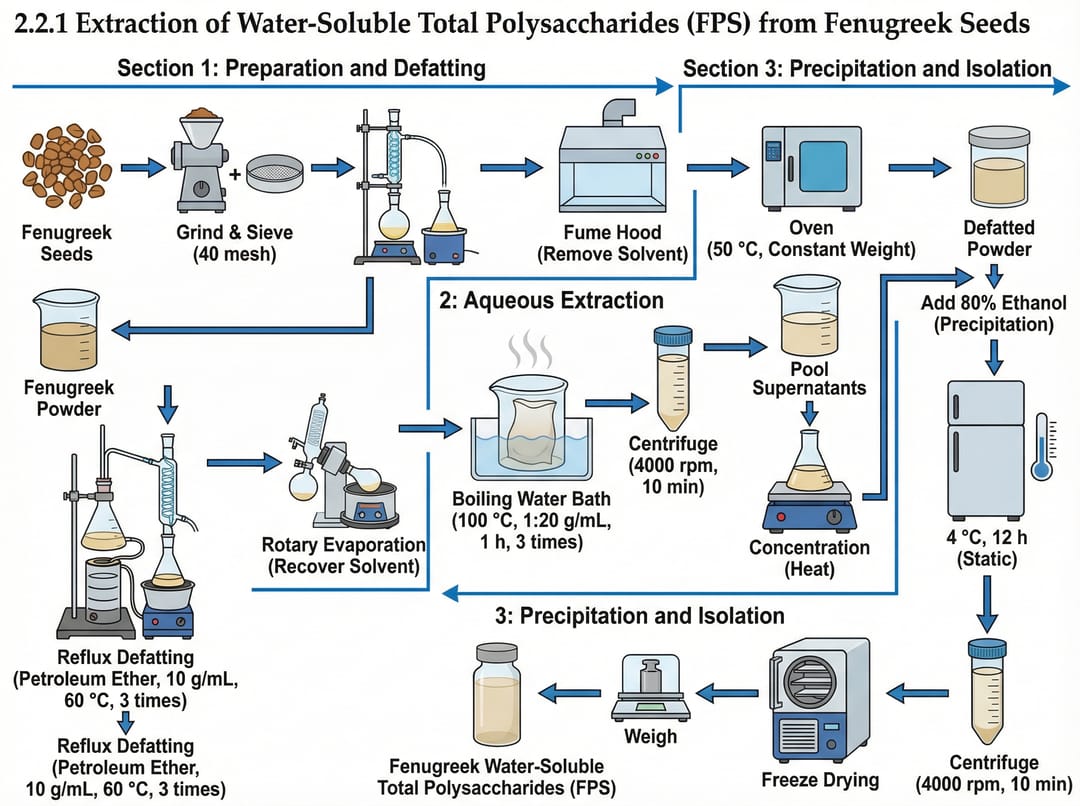 フェヌグリーク多糖類の抽出およびキャラクタリゼーションのワークフロー
化学イラストのためのプロンプトのコツ
効果的な化学プロンプトの構成要素
301件の化学プロンプトの分析に基づくと、成功しているプロンプトには以下の共通パターンがあります:
| 要素 | 頻度 | 例 |
|---|---|---|
| 具体的な試薬 | 22% | "Ag₂O oxidant, MeOH solvent" |
| 反応条件 | 15% | "80°C, 12h, Pd catalyst" |
| 収率/指標 | 11% | "92% yield", "η = 23.5%" |
| ジャーナルの参照 | 14% | "ACS Nano style", "JACS format" |
| 反応機構の矢印 | 12% | "electron flow direction", "curved arrows" |
化学プロンプトにおける一般的なバイグラム(2語の組み合わせ)
最も頻繁に使用される2語のフレーズは、研究者が何を重視しているかを明らかにしています:
- "schematic diagram"(31回) — 好まれる形式
- "the reaction"(25回) — 反応プロセスへの中心的な焦点
- "resulting in"(20回) — 因果関係の推論
- "surface of"(17回) — 表面化学の強調
- "to form"(14回) — 生成物形成の記述
化学イラストの作成を始める
次の論文のために、プロフェッショナルな化学図を作成する準備はできましたか?
- SciDraw AI Drawing にアクセスする
- Mechanism Illustration(反応機構イラスト)または TOC Graphical Abstract(TOCグラフィカルアブストラクト)テンプレートを選択する
- 具体的な試薬、条件、構造の詳細を含める
- 出版品質の化学ビジュアルを生成し、微調整する
電極触媒の概略図から分子軌道図まで、AIは化学を正確かつ明確に伝えるお手伝いをします。
関連記事:
- メカニズム図ジェネレーター — AIで反応メカニズム・パスウェイ図を作成
- 模式図ジェネレーター — AIで実験装置模式図を作成
- TOCグラフィックス生成ガイド
- 科学図版ジェネレーター:研究論文用AIツール
- 細胞生物学およびシグナル伝達経路のイラストガイド