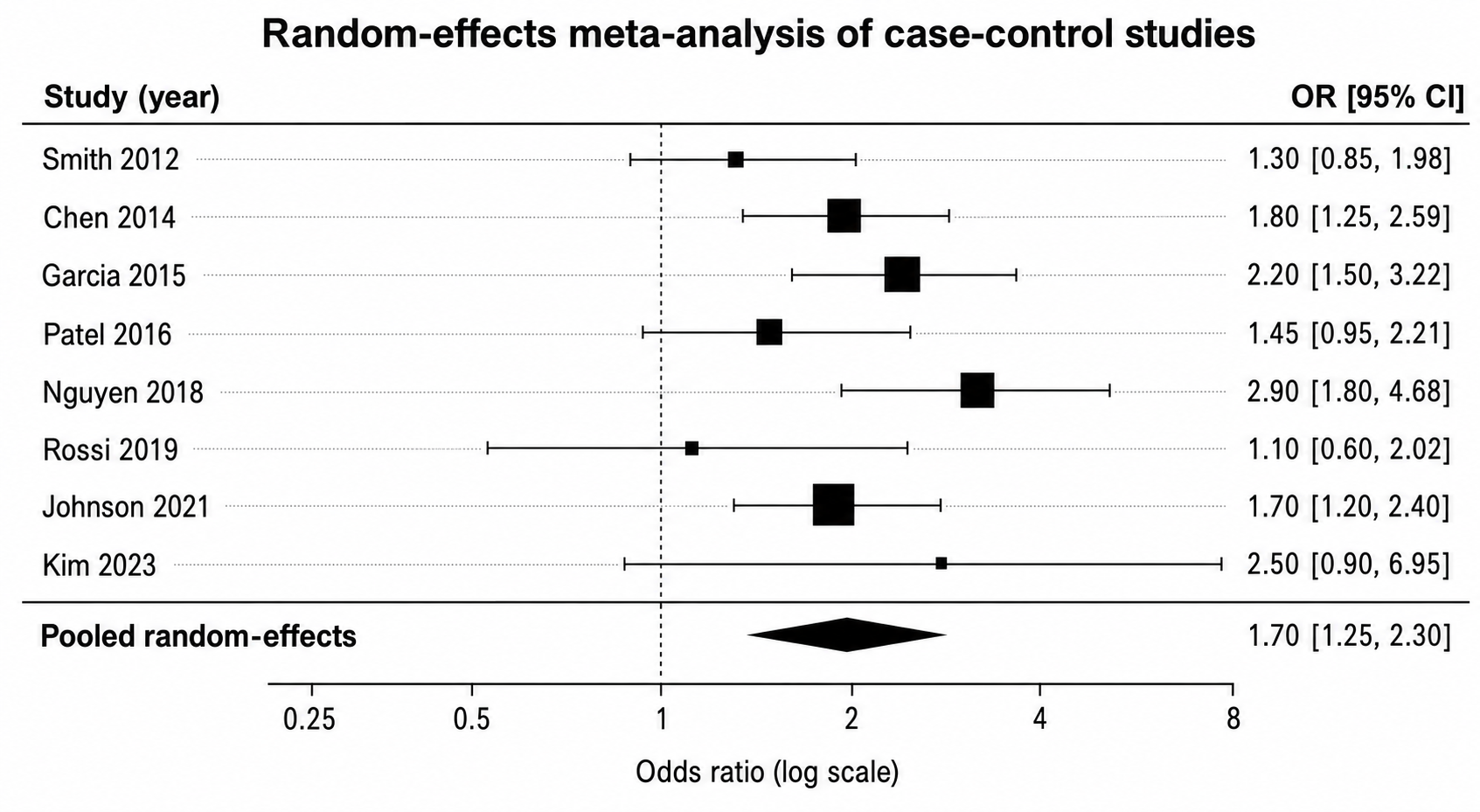
Forest Plot Generator
Create Forest Plot Generator from experimental or research data
Make Odds Ratio Meta-Analysis from CSV or Excel with Forest Plot Generator. Includes Python rendering, SciVis editing, and publication-ready export.
Forest Plot Generator examples with downloadable data
Open an example to inspect the chart, download its CSV, or load the same data into the generator above.
What does Forest Plot Generator show?
Forest Plot Generator turns structured research data into the statistical form this chart is designed to show. Use it for Odds Ratio Meta-Analysis, Risk Ratio (RCTs), and related analyses; Python creates the first reproducible chart and SciVis handles visual refinement.
Data requirements for Forest Plot Generator
- Representative fields: study, effect, ci_lower, ci_upper, weight_percent, subgroup.
- Keep one observation, category, time point, or valid pair per row.
- Store measured values as numbers and put units in the column header.
- Treat blanks as missing values and remove totals or notes before upload.
Research examples for Forest Plot Generator
- Odds Ratio Meta-Analysis
- Risk Ratio (RCTs)
- Hazard Ratio (Survival)
- Mean Difference
- Subgroup Analysis
- Prevalence / Proportion
Why use Forest Plot Generator for research data?
- Validate the data mapping with the included Odds Ratio Meta-Analysis example before replacing its values.
- Apply the same visual grammar to Risk Ratio (RCTs) or a comparable dataset.
- Use Python-backed rendering without having to write or debug plotting code.
- Keep the generated values intact while refining labels, colors, and export in SciVis.
How to use Forest Plot Generator
Choose an example or upload one CSV, TSV, TXT, XLSX, or XLS file, check the detected columns, generate the chart, and continue editing it in SciVis. For Excel files, the first worksheet is imported.
What a clear Forest Plot Generator should include
- Axes, groups, or nodes mapped consistently from study, effect, ci_lower, ci_upper, weight_percent, subgroup.
- A title that states the outcome or comparison shown by the Forest Plot Generator.
- Readable labels, units, legends, and reference lines where the method requires them.
- A restrained color system and sufficient resolution for papers, posters, or slides.
Forest Plot Generator or Funnel Plot Generator?
Choose Forest Plot Generator when its statistical structure matches the question and columns in your dataset. Use Funnel Plot Generator when that alternative comparison is the main analytical goal; keeping the chart types separate avoids a misleading visual encoding.
Forest Plot Generator FAQ
Which columns does Forest Plot Generator need?
The included CSV shows the expected structure. Representative fields are study, effect, ci_lower, ci_upper, weight_percent, subgroup; equivalent column names are accepted when their values have the same roles.
When should I use Forest Plot Generator instead of Funnel Plot Generator?
Use Forest Plot Generator when you want the relationship it is specifically designed to encode. Choose Funnel Plot Generator when its alternative comparison better matches the research question.
Can I edit a figure after creating it with Forest Plot Generator?
Yes. Open the figure generated with Forest Plot Generator in SciVis to change labels, colors, annotations, layout, and other visual settings.
Can I use figures from Forest Plot Generator in a research paper?
Yes. Forest Plot Generator is designed to produce clean, publication-ready scientific figures. Always verify values and journal requirements before submission.
Can Forest Plot Generator export high-resolution figures?
Yes. After editing a Forest Plot Generator figure in SciVis, you can export it in formats suitable for papers, posters, slides, and reports.
Do I need coding experience to use Forest Plot Generator?
No. Forest Plot Generator creates the first version through a guided upload workflow, while SciVis provides visual controls for refinements.
Learn how to use Forest Plot Generator with research data
Review chart selection, required data columns, interpretation, and related scientific visualization workflows before preparing your final figure.
Explore More Tools


Create a figure with Forest Plot Generator
Start with sample data or upload one supported data file, then finish the figure in SciVis.