環境科学は、土壌微生物学から地球気候モデリングまで多岐にわたる分野を網羅しており、それぞれのサブフィールドにおいて、明確で説得力のあるイラストレーションが求められます。Environmental Science & Technology、Soil Biology and Biochemistry、あるいは Nature Climate Change に投稿する場合でも、図表は複雑な生態学的プロセスを一目で伝える必要があります。
SciDraw AI で生成された300以上の環境テーマのイラストレーションに基づくと、データから明確な傾向が見て取れます。研究者が最も必要としているのは、土壌プロセス、生物地球化学的循環、水処理システム、および気候影響図です。このガイドでは、実際の例と洗練されたプロンプトを使用して、それぞれのタイプを作成する方法を紹介します。
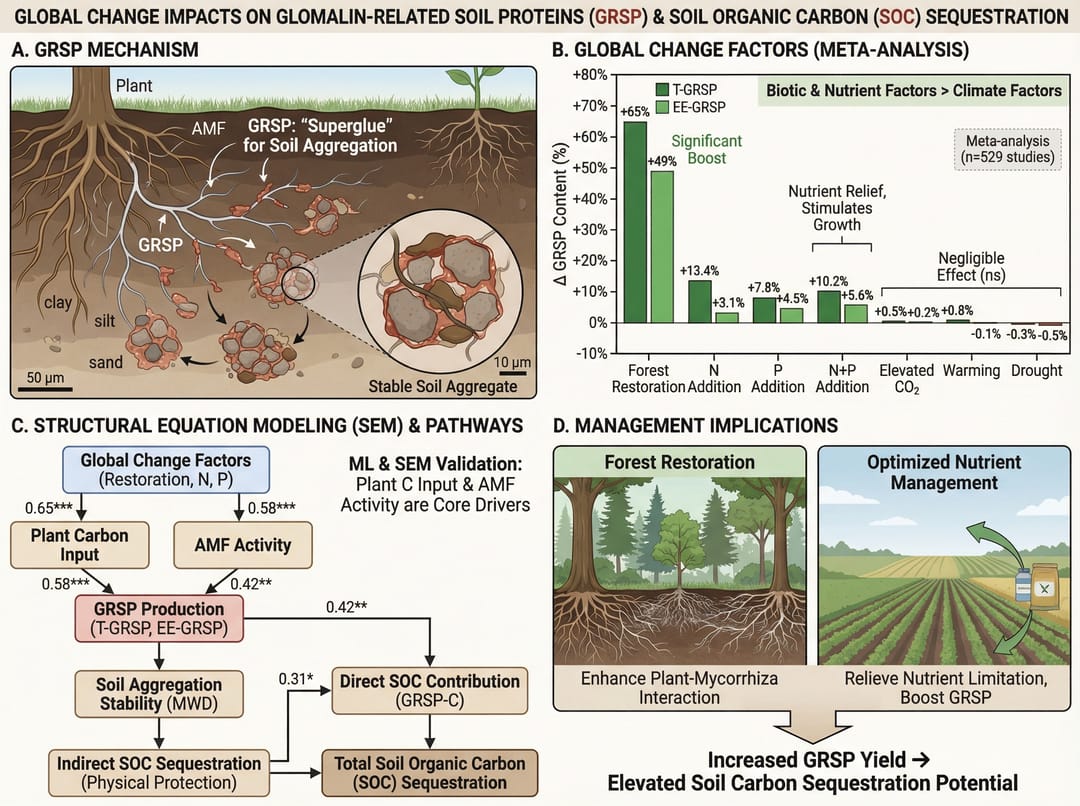 グロマリン関連土壌タンパク質と有機炭素の安定化メカニズム — 実際の研究者が作成したイラストレーション
環境研究者が描いているもの
302件の実際の環境テーマのプロンプトのキーワード分析に基づくと、主なトピックは以下の通りです:
- 土壌科学 (22% が「soil(土壌)」に言及、そのうち「microbial(微生物)」が 10%)
- 水システム (23% が「water(水)」に言及)
- 炭素循環 (13% が「carbon(炭素)」に言及)
- 環境メカニズム (14% が「mechanism(メカニズム)」に言及)
- 植物と土壌の相互作用 (10% が「plant(植物)」に言及)
- 汚染と修復 (頻出用語:「pollutants(汚染物質)」、「contamination(汚染)」、「treatment(処理)」)
土壌科学のイラストレーション
土壌科学は環境イラストレーションの中で最大のトピックであり、菌根ネットワークからバイオ炭による土壌改良まで、あらゆる内容をカバーしています。
土壌有機炭素の安定化
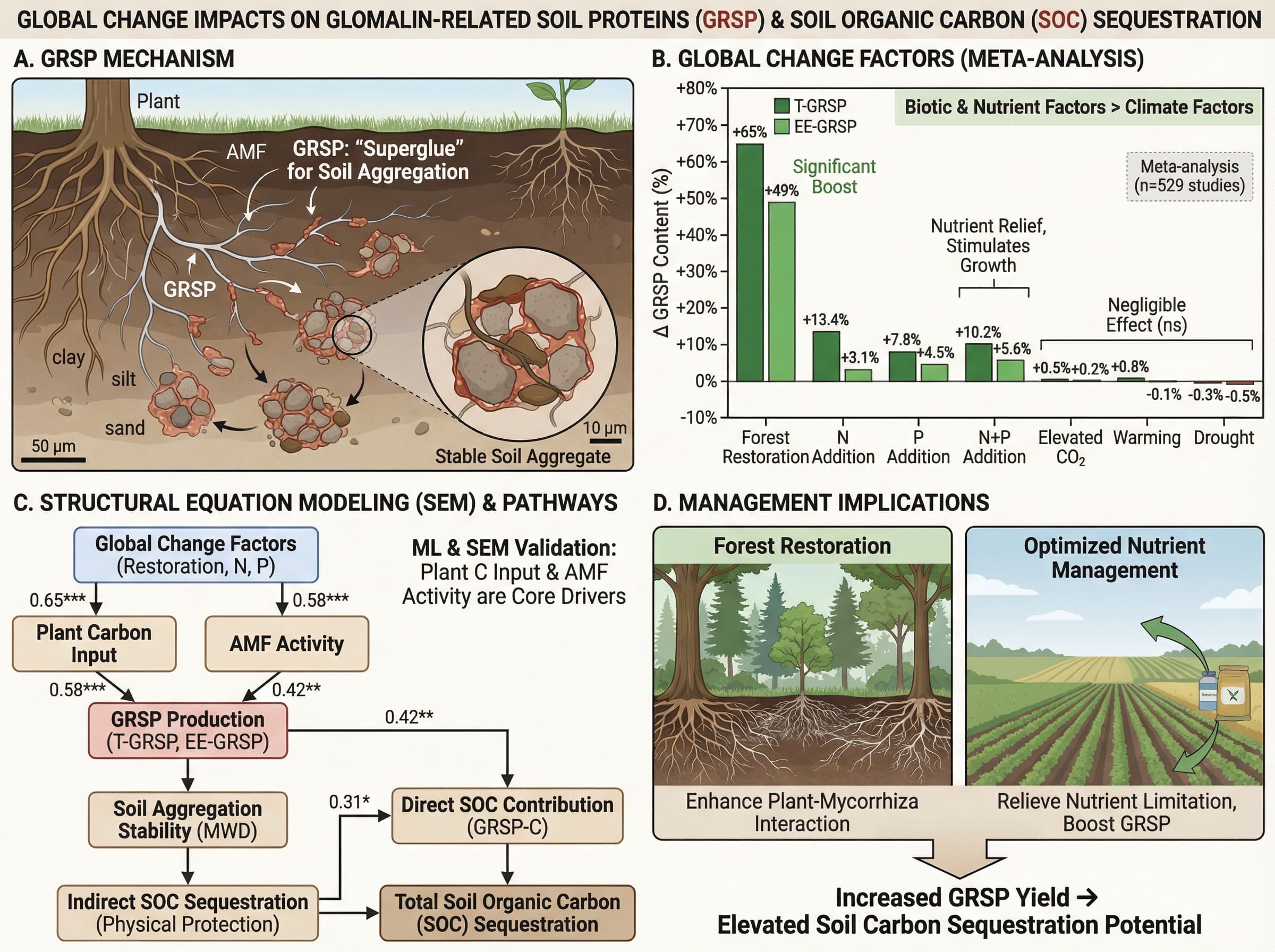
Glomalin-related soil protein (GRSP) mechanism illustration.
GRSP as a key metabolite secreted by arbuscular mycorrhizal fungi,
known as "super glue" for maintaining soil organic carbon stability.
Show: mycorrhizal hyphae in rhizosphere →
GRSP secretion onto soil particle surfaces →
formation of soil aggregates (micro and macro) →
physical protection of organic carbon within aggregates.
Under climate change: elevated CO₂ and temperature effects
on GRSP production rates and aggregate stability.
Soil biology journal style, cross-sectional soil view.
最新センサーを用いた土壌の色分析
Research illustration for soil property analysis
using Nix Pro color sensor as modern alternative
to conventional manual methods.
Study design: 150 soil samples analyzed.
Show: field sampling → sensor measurement (RGB/L*a*b*) →
machine learning models (Random Forest, SVM) →
predicted soil properties (organic matter, moisture, pH).
Comparison panel: traditional lab methods vs. sensor-based.
Precision agriculture journal style.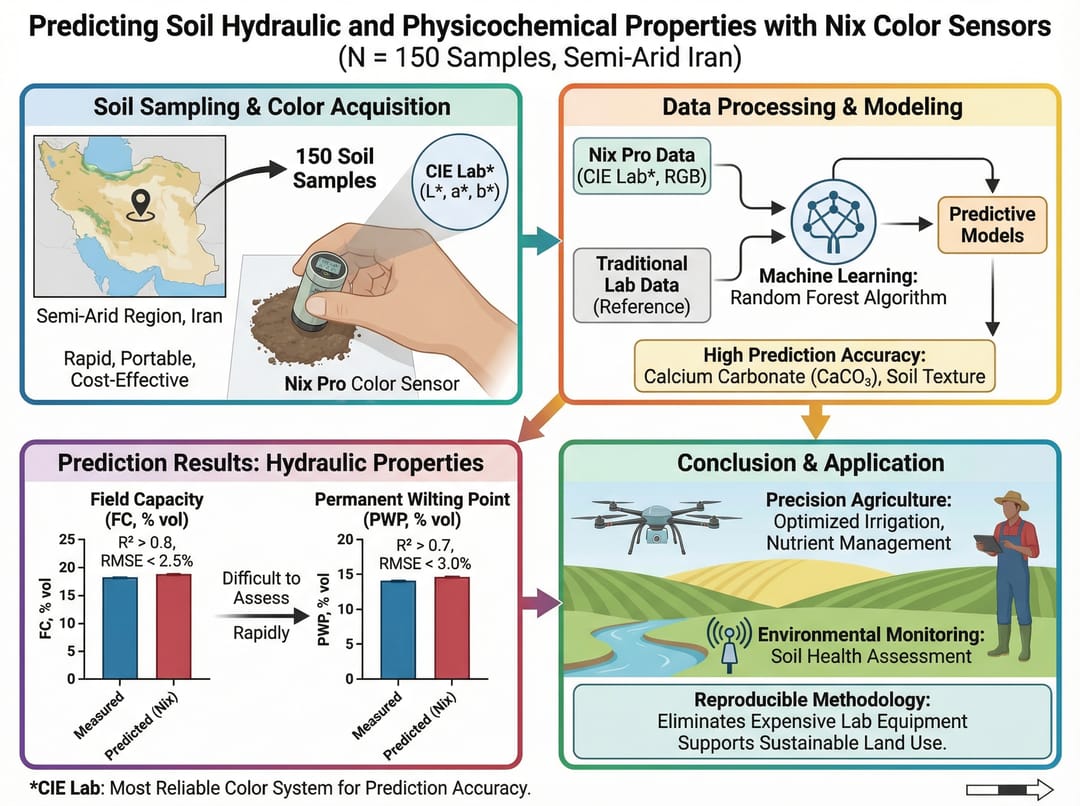 土壌特性分析のための Nix Pro カラーセンサー — 方法論のフレームワーク
土壌システムにおけるバイオ炭
Biochar layer structure illustration.
Show gray, undulating biochar structure
embedded within soil profile.
Porous carbon matrix with micropores labeled,
nutrient adsorption sites (NH₄⁺, PO₄³⁻) indicated,
water retention capacity in pore spaces,
microbial colonization on biochar surfaces.
Soil amendment cross-sectional view,
environmental engineering journal style.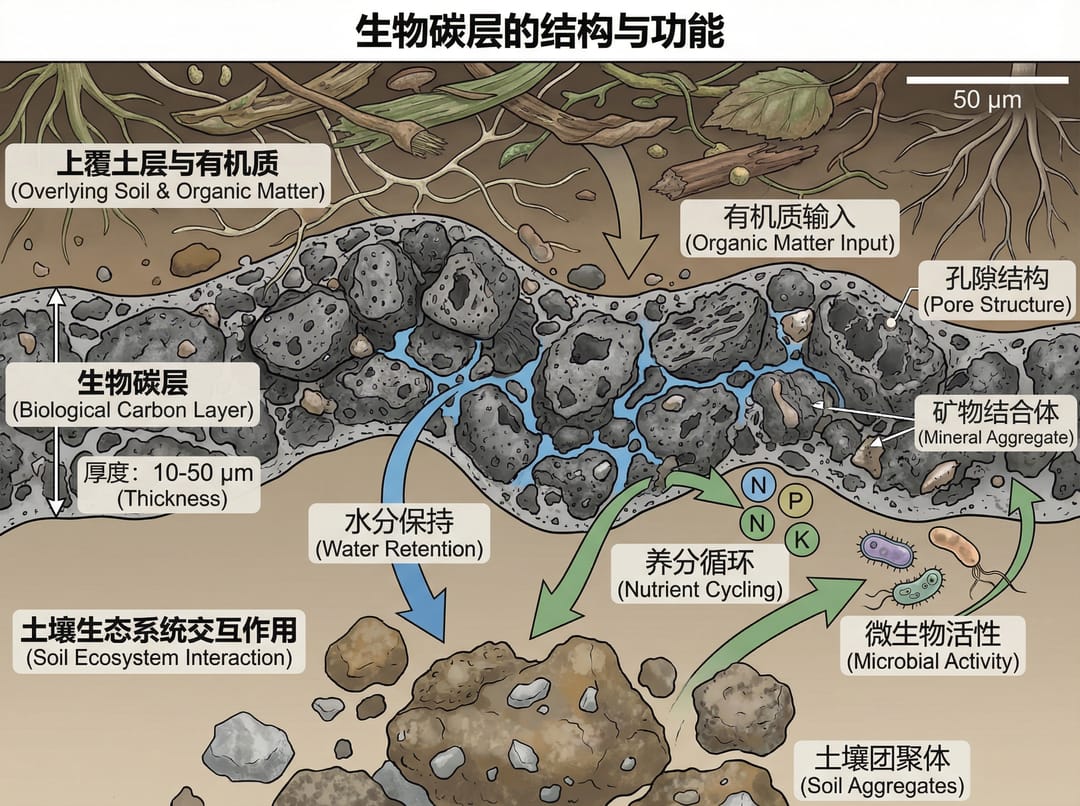 土壌断面におけるバイオ炭層の特性
生物地球化学的循環
炭素循環と窒素循環は、環境科学の教育および研究出版物の両方において基礎となるものです。
炭素循環の生態系ダイアグラム
High-contrast, black and white diagram of the carbon cycle
suitable for photocopying.
Depict a moose, balsam fir, and aquatic plants in a lake,
alongside a volcano.
Illustrate: photosynthesis (CO₂ uptake by plants),
respiration (CO₂ release by animals),
decomposition in soil,
volcanic outgassing,
ocean-atmosphere CO₂ exchange,
fossil fuel formation pathways.
Arrows with labels for flux rates.
Ecology textbook illustration style.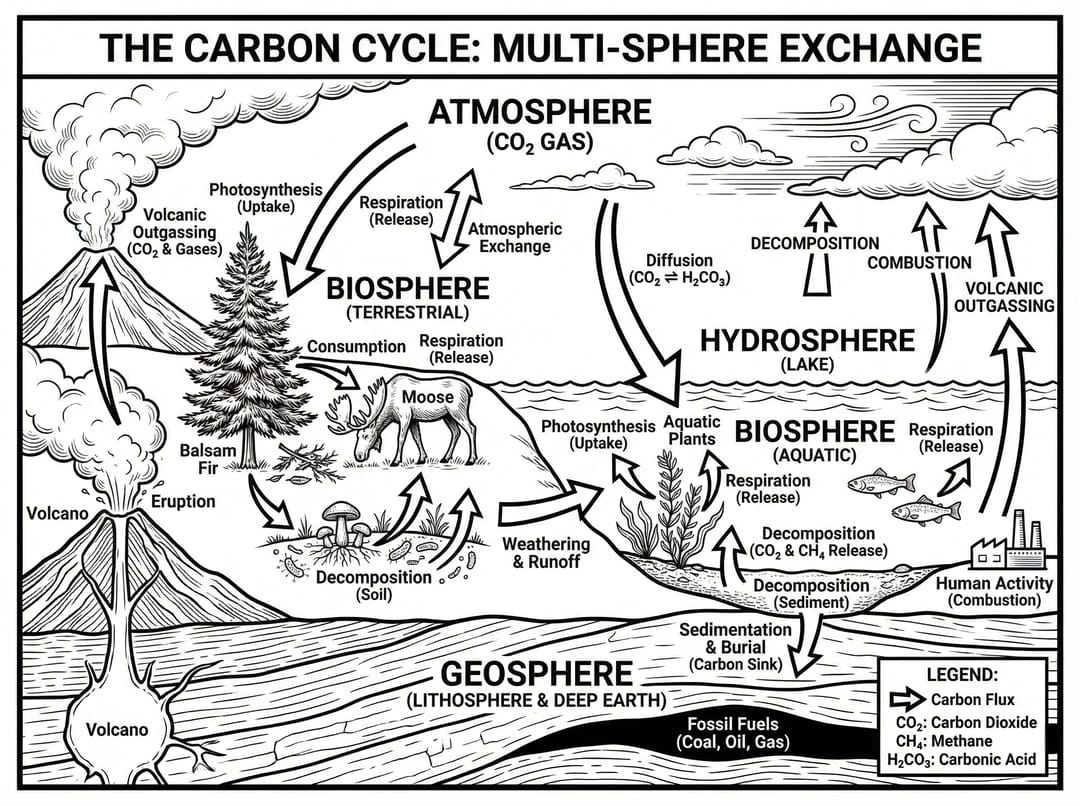 北方林の構成要素を含む炭素循環の生態系ダイアグラム
窒素循環
Nitrogen cycle diagram incorporating
a moose and balsam fir as biotic components.
Show: atmospheric N₂ fixation (biological and lightning),
nitrification (NH₄⁺ → NO₂⁻ → NO₃⁻),
denitrification (NO₃⁻ → N₂O → N₂),
ammonification of organic N,
plant uptake and animal consumption,
leaching to groundwater.
Bacterial species labeled at key transformation steps.
Black and white suitable for photocopying.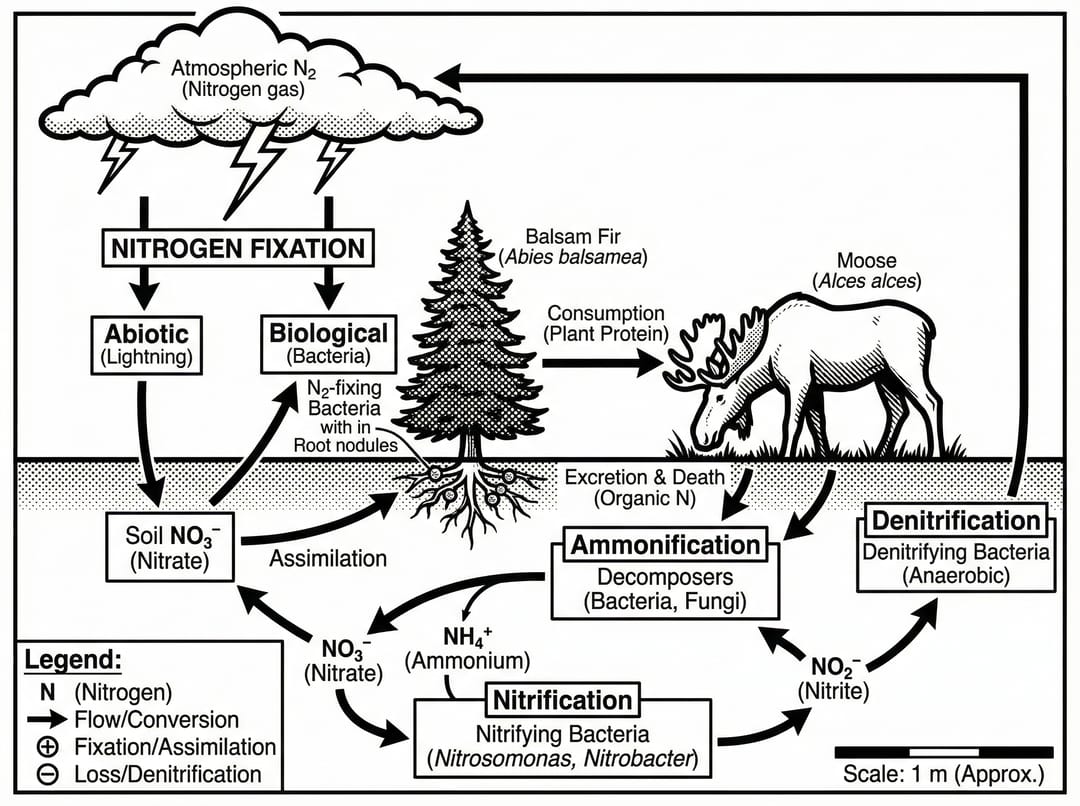 北方生態系の構成要素を含む窒素循環
水処理と汚染
水源からのプラスチック除去
Flowchart illustrating process for plastic removal
from water sources (white background, line images):
1. Site Selection: major drainage outlets,
wastewater discharge points, stormwater drains
2. Sampling and Analysis: microplastic quantification
3. Treatment System Design: filtration stages
4. Implementation: boom barriers, filtration units
5. Monitoring: before/after comparison metrics
Sequential flowchart with icons at each step.
Environmental engineering journal style.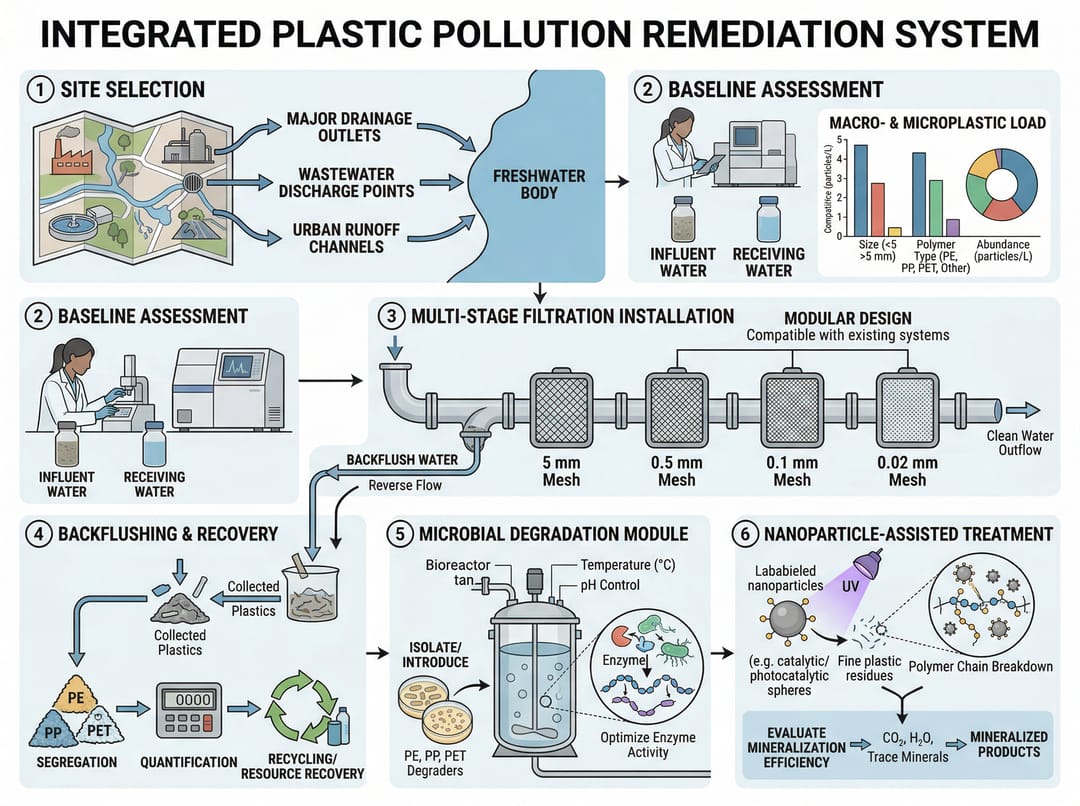 水源からのプラスチック除去プロセス — 順次ワークフロー
石炭火力発電所の汚染物質経路
Operation of coal-fired power plants and pollutant pathways
into river ecosystems.
Show: wastewater discharge from coal combustion facilities,
waste landfill leachate pathways,
atmospheric deposition of particulates,
pollutant transport through soil to groundwater,
bioaccumulation in aquatic food chain.
Multiple entry points converging on river system.
Environmental impact assessment style,
suitable for Environmental Science & Technology journal.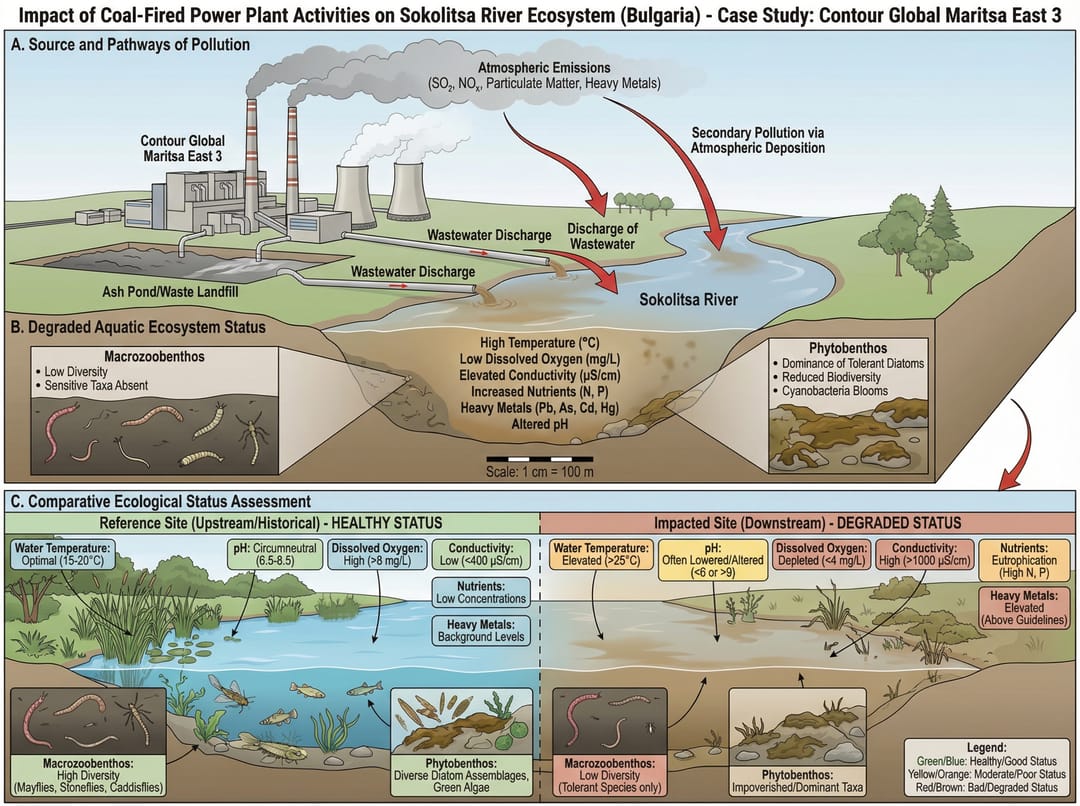 石炭火力発電所から河川生態系への汚染物質経路
気候と生態系への影響
気候変動と食料安全保障
Highlights visualization for climate change
and food security research in Africa.
Key threats: increasing temperatures,
inconsistent rainfall patterns, extreme weather events.
Show: climate drivers (top) →
agricultural impacts (crop yield decline, livestock stress) →
food security outcomes (malnutrition, economic loss) →
adaptation strategies (drought-resistant crops, irrigation).
Vulnerable populations highlighted.
Infographic style for policy communication.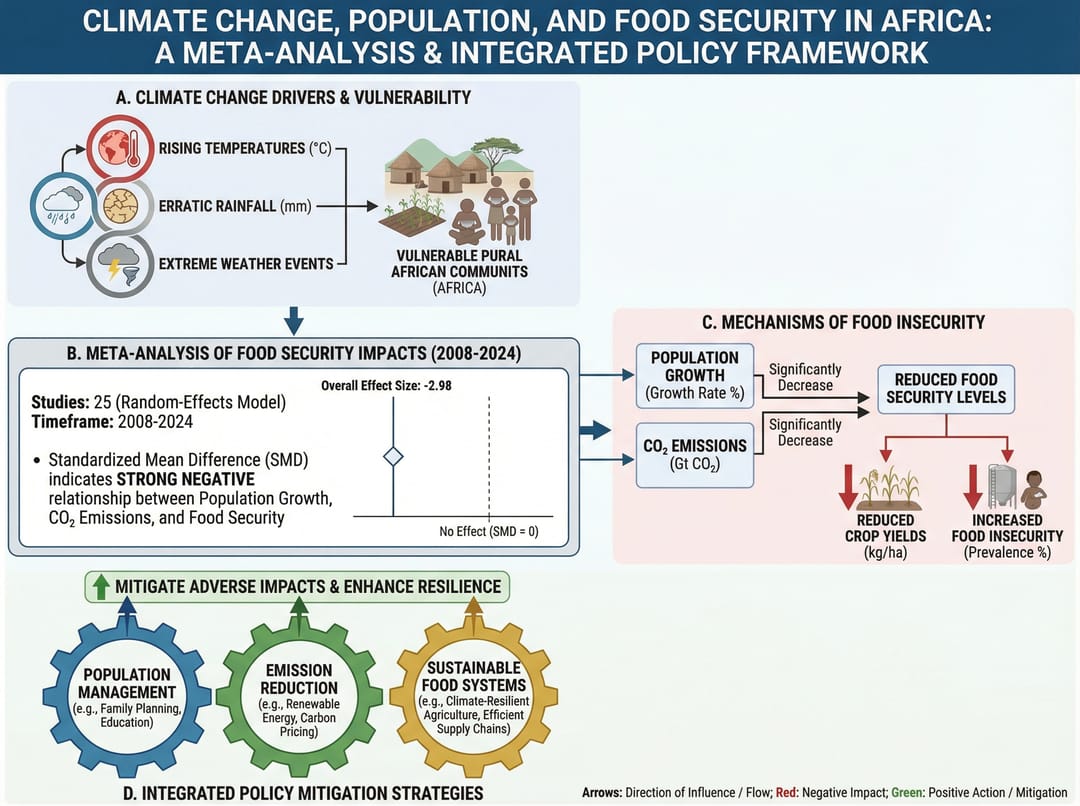 アフリカにおける気候変動が食料安全保障に与える影響
CO₂ 圧入と岩盤力学
Illustration depicting the damage mechanism
of high-temperature CO₂ injection into coal rock.
Show: injection well and CO₂ flow pathway,
thermomechanical stress on coal matrix,
fracture propagation patterns,
mineral dissolution and pore structure changes,
permeability enhancement zones.
Cross-sectional geological view with depth indicators.
Energy geoscience journal style.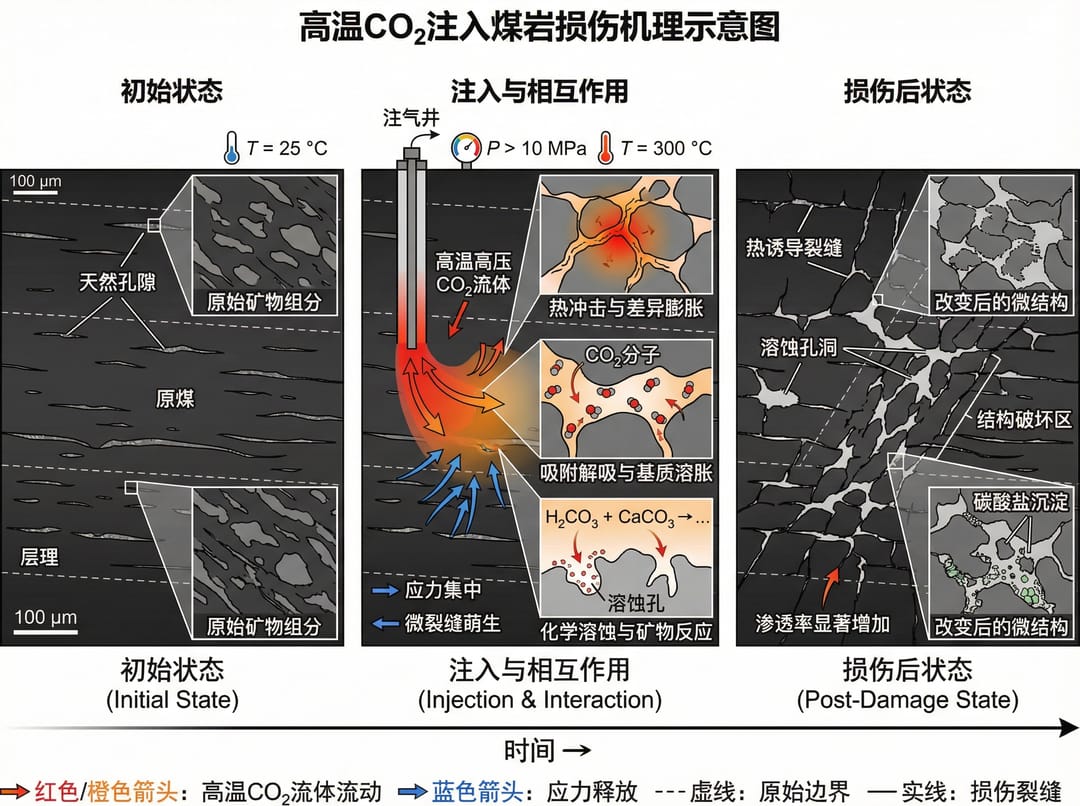 石炭岩への高温 CO₂ 圧入による損傷メカニズム
研究フレームワーク図
多層研究ロードマップ
環境研究では、理論、方法論、成果を結びつける多層的なフレームワーク図が必要になることがよくあります。
Three-layer logical research framework,
landscape orientation, technical roadmap style.
Blue-green color scheme.
Logic flow: "Background Analysis" →
"Methodology Development" → "Application & Validation."
Layer 1: Problem identification and literature review
Layer 2: Experimental design and data collection
Layer 3: Model development and prediction
Each layer with 3-4 sub-components connected by arrows.
SCI paper technical roadmap style.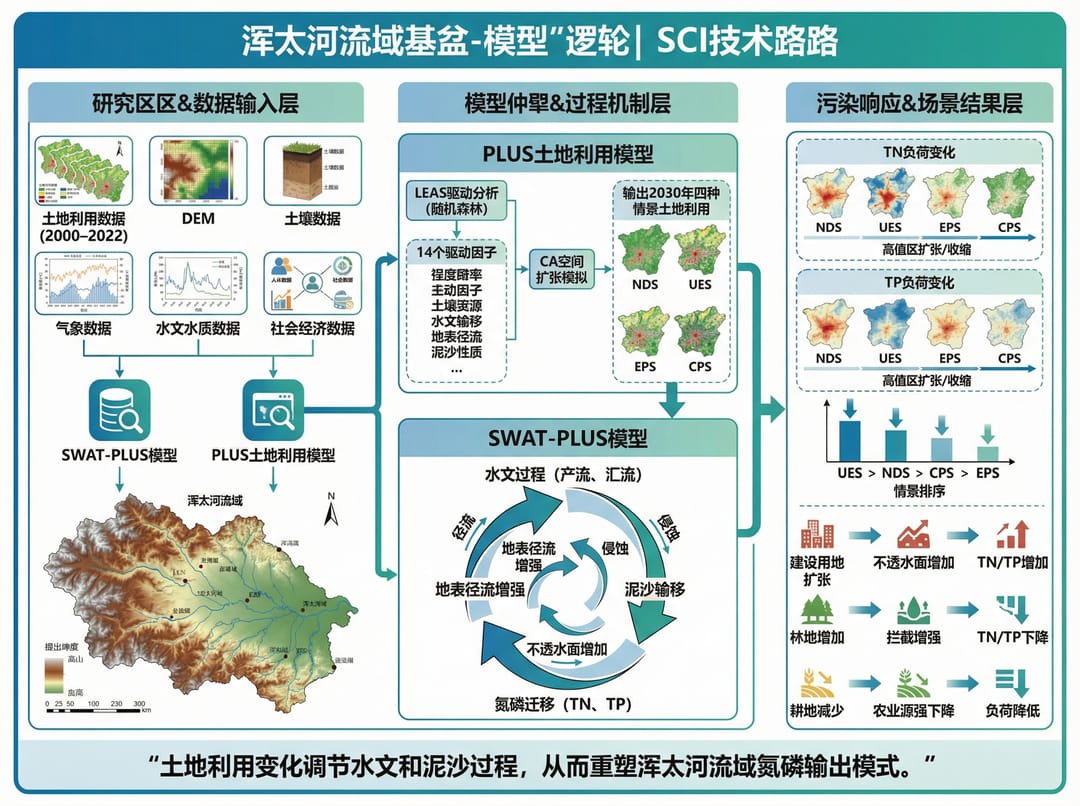 青緑色の配色を用いた3層研究フレームワーク
系統的レビュープロトコル
Systematic Review Protocol using SPICE Framework.
Research objectives for Knowledge Management
in Subtropical Forestry.
Portrait or square layout.
Show: Setting → Perspective → Intervention →
Comparison → Evaluation.
Search strategy: databases (Web of Science, Scopus, CNKI),
inclusion/exclusion criteria flowchart,
PRISMA flow diagram integration.
Forestry and environmental management journal style.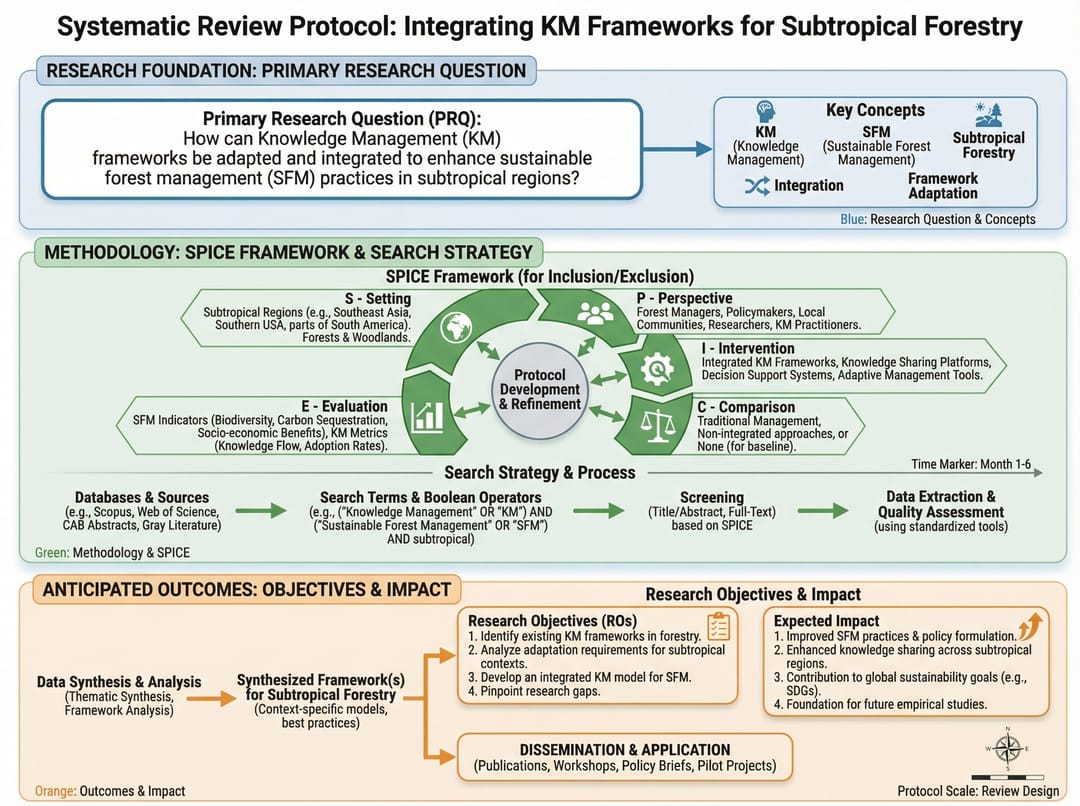 亜熱帯林業研究のための SPICE フレームワークを用いた系統的レビュープロトコル
環境科学のためのプロンプト作成のヒント
効果的な環境プロンプトの構成要素
302件の環境プロンプトの分析に基づくと、最も成功しているプロンプトには以下の要素が含まれています:
| 要素 | 頻度 | 例 |
|---|---|---|
| コンパートメントのラベル | 22% | "soil(土壌)", "water(水)", "atmosphere(大気)" |
| プロセス名 | 17% | "nitrification(硝化)", "photosynthesis(光合成)" |
| スケールの指標 | 12% | "ecosystem level(生態系レベル)", "molecular scale(分子スケール)" |
| フラックスの方向 | 14% | 矢印, "leading to(〜につながる)", "resulting in(〜の結果となる)" |
| 種/生物 | 10% | "mycorrhizal fungi(菌根菌)", "moose(ヘラジカ)", "balsam fir(バルサムモミ)" |
成功するプロンプトの共通パターン
- "Schematic diagram illustrating"(〜を説明する模式図) — 最も一般的な開始フレーズ(20回以上の出現)
- "This study"(本研究) — イラストレーションを特定の研究に結びつける(37回の出現)
- コンパートメント間の接続 — 大気・土壌・水の相互作用を示す
- Before/after(前後)の比較 — 処理効果、季節変化
- 機械学習の統合 — 環境モデリングにおいてますます一般的になっています
避けるべきこと
- 空間的コンテキストの欠如: 常に地上と地下の区別を明示してください。
- 過度に簡略化された循環: 少なくとも主要な変換ステップを含めてください。
- スケールの参照がない: 読者は、分子レベル、フィールドレベル、あるいは地球規模のどれを示しているのかを理解する必要があります。
- フィードバックループの忘却: 環境システムは本質的に相互に関連しています。
環境科学のイラストレーション作成を始める
環境研究のビジュアライゼーションをアップグレードしましょう:
- SciDraw AI Drawing にアクセスする
- Mechanism Illustration(メカニズムイラストレーション) または Experimental Workflow(実験ワークフロー) テンプレートを選択する
- 環境システム、プロセス、およびコンパートメントを記述する
- 論文に使用できる出版品質の図を生成する
土壌炭素の動態から気候影響評価まで、AI は環境システムの複雑さを明確かつ正確に伝えるお手伝いをします。
関連記事: