How to Change the Style of a Figure with AI: Flat Vector, 3D, Hand-Drawn & Journal Style (2026)
Restyle a diagram with AI without redrawing it — switch a figure between flat vector, 3D render, hand-drawn sketch, and clean journal style just by describing the look you want. Copy-paste prompts, a reusable style template, and an AI figure editor that does the work.
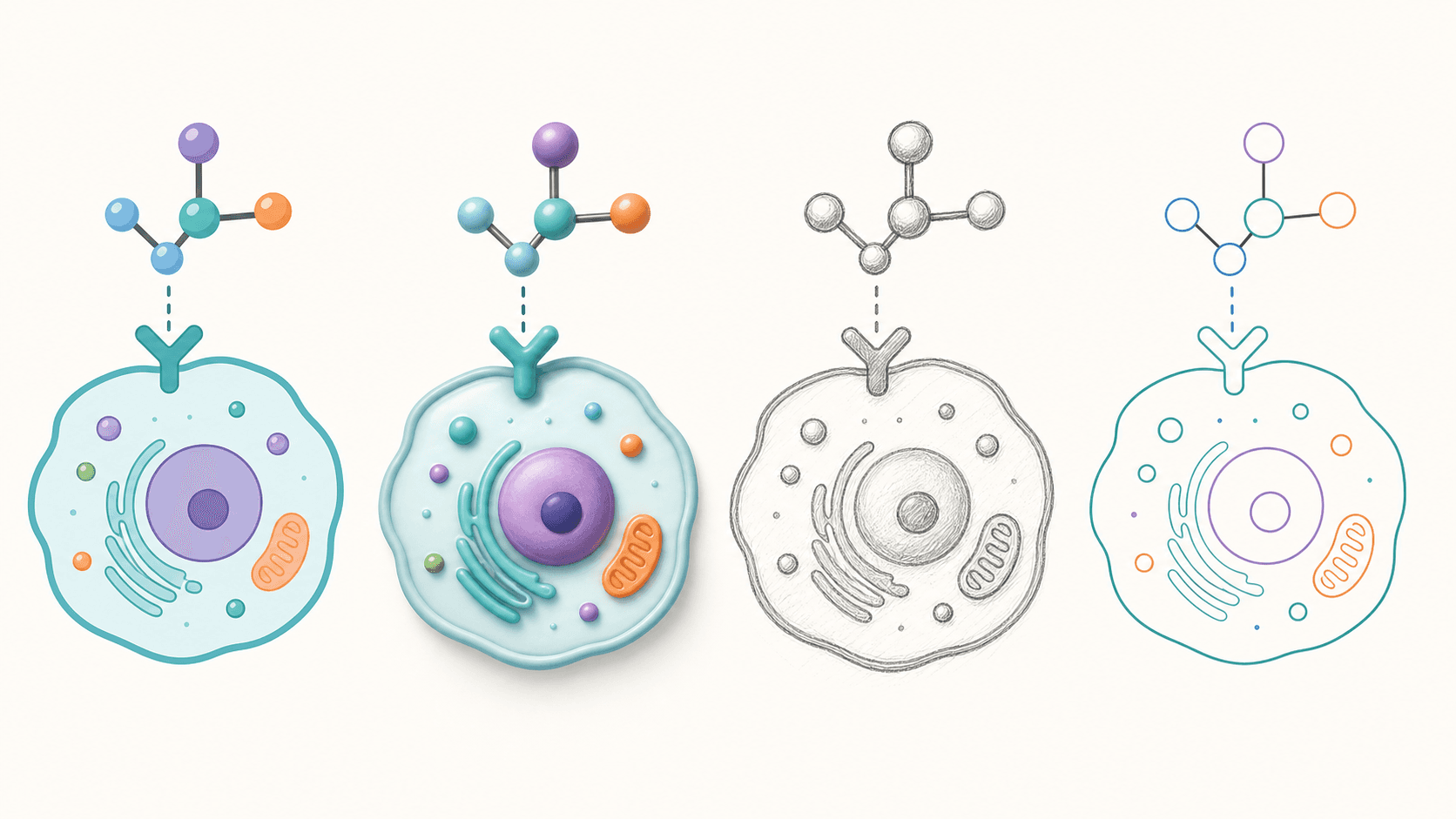
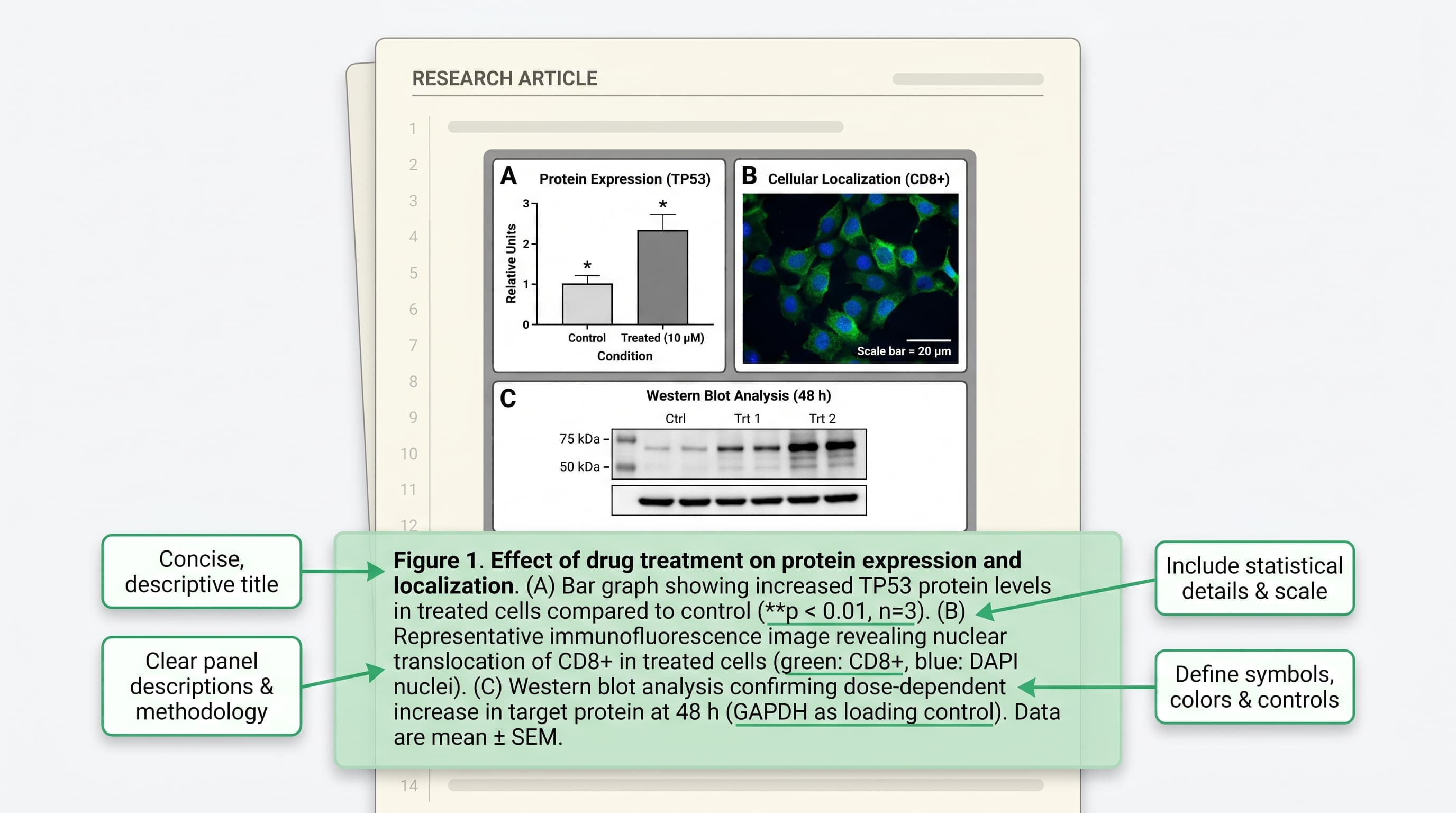
You have a scientific figure that says the right thing but looks wrong for where it's going: a flat textbook diagram that needs to feel premium for a journal cover, a busy 3D render that should be a clean line drawing for a grant, or a stiff vector schematic that would land better as a friendly hand-drawn sketch on a slide. You don't have to redraw it. With an AI-native figure tool you simply tell the AI the style you want, and it restyles the existing image while keeping the same structure, labels, and meaning. This guide shows you how to change the style of a figure and restyle a diagram with AI — flat vector, 3D, hand-drawn, or journal style — without design software and without starting over.
By the end of this guide you'll be able to:
Change a figure to flat vector style for clean, publication-ready schematics.
Convert a diagram to 3D for depth on a cover or a marketing graphic.
Turn a figure into a hand-drawn sketch for relatable slides and teaching.
Restyle a diagram into journal style — muted palette, thin strokes, professional typography.
Switch styles without redrawing the figure, so the science stays put while only the look changes.
Every restyle below is made by typing one sentence into the SciDraw AI editor — the AI figure editor where your image is the canvas and language is the tool.
A figure does two jobs at once: it carries the science, and it sets a visual tone. A diagram that is perfect for a methods section can look out of place on a conference slide, and a glossy 3D render that wows on a cover can feel distracting in a peer-reviewed paper. Traditionally, matching a figure to its context meant redrawing it in a different program. With AI restyling, content and style become independent — you lock in the correct structure once, then ask for whatever visual treatment the destination needs. That means one source figure can become a flat-vector method panel, a 3D cover graphic, and a hand-drawn lecture slide, all without rebuilding it.
Davie Chen is a researcher at the Faculty of Animation and Intermedia, University of Arts in Poznan, studying generative AI for scientific figure creation, patent illustration, and manuscript drafting. SciDraw AI is one of the research-to-product tools built from this work.
Thousands of researchers use SciDraw AI to make publication-ready figures for papers, grants, and journal submissions — in minutes, with no design skills.
The whole skill is describing the look you want while telling the AI to keep the meaning. Instead of regenerating from scratch (and risking new labels, new layout, or new errors), you give one targeted restyle instruction.
❌ Vague: "make this look nicer"
✅ Targeted: "Restyle this diagram in a clean flat-vector style with thin outlines and a muted palette. Keep the same layout, elements, and labels."
Template: "Restyle this figure in a [flat vector / 3D render / hand-drawn sketch / journal] style, with [stroke weight, palette, shading]. Keep the same layout, elements, and labels."
Open your figure in the editor, type the instruction, and the AI repaints the image in the new style while holding everything semantically in place. Naming what to preserve — "keep the same layout and labels" — is what separates a clean restyle from an accidental redraw.
Flat vector is the default look for most scientific figures: solid fills, thin uniform outlines, no gradients, no drop shadows. It reproduces well in print, stays legible at small sizes, and reads as professional. Use it when you're preparing a methods schematic, a pathway diagram, or any figure for a manuscript.
"Restyle this figure as a flat vector illustration: solid fills, thin uniform black outlines, no gradients or shadows."
"Convert this to a minimal flat-design diagram with a limited, muted color palette suitable for a journal."
"Flatten the 3D shading into clean 2D vector shapes while keeping every label and arrow."
"Make this a flat infographic style with consistent line weights and rounded corners."
A 3D style adds depth, soft lighting, and dimensional shapes. It's eye-catching for journal covers, graphical abstracts aimed at a broad audience, lab websites, and social media — anywhere you want the figure to pop rather than blend into the text.
"Restyle this molecule as a 3D render with soft studio lighting, subtle shadows, and glossy surfaces."
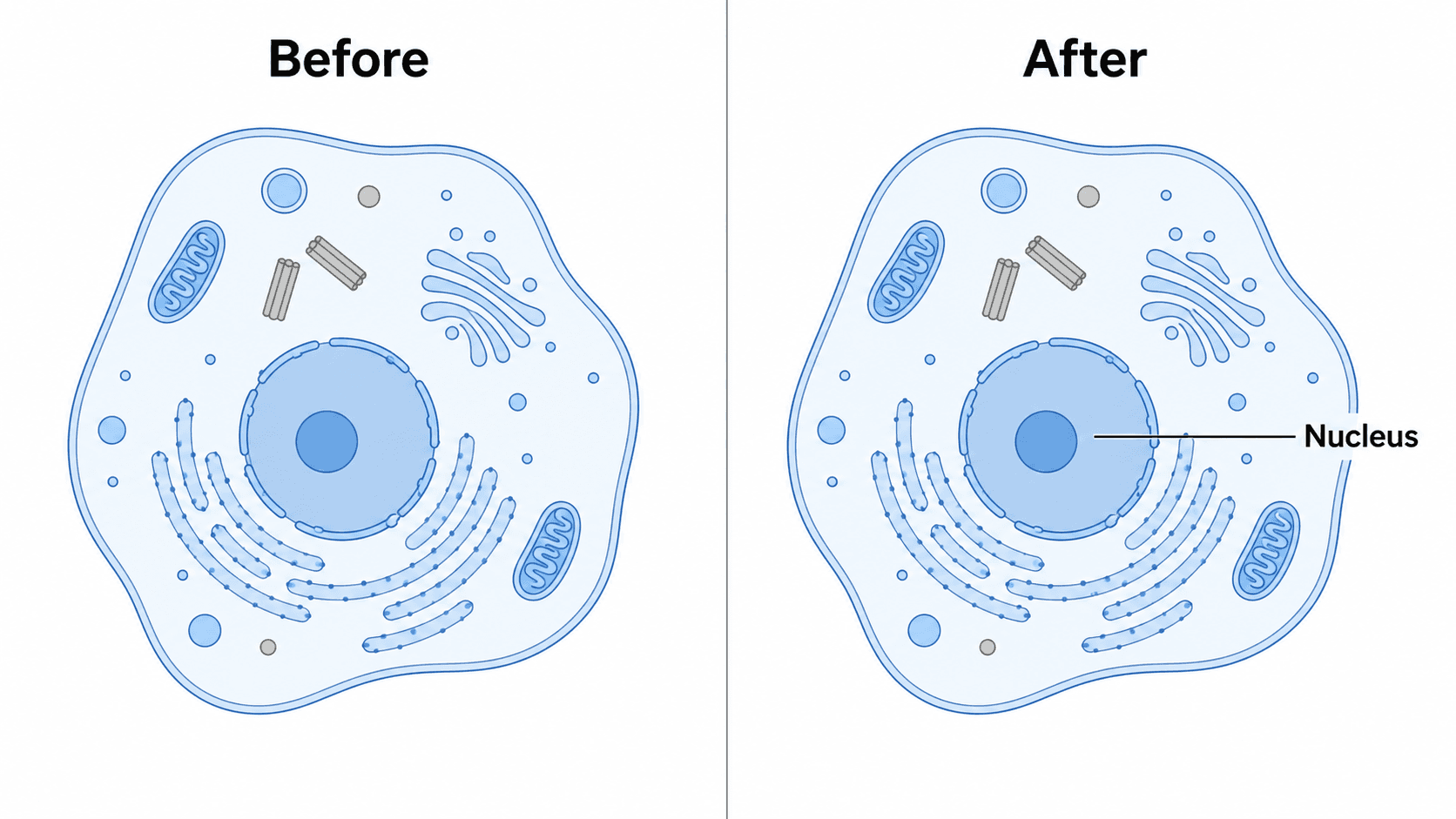
"Convert this flat cell diagram into a semi-3D illustration with depth and gentle ambient occlusion, keeping the labels readable."
"Give this pathway a modern 3D isometric look while preserving the order of the steps."
"Make the cover figure a polished 3D scene with a dark gradient background and rim lighting."
A hand-drawn or sketch style uses loose, pencil- or ink-like strokes and a slightly imperfect feel. It's ideal for teaching slides, explainer posts, lab notebooks, and any setting where you want the figure to feel human and inviting rather than clinical.
"Restyle this diagram as a hand-drawn sketch with loose ink outlines and light watercolor fills."
"Convert this schematic into a chalkboard-style drawing with white lines on a dark green background."
"Make this look like a friendly notebook doodle with marker strokes, keeping the labels legible."
"Give this a soft pencil-sketch style suitable for a lecture slide."
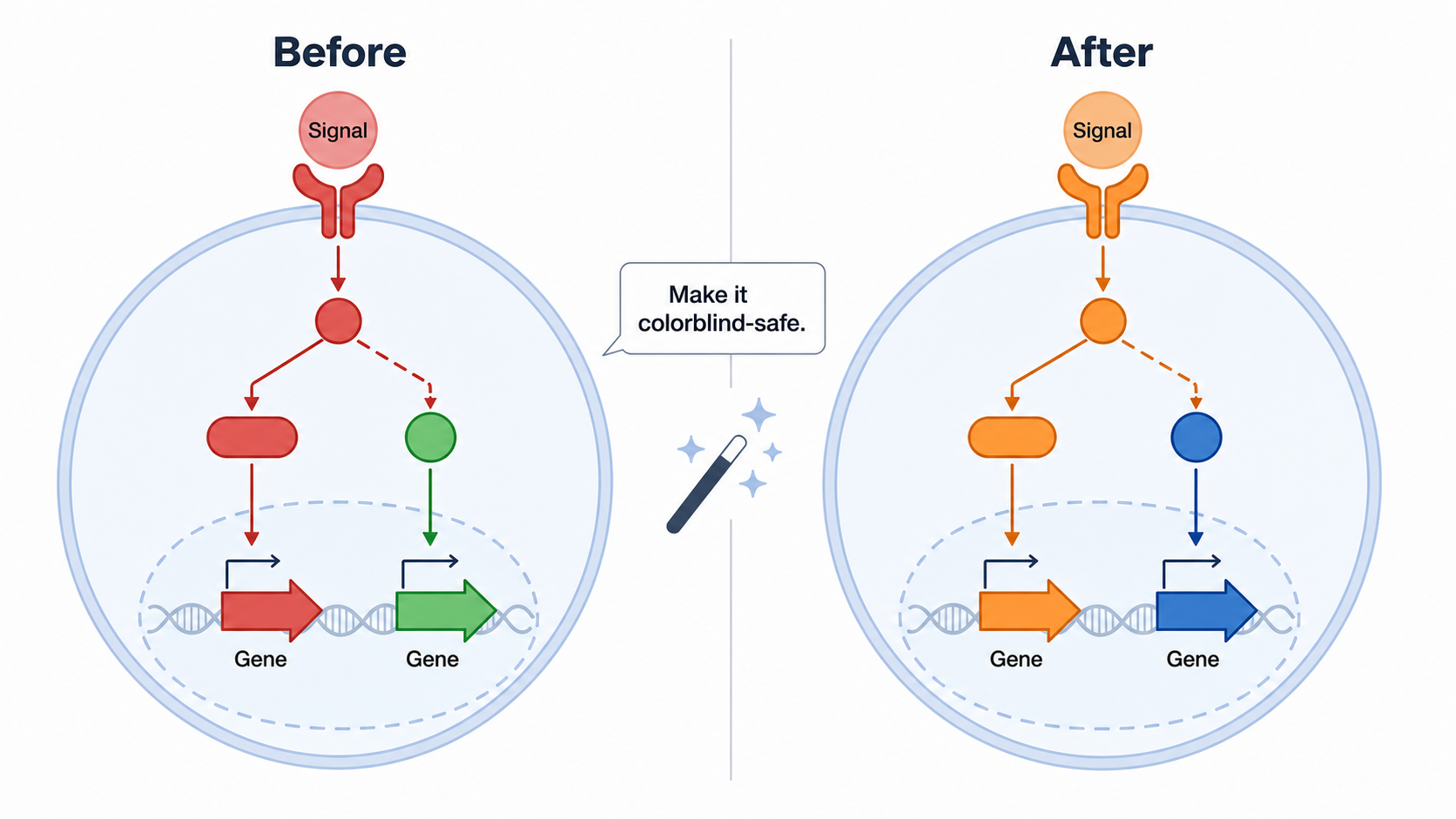
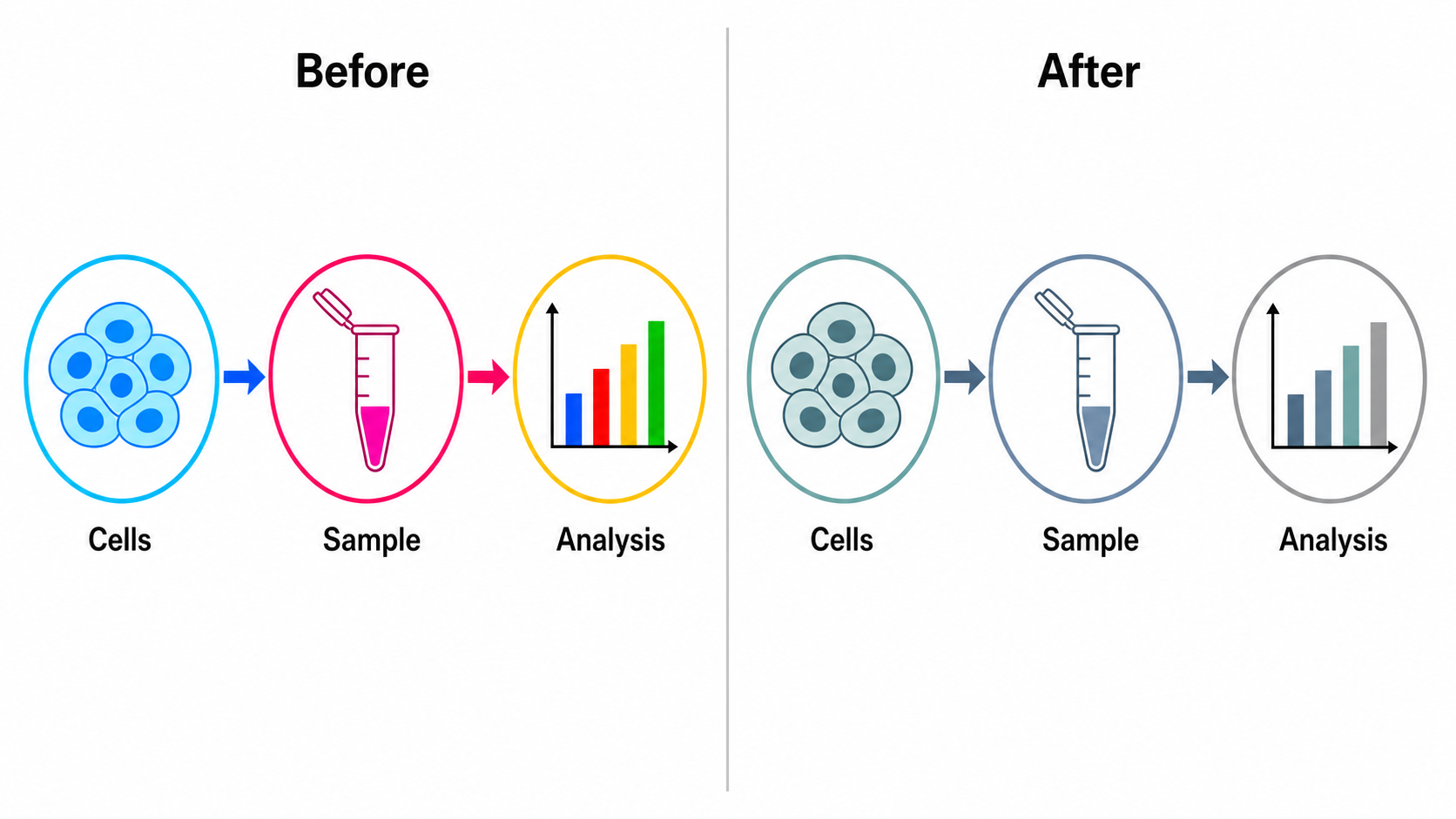
"Journal style" usually means a restrained, professional treatment: a muted or single-accent palette, thin consistent strokes, clean sans-serif labels, and no decorative effects. Many journals also expect a specific look — grayscale-friendly, colorblind-safe, or matched to a house palette. You can ask for all of this in one instruction.
"Restyle this figure in a clean journal style: muted palette, thin strokes, sans-serif labels, no shadows or gradients."
"Make this colorblind-safe and grayscale-friendly while keeping the flat-vector journal look."
"Match this to a Nature-style figure: minimal, professional, with a restrained two-color accent palette."
"Restyle for a methods section: neutral grays with a single blue accent, thin lines, compact labels."
Vague style requests produce a full redraw. Fix: name the style and effects precisely and add "keep the same layout and labels."
Labels get lost in heavy 3D or sketch styling. Fix: ask the AI to "keep all labels crisp and legible" or restyle the labels separately afterward.
The new style clashes with the journal's requirements. Fix: specify "colorblind-safe" and "grayscale-friendly" up front for publication figures.
Over-stylized result looks unscientific. Fix: pull back with "more restrained, fewer effects, thinner lines" for a publication-appropriate look.
Restyling changes the content by accident. Fix: compare against the original and re-prompt "restore the original layout but keep the new flat-vector style."
Garbled text after a heavy restyle (typical of generic image AI). Fix: SciDraw AI re-renders clean, readable labels — re-prompt the exact wording if a label drifts.
Once the look is right, export the figure to editable SVG or PowerPoint (PPTX), or download a high-resolution image for your manuscript, slides, cover, or poster. SVG and PPTX let you (or a collaborator) tweak the styled figure later, while the AI editor handles the fast restyles now.
How do I change the style of a figure with AI?
Open the figure in the SciDraw AI editor and type a short instruction such as "restyle this diagram in a clean flat-vector style and keep the same layout and labels." The AI restyles the existing image in place, so you change the look without redrawing the figure.
Can I convert a diagram to 3D without redrawing it?
Yes. Tell the AI to "convert this flat diagram into a semi-3D illustration with soft lighting and depth, keeping the labels readable." Only the visual treatment changes; the structure and labels stay the same.
How do I turn a figure into a hand-drawn or sketch style?
Describe the look — "restyle this as a hand-drawn sketch with loose ink outlines and light fills" — and the AI repaints the figure in that style while preserving the content.
What does "journal style" mean for a scientific figure?
Journal style usually means a restrained, professional look: a muted palette, thin consistent strokes, clean sans-serif labels, and no decorative shadows or gradients. Ask for "a clean journal style, colorblind-safe and grayscale-friendly" to match most publication requirements.
Can I restyle a figure for free?
You can start restyling figures for free in the AI figure editor, then upgrade for more credits and editable SVG/PPTX export. Every restyle is made by typing an instruction — no design software to install.
Open any figure in the SciDraw AI editor and type your first restyle — flat vector for a paper, 3D for a cover, hand-drawn for a slide, or journal style for submission. The AI does the redrawing so you don't have to, and your restyled figure is one sentence away.