Lab meeting
Starts from what you planned last time, shows this period's key result, lays out the problem you hit and what you already tried, and asks for specific help before the plan for next time.
Previews are rendered from the downloadable file.
Tools for the figures in this template
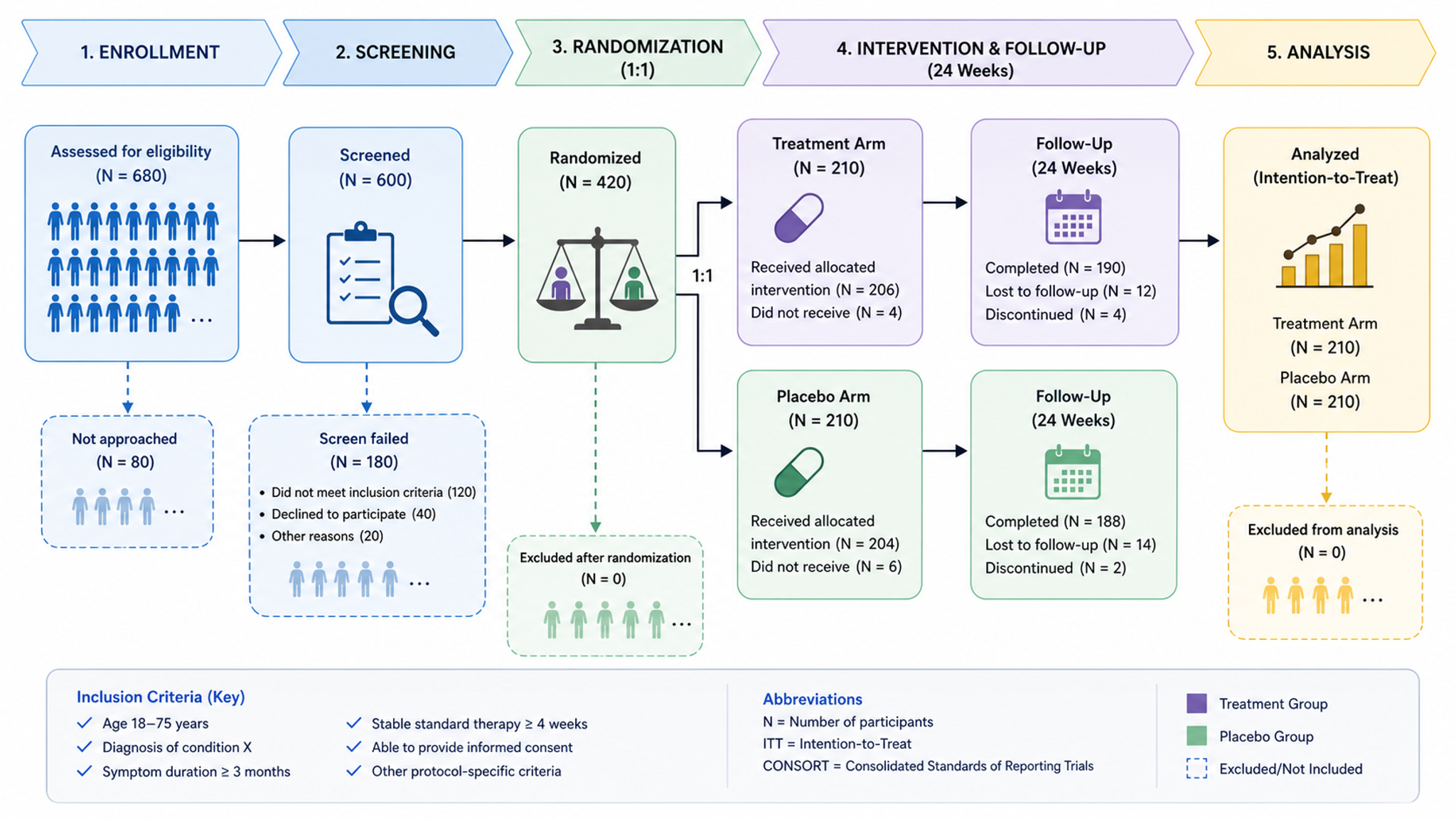
What's inside
- 1Overview: three numbers and one sentence
- 2Last plan: done, in progress, not started
- 3Key result with a native chart
- 4Representative images
- 5Problem: what happened and what you tried
- 6Where you need input
- 7Plan until the next meeting
How to use it
- 1
Download the file in your language and open it in PowerPoint.
- 2
Read the hidden instruction slide first: it explains timing, colours and figures.
- 3
Replace the example study slide by slide. Right-click a chart → Edit Data to use your numbers.
- 4
Need a figure? Use the link under any figure slot to open SciDraw AI with a matching prompt.
Guides to read alongside
- Lab Figures: The Complete Guide (For Papers, Theses, and Lab Meetings)What lab figures are, the 5 categories you'll need, how to make them fast, and what reviewers actually look for when they scan your figure set.
- Convert Scientific Images to Editable PPTX and SVGLearn how to turn PNG, JPG, WebP, and AI-generated scientific figures into editable PowerPoint PPTX and SVG files, with practical workflow tips for slides, Illustrator, Figma, and journal submission.
Other templates
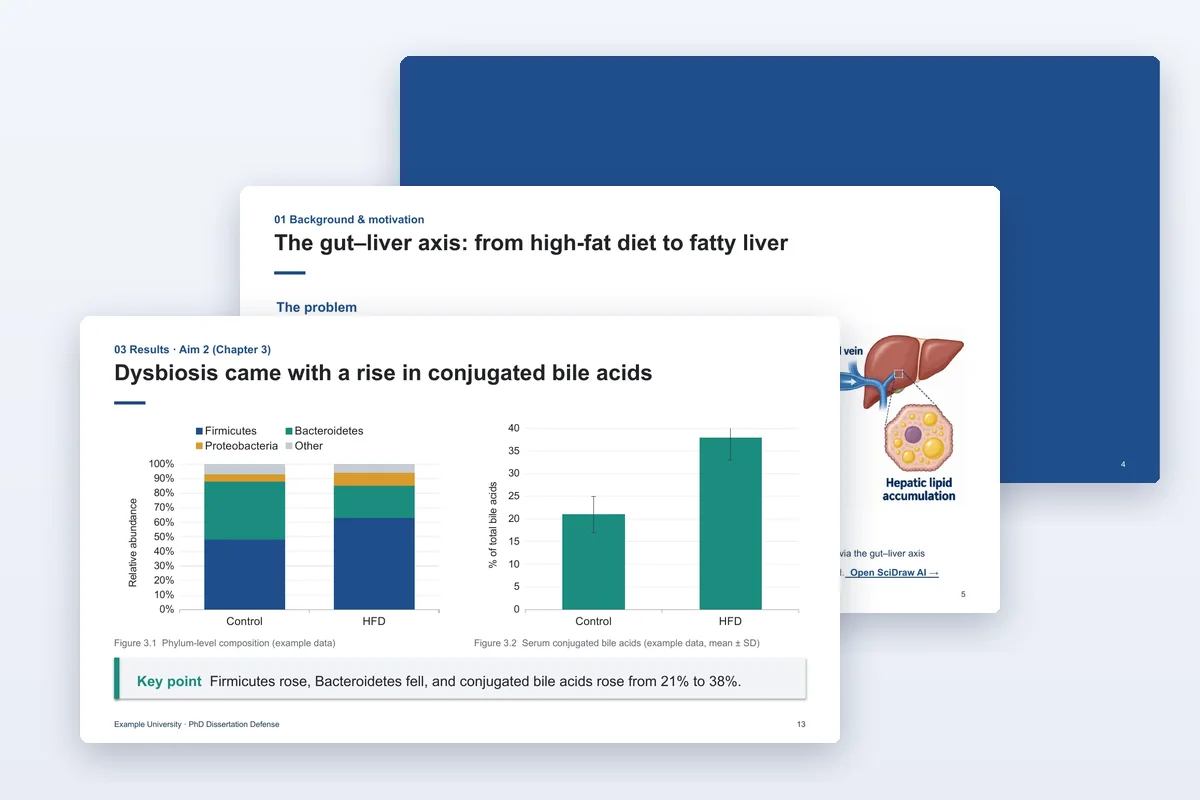
Thesis defense
A PhD or master's defense talk with committee Q&A backup slides.
- PPTX
- 11 languages
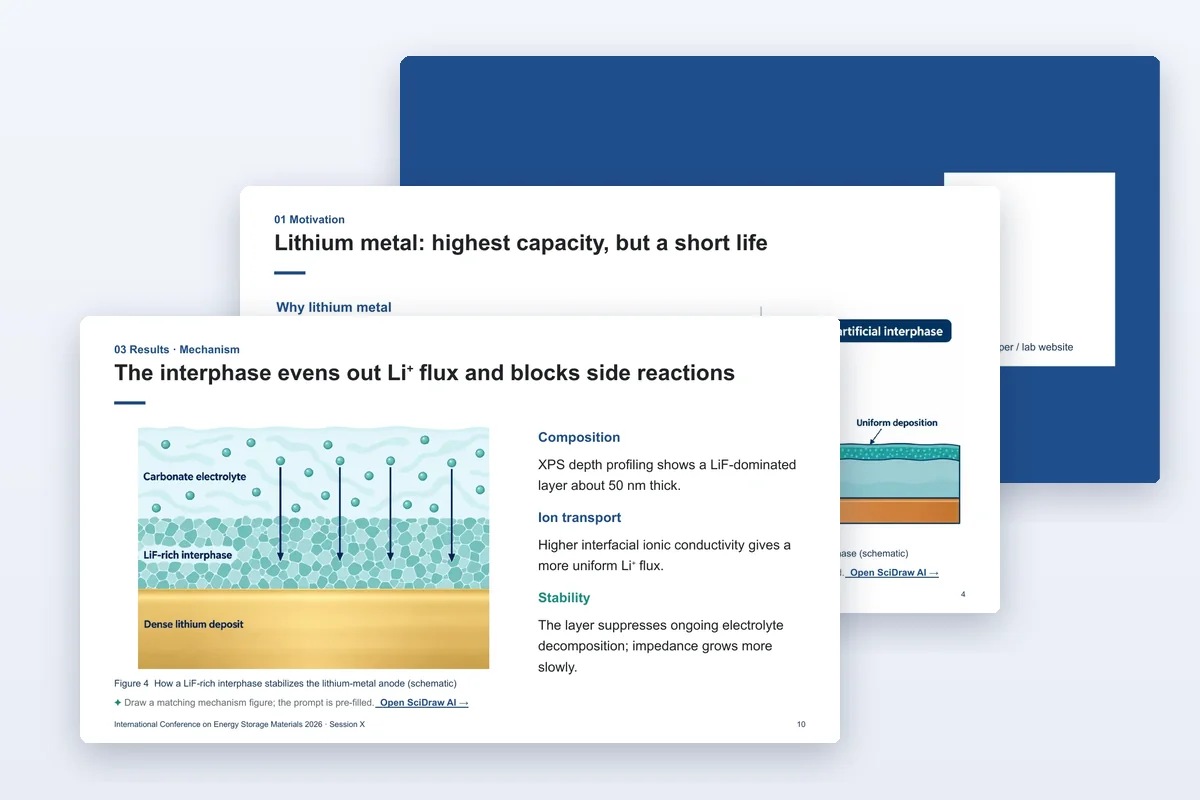
Conference presentation
A 12–15 minute talk that leads with one take-home message.
- PPTX
- 11 languages
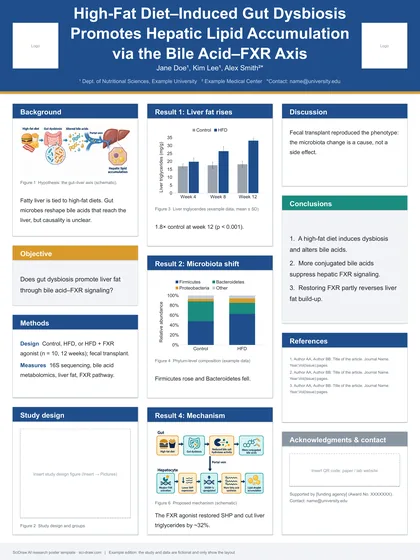
Research poster · Standard
Classic IMRaD poster in three or four columns.
- PPTX
- 11 languages