科學傳播彌合了專業研究和公眾理解之間的差距,使複雜的發現能夠被一般大眾所理解。無論您是撰寫科普文章、管理社交媒體頻道、製作 YouTube 解釋影片,還是舉辦公開講座,引人注目的視覺效果對於吸引注意力和促進理解至關重要。然而,建立有效的科學傳播圖形面臨著獨特的挑戰:專業插圖服務每個專案的成本高達數千美元,設計軟體需要大量的培訓,而緊迫的出版截止日期幾乎沒有留下視覺開發的時間。
AI 驅動的插圖正在改變科學傳播者建立引人入勝內容的方式。曾經需要醫學插畫家或科學藝術家才能呈現的複雜現象,現在可以透過自然語言描述來視覺化。需要花費數小時進行設計調整的社交媒體圖形,現在可以在幾分鐘內生成。快速迭代視覺解釋的能力,使得以前由於資源限制而無法實現的傳播方法成為可能。
這份綜合指南探討了五種變革性應用,在這些應用中,AI 插圖正在徹底改變科學傳播。從病毒式傳播的社交媒體資訊圖表到 Podcast 封面藝術,您將確切地發現如何利用 AI 來最大限度地提高公眾參與度,同時保持科學準確性。
在本教程中,您將學習:
- 如何建立可分享的社交媒體科學資訊圖表
- 設計引人注目的部落格文章首圖的技巧
- 製作解釋影片故事板的方法
- 產生公開講座視覺效果的策略
- 製作獨特 Podcast 封面藝術的方法
讓我們透過詳細的範例和可操作的提示範本來探索每個應用,您可以立即在您的科學傳播中使用這些範本。
應用 1:社交媒體資訊圖表
它是什麼以及為什麼重要
社交媒體資訊圖表將科學發現、數據或概念轉化為高度可分享的視覺格式,這些格式針對 Instagram、Twitter、LinkedIn 和 Facebook 等平台進行了優化。這些簡短的視覺解釋必須在 1-2 秒內吸引滾動瀏覽使用者的注意力,同時以易於理解的格式傳達準確的科學資訊。研究表明,帶有自定義視覺效果的科學內容比僅包含文字的貼文獲得 650% 更多的參與度,這使得資訊圖表對於有效的數位科學傳播至關重要。
傳統挑戰
建立有效的社交媒體科學圖形面臨著幾個障礙:
- 平台特定的尺寸:每個社交平台都需要不同的長寬比(Instagram 1:1、Stories 9:16、Twitter 16:9)
- 行動裝置優化:大多數社交媒體消費發生在小螢幕的智慧型手機上
- 注意力競爭:科學內容與娛樂內容競爭,需要卓越的視覺吸引力
- 準確性與簡化:平衡科學精確性與公眾可及性
- 病毒式設計元素:了解哪些視覺特徵驅動分享行為
- 一致的品牌形象:在貼文中保持可識別的視覺形象
AI 如何解決這些問題
AI 插圖使科學傳播者能夠快速生成針對平台優化的資訊圖表,這些資訊圖表在準確性和參與度之間取得平衡。您可以描述科學概念、指定目標受眾的成熟度、請求平台特定的尺寸,並生成可分享的視覺效果,而無需圖形設計專業知識。可以測試多個變體以優化參與度指標。
社交媒體資訊圖表的關鍵要求
平台優化:正確的長寬比(Instagram 為 1:1,Stories/Reels 為 9:16) 行動優先設計:大文字、高對比度、在小螢幕上可讀 吸引眼球的影響力:醒目的顏色、引人注目的構圖、立即的視覺趣味 品牌空間:保留用於標誌、署名、行動呼籲的區域 三秒鐘清晰度:核心訊息在幾秒鐘內可掌握 可分享性:鼓勵轉發的獨立資訊
範例提示範本
Social media infographic explaining mRNA vaccine mechanism for Instagram post, 1:1
square format (1080x1080px), designed for general public audience with high school
education level, eye-catching science communication style.

Title banner at top: "How mRNA Vaccines Work" in bold white text on vibrant blue
gradient background, occupying top 15% of image.

Main visual (center 70%): Cross-section of human cell showing 4 numbered steps in
clockwise sequence:

Step 1 (upper left): Vaccine injection syringe releasing yellow mRNA strands labeled
"mRNA Instructions" entering cell through cell membrane, simple arrow showing
"mRNA enters cell".

Step 2 (upper right): Inside cell, mRNA strand being read by ribosome (purple
protein complex) labeled "Ribosome reads instructions", producing spike protein
shown as red spiky structure labeled "Spike Protein produced".

Step 3 (lower right): Spike protein displayed on cell surface with immune system
T-cell (blue) approaching, labeled "Immune system recognizes spike", antibodies
(Y-shaped symbols) being produced labeled "Antibodies created".

Step 4 (lower left): Real coronavirus (gray sphere with red spikes) being blocked
by antibodies, large red X over virus, labeled "Protected from COVID-19".

Center of diagram: Simple human silhouette outline showing where this occurs "In
your cells".

Bottom banner (15%): Key takeaway in large text "Your cells learn to fight COVID
without getting sick" on teal gradient, small logo space bottom right corner,
"@ScienceExplainer" handle bottom left.

Use bright, friendly colors (blue, yellow, purple, red, teal), modern flat design
style similar to Kurzgesagt illustrations, no medical jargon, simple sans-serif
fonts (minimum 24pt), high contrast for mobile screens, engaging but scientifically
accurate, suitable for general public Instagram audience.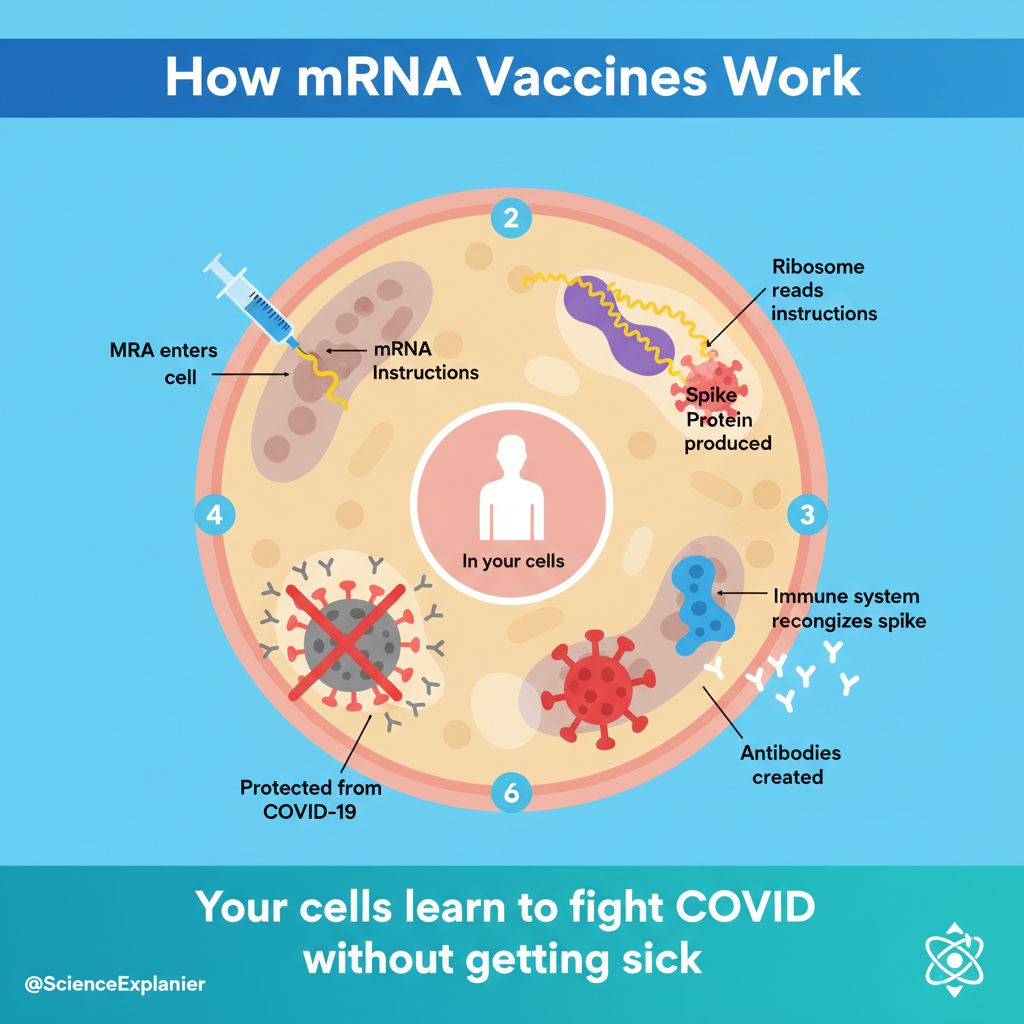
結果:一個視覺上引人注目、科學上準確的資訊圖表,針對 Instagram 進行了優化,以易於理解的方式解釋了複雜的免疫學,專為行動裝置觀看而設計,具有高度的可分享潛力和清晰的品牌整合。
應用 2:部落格文章首圖
視覺第一印象的力量
部落格文章首圖是科普文章的關鍵視覺錨點,出現在文章頂部、搜尋結果中以及在社交媒體平台上分享時。這些特色圖片必須同時吸引讀者、傳達文章主題並建立可信度,同時適用於不同的情境(部落格標題、社交媒體預覽、電子郵件新聞通訊)。研究表明,帶有自定義首圖的文章比使用庫存照片的文章獲得 94% 更多的總瀏覽量。
傳統製作挑戰
通用庫存照片問題:免費的庫存圖片會產生「以前看過」的疲勞感,並且缺乏主題特異性 成本障礙:單篇文章的自定義插圖可能需要 300-800 美元 主題相關性:尋找準確代表特定科學概念的視覺效果 多平台優化:圖片必須適用於寬標題、方形縮圖和矩形預覽 SEO 考量:提高搜尋可見性和點擊率的視覺元素 常青品質:圖片應保持相關性,並且不會很快顯得過時
AI 驅動的首圖建立
AI 使科學作家能夠生成獨特的、主題特定的首圖,這些首圖精確地匹配文章內容,而沒有庫存照片的限制。透過描述文章的核心概念、所需的視覺隱喻、色彩氛圍和平台要求,您可以製作自定義的特色圖片,從而提高文章的可發現性和讀者參與度。
部落格首圖的關鍵要求
寬螢幕格式:通常為 16:9 或 2:1 的長寬比,用於部落格標題 視覺隱喻清晰度:圖片應暗示文章主題,而無需文字 專業品質:足夠精美以建立文章可信度 社交媒體吸引力:在 Facebook、Twitter、LinkedIn 上作為共享縮圖有效 文字覆蓋空間:用於可選標題放置的乾淨區域 SEO 優化:支持文章關鍵字和主題的視覺元素
範例提示範本
Blog post hero image for article about gut microbiome and mental health connection,
2:1 widescreen format (2400x1200px), designed for popular science blog targeting
educated general audience, compelling science journalism aesthetic.

Central concept: Visual representation of gut-brain axis connection showing
bidirectional communication between digestive and nervous systems.

Left side (40%): Stylized human digestive system with transparent intestines
revealing diverse gut microbiome illustrated as colorful bacterial colonies -
beneficial bacteria shown as friendly rounded shapes in blues, greens, purples
labeled with text overlay "100 Trillion Bacteria", gentle glow emanating from
healthy microbiome.

Center (20%): Bidirectional communication pathway visualized as glowing neural
connections (resembling fiber optic cables) in gold/yellow traveling upward labeled
"Vagus Nerve Signals", neurotransmitter molecules (serotonin, dopamine) shown as
colorful floating geometric shapes labeled "Chemical Messengers" traveling both
directions between gut and brain.

Right side (40%): Stylized human brain with visible neural networks, areas
associated with mood and emotion highlighted in warm colors (amygdala, prefrontal
cortex), gentle neural activity patterns visualized as soft light pulses,
suggestion of positive mental state through warm color palette.

Background: Soft gradient from deep blue (left/gut) through purple (center/connection)
to warm pink-orange (right/brain), suggesting journey and connection, scientific
but approachable aesthetic.

Floating text elements integrated naturally: "The Gut-Brain Connection", "How Your
Microbiome Affects Your Mood", minimal text maintaining visual focus.

Modern scientific illustration style similar to Quanta Magazine or Scientific
American covers, balance of scientific accuracy with visual accessibility, warm
and inviting color palette suggesting hope and health, professional science
journalism quality, suitable for wide blog header, social media sharing, and
newsletter feature image.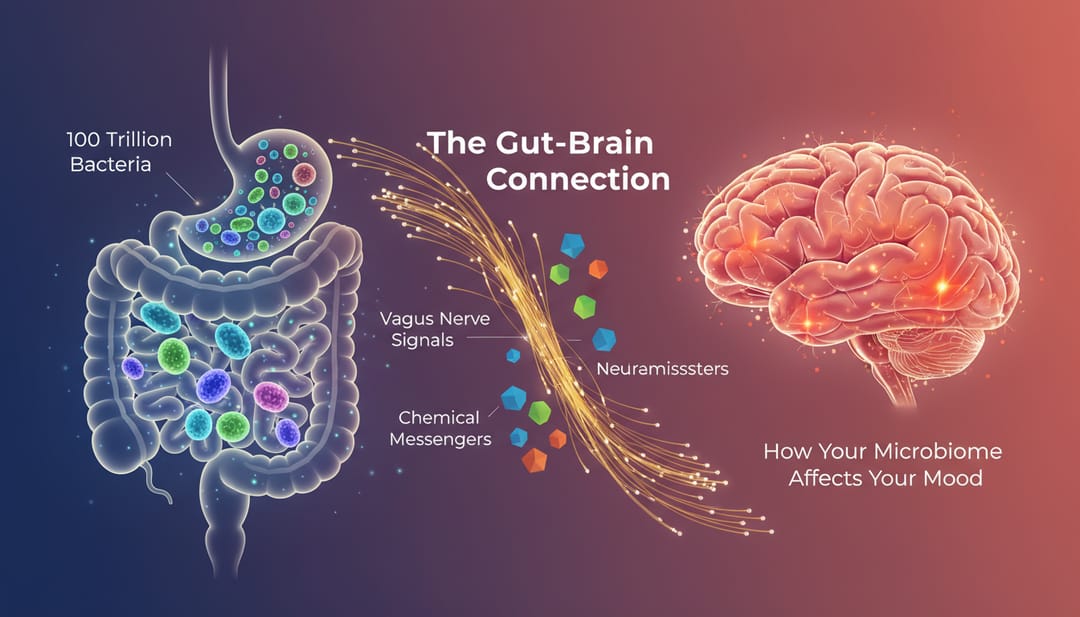
結果:一個獨特的、視覺上引人注目的首圖,它準確地代表了複雜的神經科學概念,適用於多個平台,透過視覺隱喻暗示文章內容,並建立科學可信度,同時保持對一般大眾的可及性。
應用 3:解釋影片故事板
可視化影片敘事
解釋影片故事板為 YouTube、TikTok 和教育串流媒體服務等平台上的科學傳播影片提供視覺藍圖。這些連續的畫面在影片製作開始之前,繪製了視覺敘事、動畫序列和關鍵視覺轉換。有效的故事板透過及早發現視覺挑戰來降低製作成本,使作家和動畫師之間能夠更好地協作,並確保連貫的視覺敘事支持教育目標。
傳統故事板障礙
藝術技能要求:傳統故事板需要許多科學傳播者缺乏的繪圖能力 時間密集性:5-10 分鐘影片的手動逐幀草圖需要數天的工作 修訂成本:對敘事結構的更改需要重繪整個序列 協作摩擦:在沒有視覺參考的情況下向動畫師傳達視覺想法 步調不確定性:在沒有模型的情況下難以預覽時間和轉換 動畫規劃:識別哪些元素在場景之間移動、轉換或過渡
AI 驅動的故事板生成
AI 可以從詳細的場景描述中生成完整的故事板序列,建立視覺參考,將預期的鏡頭、構圖和轉換傳達給影片製作團隊。透過指定每個場景的視覺元素、攝影機角度、主體位置和敘事進展,您可以製作傳統上需要專業故事板藝術家的綜合故事板。
影片故事板的關鍵要求
連續編號:用於製作參考的清晰場景/鏡頭編號 時間註釋:每個場景或轉換的持續時間註釋 敘述對齊:與旁白腳本相對應的視覺元素 動畫指示器:關於運動、轉換和動態元素的註釋 鏡頭構圖:攝影機角度、取景和視覺層次結構 一致的風格:所有故事板畫面中統一的視覺語言
範例提示範本
Explainer video storyboard for YouTube science video about photosynthesis, sequence
of 6 key frames in 16:9 format, designed for 3-minute educational video targeting
middle school to adult general audience, clear storyboard sketch style.

Frame 1 (0:00-0:15): "Opening Hook" - Extreme close-up of lush green leaf surface
with visible cellular detail, morning sunlight streaming through creating dramatic
backlighting, water droplets on surface catching light, visual text overlay "How
Plants Turn Sunlight Into Food", camera slowly zooming toward leaf surface suggesting
we'll dive into microscopic world. Narration: "Every day, plants perform an amazing
feat of chemistry..."

Frame 2 (0:15-0:35): "Zoom Into Leaf" - Transition through layers of leaf showing
cross-section view, upper epidermis labeled, palisade mesophyll cells packed with
green chloroplasts becoming visible, smooth animated zoom creating journey into
plant, camera movement from external leaf to cellular level, labeled callouts appear:
"Epidermis", "Mesophyll Cells", "Chloroplasts". Narration: "Inside leaves, special
structures called chloroplasts are the power plants of the plant world..."

Frame 3 (0:35-1:00): "The Ingredients" - Split screen showing three inputs entering
leaf: left third shows yellow sun rays with label "Sunlight (Energy)", center third
shows blue water molecules rising from roots labeled "H₂O (Water)", right third
shows gray CO₂ molecules entering through stomata labeled "CO₂ (Carbon Dioxide)",
all three arrows pointing toward central chloroplast, ingredients coming together,
simple animation showing flow. Narration: "Photosynthesis needs three ingredients:
sunlight for energy, water from the roots, and carbon dioxide from the air..."

Frame 4 (1:00-1:30): "Inside the Chloroplast" - Detailed view inside single
chloroplast showing thylakoid stacks (grana) where light reactions occur, lightning
bolt symbols showing energy conversion "Light Reactions", ATP and NADPH molecules
being produced shown as glowing energy carriers, Calvin cycle shown in stroma area
as circular pathway labeled "Calvin Cycle", visual separation between light-dependent
and light-independent reactions, dynamic energy flow animations. Narration: "Inside
chloroplasts, two sets of reactions work together..."

Frame 5 (1:30-2:00): "The Output" - Glucose molecule (C₆H₁₂O₆) being produced and
transported, shown as golden hexagonal structure labeled "Glucose (Sugar)", oxygen
molecules (O₂) being released through stomata shown as orange bubbles floating upward
labeled "Oxygen Released", split view showing glucose traveling to plant growth and
oxygen benefiting animals/humans, arrows showing energy flow from photosynthesis to
food chain. Narration: "The end result? Sugar for the plant to grow, and oxygen
for us to breathe..."

Frame 6 (2:00-2:30): "Big Picture Conclusion" - Pull back to show full plant in
ecosystem context, arrows showing cyclical relationship: plants produce oxygen and
food, animals consume and produce CO₂, sun provides energy, complete cycle
visualization labeled "The Circle of Life", text overlay "6CO₂ + 6H₂O + Light →
C₆H₁₂O₆ + 6O₂", final message "Thank You, Plants!" with subscribe button animation.
Narration: "Photosynthesis is the foundation of almost all life on Earth..."

Each frame includes: frame number, timestamp, shot description, camera movement notes,
labels/text overlay positions, narration alignment markers. Clean storyboard sketch
style with clear compositions, annotation arrows, movement indicators, suitable for
production team reference and client approval.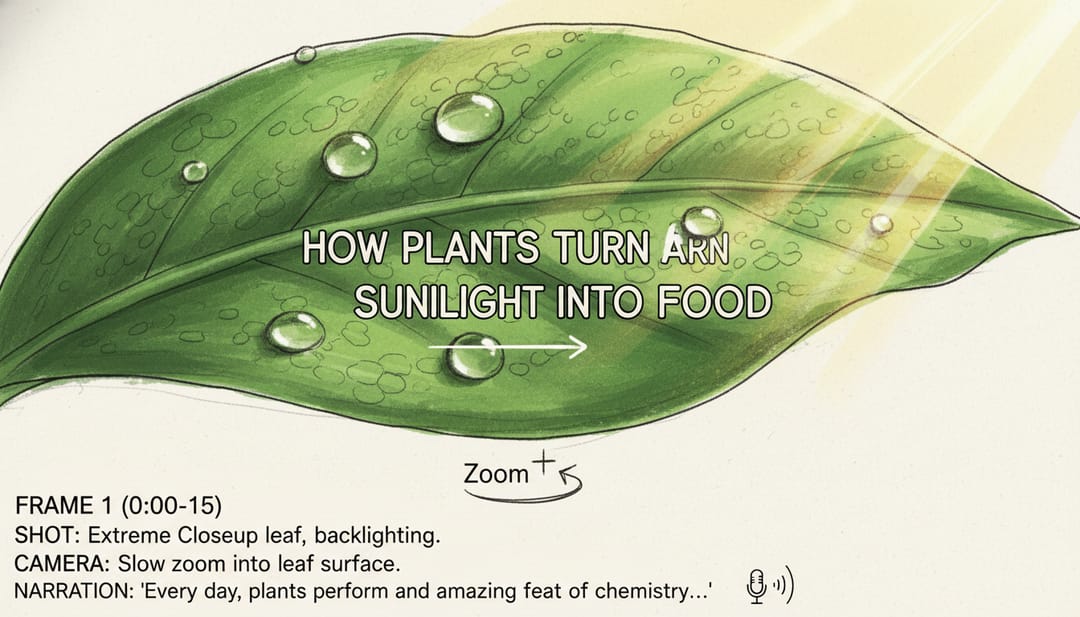
結果:一個全面的 6 畫面故事板,它繪製了完整的影片敘事,為動畫師提供了清晰的視覺方向,使視覺效果與敘述時間對齊,並展示了用於教育科學影片內容的製作就緒規劃。
應用 4:公開講座視覺效果
吸引不同的受眾
公開講座視覺效果為科學傳播者在科學咖啡館、圖書館計畫、博物館講座、社區活動和公立大學講座等場合向一般大眾進行演講提供服務。與針對專業受眾的學術會議簡報不同,公開講座視覺效果必須吸引從好奇的青少年到具有不同科學背景的退休專業人士的參與者。這些視覺效果必須在不屈尊的情況下進行簡化,在不誤導的情況下進行啟發,並在 30-60 分鐘的簡報中保持注意力。
傳統設計限制
受眾多樣性挑戰:單一視覺效果必須同時適用於 15 歲和 75 歲的人 注意力跨度管理:公眾的注意力跨度比學術環境短 避免術語:在保持準確性的同時消除技術術語 文化敏感性:確保範例和隱喻在不同的背景下產生共鳴 可訪問性要求:大文字、高對比度,適用於不同的視覺能力 靈感平衡:傳達驚奇和興奮,而沒有聳人聽聞
AI 的公眾參與能力
AI 能夠建立普遍可訪問的科學視覺效果,這些視覺效果在精緻度和清晰度之間取得平衡,使用日常類比和熟悉的背景來解釋複雜的現象。透過指定受眾多樣性、避免技術術語並強調相關範例,您可以生成在不過度簡化的情況下吸引參與的公開講座視覺效果。
公開講座視覺效果的關鍵要求
零假設知識:視覺效果必須在沒有科學背景的情況下也能理解 相關類比:使用日常物品、經驗和熟悉的背景 大而清晰的文字:從社區空間的後方可讀(最小 28pt) 包容性代表:跨年齡、種族、性別、能力的多樣化描述 互動潛力:支持受眾參與的視覺元素 故事驅動:敘事結構而不是純粹的數據呈現
範例提示範本
Public lecture visual explaining CRISPR gene editing for community science café
talk, 16:9 format designed for general public audience ages 16-80 with no assumed
biology background, engaging and accessible science communication style.

Title at top: "CRISPR: Molecular Scissors That Edit DNA" in large, friendly font
(36pt), approachable but not childish.

Left side (40%): "The Problem" - Illustrated DNA double helix with one section
highlighted in red labeled "Genetic Mutation" (avoid term "allele"), shown as
visible error in sequence, simple analogy text: "Like a typo in an instruction
manual", everyday comparison making concept relatable.

Center (30%): "The Solution" - CRISPR-Cas9 system visualized as molecular scissors
(literal scissors shape formed by Cas9 protein structure), guide RNA shown as
yellow ribbon labeled "GPS Guide" directing scissors to exact location, cutting
action illustrated with snip lines, mutation section being removed, analogy text:
"Find the typo, cut it out, paste in the correction", word processor analogy
visible.

Right side (30%): "The Fix" - DNA strand now corrected with healthy sequence in
green labeled "Corrected DNA", cell shown functioning normally, simple illustration
of therapeutic outcome (healthy tissue), text: "Cell now has correct instructions".

Bottom section: Real-world application examples with simple icons and text:
"Medical Uses: Sickle Cell Disease Treatment, Cancer Therapy Research, Inherited
Blindness Cure", each with small representative icon, human interest angle emphasized.

Include diverse representation: scientist illustrations showing various ethnicities
and genders, patient benefits shown across age groups, making science feel inclusive
and relevant to all.

Color palette: Friendly, warm colors (blues, greens, yellows) avoiding intimidating
clinical aesthetics, modern but not overly technical, similar to TED Talk visuals
or public television science programs (NOVA, Cosmos).

Large, clear labels using everyday language, no abbreviations without explanation,
conversational tone in all text, suitable for projection in community spaces like
libraries, museums, or cafeterias, designed to inspire curiosity and wonder while
maintaining scientific accuracy.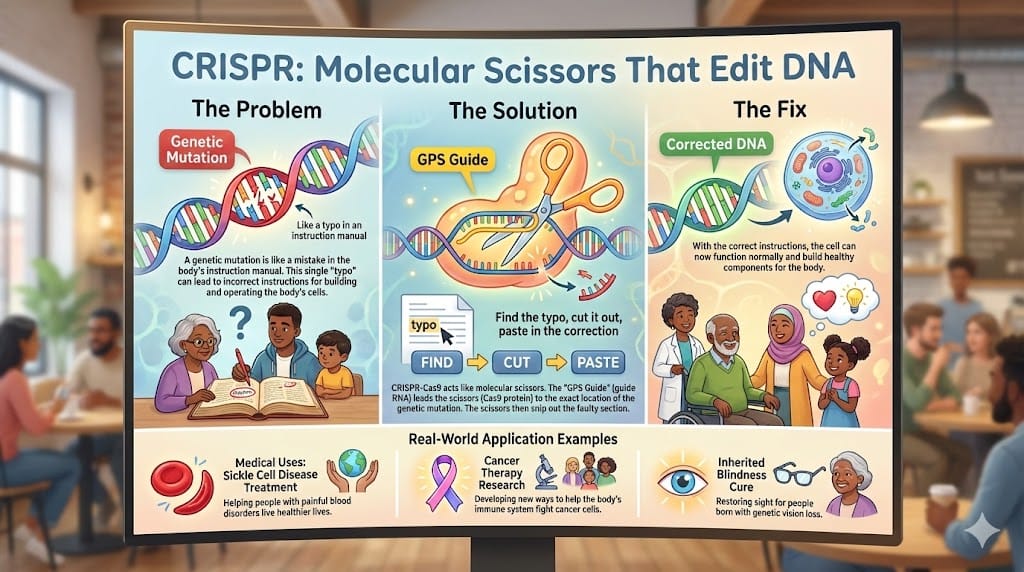
結果:一個可訪問、引人入勝的公開講座視覺效果,它使用相關類比解釋了尖端的基因技術,避免了令人望而卻步的術語,代表了不同的受眾,並激發了公眾對科學的興趣,同時保持了概念準確性。
應用 5:Podcast 封面藝術
音訊內容的視覺識別
Podcast 封面藝術為科學傳播 Podcast 提供視覺識別,出現在 Podcast 目錄、社交媒體分享和 Podcast 應用程式中,聽眾可以在其中發現新內容。儘管 Podcast 是一種音訊優先的媒體,但封面藝術是主要的發現機制,68% 的 Podcast 聽眾報告說,封面藝術會影響他們試聽新節目的決定。有效的科學 Podcast 封面必須在 1:1 的方形格式中傳達主題、語氣和品質,即使在微小的縮圖尺寸下也能保持可識別性。
傳統封面設計挑戰
小尺寸可讀性:必須在 55x55 像素的縮圖尺寸下可識別和可讀 系列一致性:在改變個別劇集封面的同時保持可識別的品牌 主題傳達:暗示科學內容,而沒有通用的圖像(燒杯、原子) 專業品質:在擁擠的 Podcast 市場中與高度製作的節目競爭 平台要求:滿足 Apple Podcasts、Spotify、Google Podcasts 的技術規範 刷新頻率:在保持系列識別的同時建立新的劇集特定封面
AI 驅動的 Podcast 藝術創作
AI 能夠快速生成專業的 Podcast 封面藝術,從而在系列品牌和劇集特定主題之間取得平衡。透過建立視覺風格指南並將其應用於各個劇集,您可以保持一致的 Podcast 識別,同時為每個劇集或系列建立新鮮的、與主題相關的封面。
Podcast 封面的關鍵要求
方形格式:1:1 的長寬比(最小 1400x1400 像素,建議 3000x3000 像素) 小尺寸易讀性:標題在縮圖尺寸下可讀 醒目的視覺品牌:立即識別的視覺識別 系列一致性:統一的調色板、排版、版面結構 主題建議:劇集特定的視覺元素 平台合規性:RGB 顏色、最小 72 DPI、JPG 或 PNG 格式
範例提示範本
Podcast cover art for science podcast episode about quantum entanglement, 1:1 square
format (3000x3000px), part of weekly science explanation podcast series "Quantum
Coffee" targeting curious general audience, consistent series branding with
episode-specific topic visualization.

Series branding elements (consistent across all episodes):
Top banner (20% height): Podcast title "QUANTUM COFFEE" in bold, modern sans-serif
font (180pt), white text on black background, small coffee cup icon integrated into
letter "O", recognizable series identifier.

Bottom banner (15% height): Episode information "EP 42: Spooky Action at a Distance"
in clean white text (90pt) on black background, guest name if applicable, date in
smaller text.

Episode-specific center section (65% height): Visual representation of quantum
entanglement concept - two photons/particles shown on opposite sides of image,
visually connected by ethereal, glowing quantum connection (purple-blue energy waves),
particles rotating in synchronized opposite directions despite distance, visual
separation showing "Lab A" and "Lab B" with large spatial gap between, mystical but
scientifically suggestive aesthetic.

Left particle in teal-green glow with rotation arrow "Spin Up", right particle in
purple-pink glow with opposite rotation arrow "Spin Down", connecting quantum
entanglement visualization shown as intertwined light waves/probability clouds
between them, Einstein quote reference "Spooky action" subtly integrated.

Background for center section: Deep space/cosmic background with subtle stars and
nebula clouds, suggesting both quantum scale and cosmic mystery, gradient from deep
blue (edges) to purple-black (center), creating depth and wonder.

Color consistency: Series palette of purple, teal, black, and white maintained,
high contrast for thumbnail visibility, text always white on dark for maximum
readability.

Visual style: Modern, sleek, slightly mysterious but not overly technical, similar
to premium science podcasts like Radiolab or Science Vs, professional production
quality, eye-catching in podcast directories, works at both 3000px (full quality)
and 55px (thumbnail) sizes.

Technical specs: RGB color space, 300 DPI for quality, no text smaller than 60pt
to ensure thumbnail readability, high contrast between text and background, saved
as both PNG (transparency) and JPG (podcast platforms).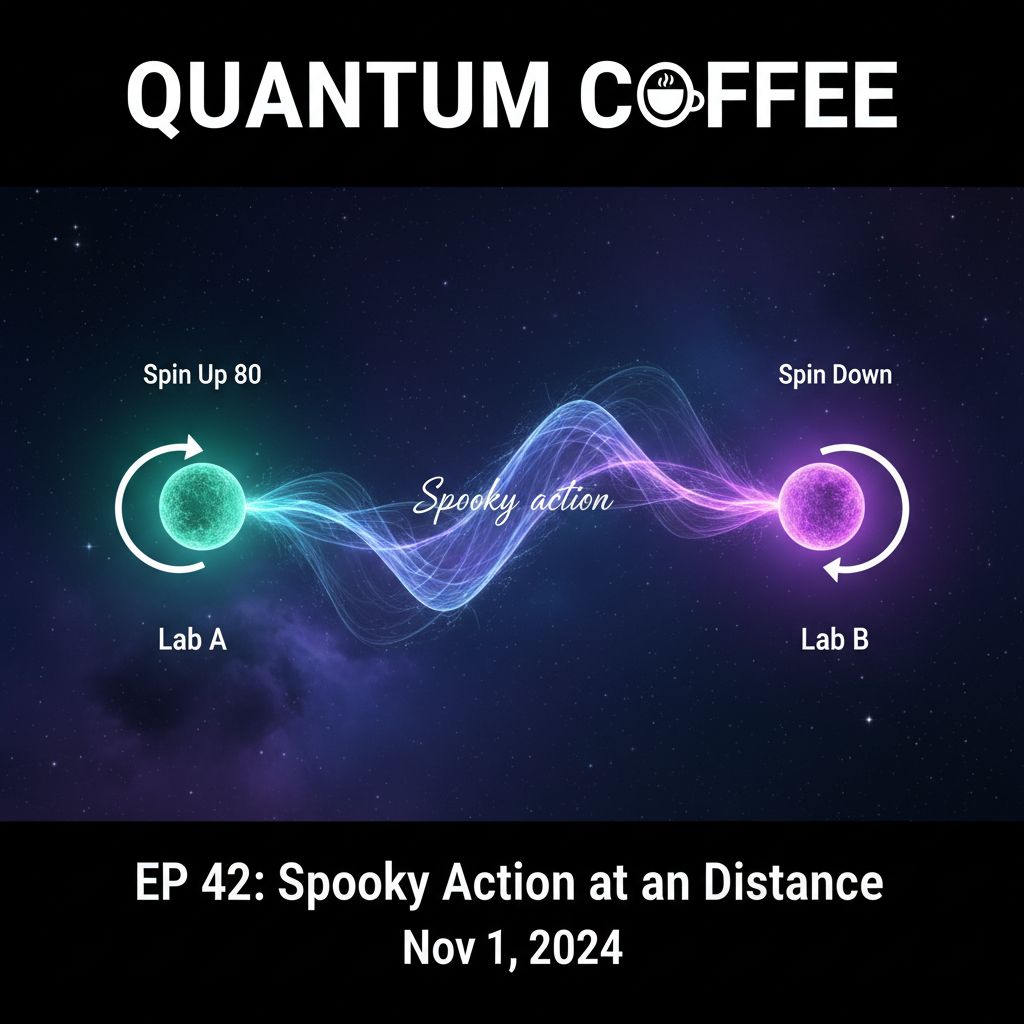
結果:專業、引人注目的 Podcast 封面藝術,透過排版和調色板保持系列品牌一致性,同時結合了劇集特定的量子物理視覺效果,針對 Podcast 目錄中的可發現性進行了優化,並且在從完整解析度到微小縮圖的所有尺寸下都可識別。
有效科學傳播視覺效果的實用技巧
現在您已經了解了五個關鍵的科學傳播應用,以下是一些基本技巧,可確保您 AI 生成的視覺效果在保持科學完整性的同時,最大限度地提高公眾參與度:
通用科學傳播檢查清單
在發布任何 AI 生成的科學傳播視覺效果之前,請驗證:
1. 準確性與可訪問性平衡
- 您是否在不引入科學不準確性的情況下進行了簡化?
- 領域專家是否可以驗證視覺效果代表了當前的科學共識?
- 簡化是否清楚地標記為類比,而不是字面意義上的表示?
- 視覺效果是否避免延續常見的科學誤解?
- 您是否諮詢了複雜主題的專家?
2. 受眾適當性
- 複雜程度是否與您的特定目標受眾相匹配?
- 您是否避免了術語,或者清楚地解釋了必要的技術術語?
- 視覺隱喻是否在文化上相關且您的受眾可以理解?
- 視覺效果是否適用於具有科學素養的觀眾和新手觀眾?
- 語氣是否適當(鼓舞人心而不聳人聽聞)?
3. 平台優化
- 長寬比是否與您的主要發布平台相匹配?
- 文字在預期的最小顯示尺寸下是否可讀?
- 您是否在行動裝置和桌上型電腦螢幕上測試了可見性?
- 檔案大小是否針對網路載入速度進行了優化?
- 顏色和對比度是否適用於不同的顯示品質?
4. 道德傳播
- 視覺效果是否避免產生誤導性暗示或誇大?
- 限制、不確定性和警告是否已適當標明?
- 科學資訊的來源是否已正確署名?
- 您是否避免為了支持預先確定的敘述而選擇性地挑選數據?
- 視覺效果是否代表了有爭議主題中的不同觀點?
5. 參與度優化
- 視覺效果是否在 1-3 秒內吸引注意力?
- 是否有清晰的視覺層次結構引導觀眾的注意力?
- 您是否包含鼓勵傳播的可分享元素?
- 視覺效果是否激發了學習更多知識的好奇心?
- 行動呼籲(訂閱、關注、了解更多)是否已清晰整合?
要避免的常見科學傳播錯誤
為了病毒式傳播而犧牲準確性:建立誤導性的簡化視覺效果,為了參與度指標而扭曲科學。始終將真實性置於點擊之上。
使用過時的科學表示:在現代理解已經發展的情況下,延續過時的模型(波耳原子、DNA 作為簡單的梯子)。與科學視覺化標準保持同步。
忽略不同的受眾:建立僅與特定人口統計產生共鳴的視覺效果。科學傳播應具有包容性,並在文化、年齡和背景方面具有可訪問性。
過度信任確定性:將新興或有爭議的科學呈現為絕對事實。傳達適當的科學不確定性和正在進行的研究問題。
忽略來源署名:未能引用研究來源或數據來源。透明度建立信任並使受眾能夠驗證。
通用庫存圖像:預設為陳詞濫調的科學視覺效果(所有生物學的 DNA 螺旋、所有物理學的原子),這些視覺效果並不能具體代表您的內容。
用於公眾參與的迭代策略
透過受眾知情的改進來優化您的科學傳播視覺效果:
初始生成:根據科學內容和目標受眾分析建立第一個版本 專家審查:讓主題專家驗證準確性並識別潛在的誤解 公眾試點測試:與不熟悉該主題的代表性受眾成員分享 理解評估:要求觀眾解釋他們僅從視覺效果中理解的內容 參與度分析:監控社交平台上的早期績效指標(分享、保存、評論) 誤解檢查:查看受眾的回應,以了解是否存在誤解的跡象 提示改進:在保持成功組件的同時,根據理解數據調整特定元素 A/B 測試:生成變體以測試同一概念的不同方法 文檔:記錄哪些有效,以供將來類似內容使用
開始建立引人入勝的科學傳播
使用 AI 驅動的插圖工具轉換您的科學傳播。免費試用 SciDraw AI,了解您可以多快地建立視覺上引人注目、科學上準確的內容,從而吸引公眾: