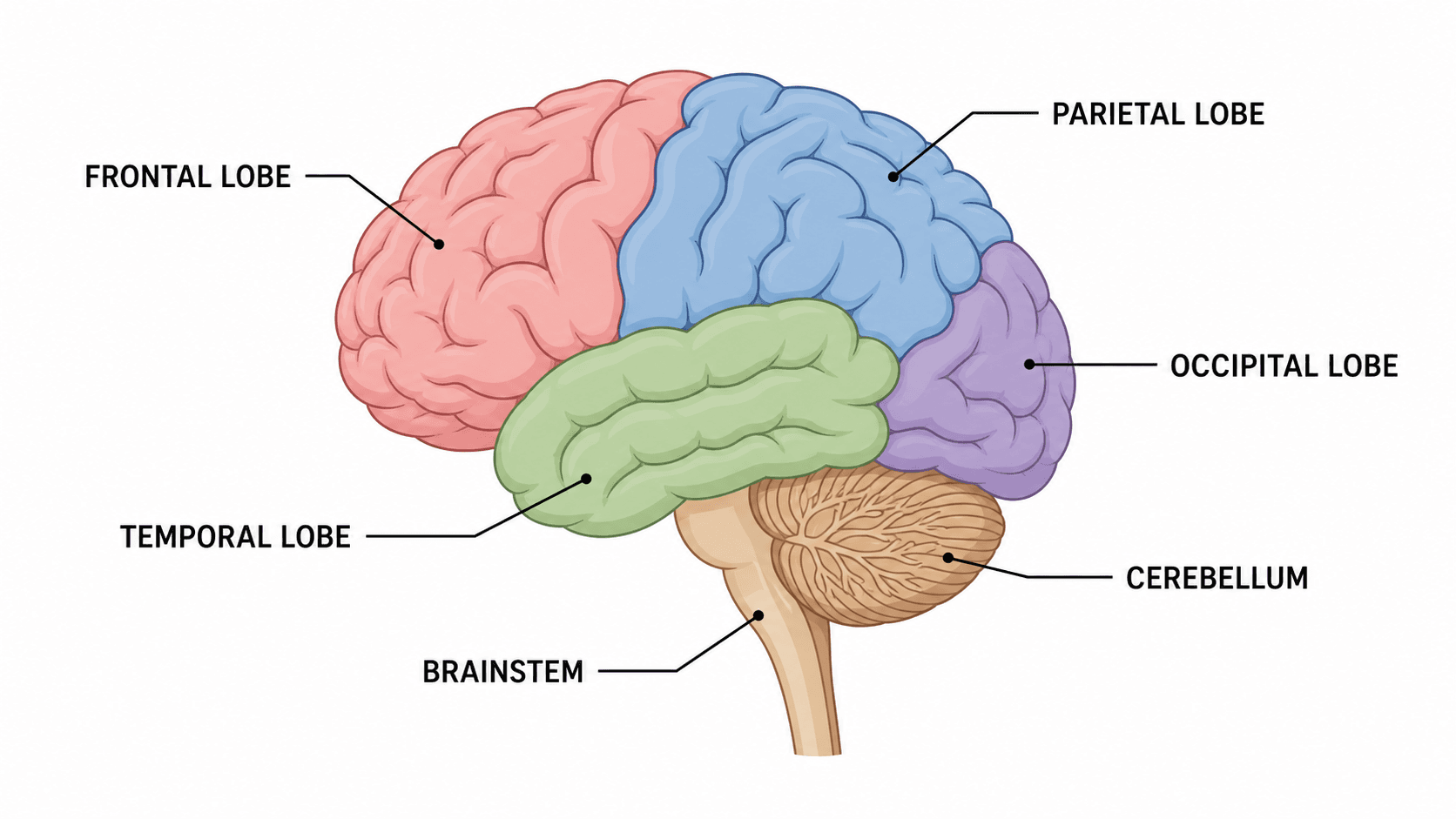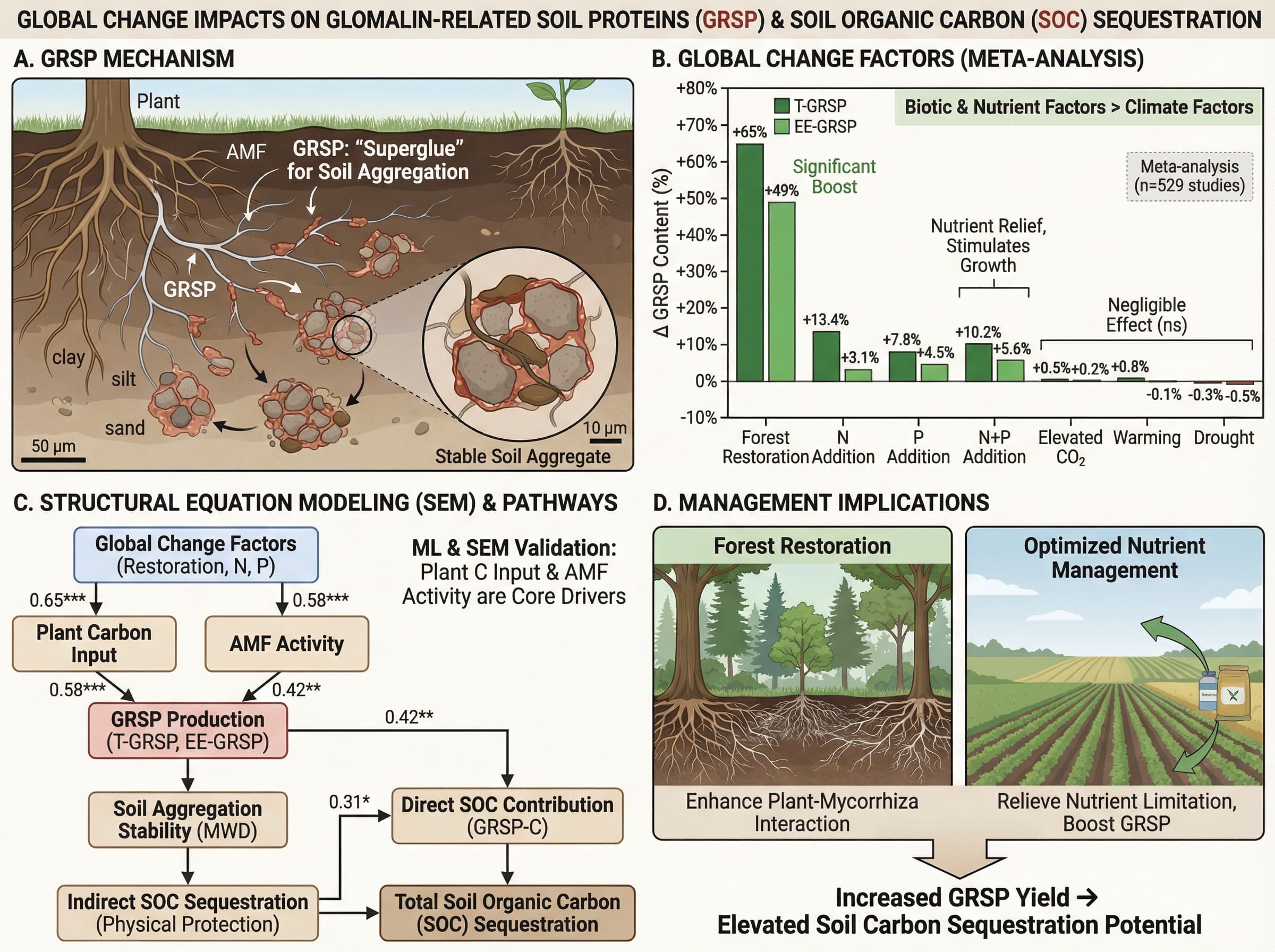
환경 과학은 토양 미생물학부터 글로벌 기후 모델링에 이르기까지 광범위한 분야를 아우르며, 모든 세부 분야에서 명확하고 설득력 있는 일러스트레이션을 필요로 합니다. Environmental Science & Technology, Soil Biology and Biochemistry, 또는 Nature Climate Change와 같은 저널에 논문을 제출할 때, 복잡한 생태학적 과정을 한눈에 전달할 수 있는 도표가 필수적입니다.
SciDraw AI에서 생성된 300개 이상의 환경 테마 일러스트레이션을 분석한 결과, 토양 과정, 생지화학적 순환, 수처리 시스템, 기후 영향 도표가 연구자들에게 가장 많이 필요한 것으로 나타났습니다. 이 가이드에서는 실제 사례와 정제된 프롬프트를 사용하여 각 유형의 일러스트레이션을 만드는 방법을 보여줍니다.
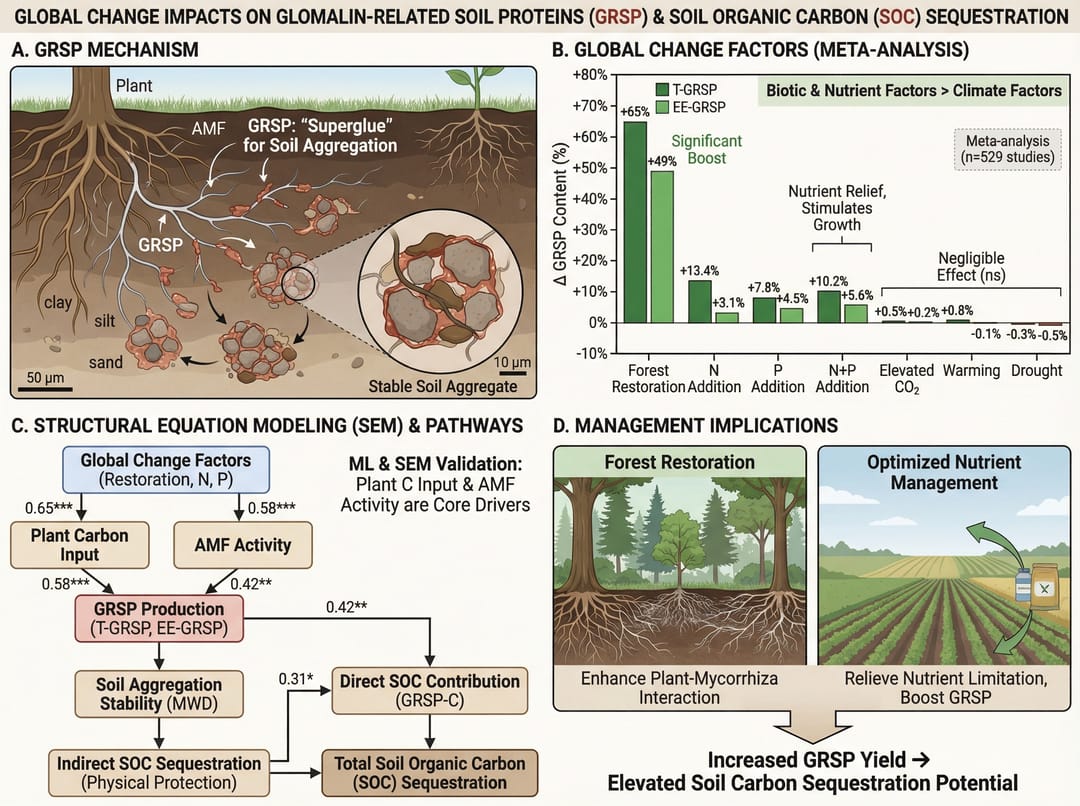 글로말린 관련 토양 단백질 및 유기 탄소 안정성 메커니즘 — 실제 연구자가 생성한 일러스트레이션
환경 연구자들이 주로 그리는 내용
302개의 실제 환경 테마 프롬프트 키워드 분석에 따르면, 주요 주제는 다음과 같습니다:
- 토양 과학 (22%가 "soil" 언급, "microbial"은 10%)
- 수계 시스템 (23%가 "water" 언급)
- 탄소 순환 (13%가 "carbon" 언급)
- 환경 메커니즘 (14%가 "mechanism" 언급)
- 식물-토양 상호작용 (10%가 "plant" 언급)
- 오염 및 복원 (자주 등장하는 용어: "pollutants", "contamination", "treatment")
토양 과학 일러스트레이션
토양 과학은 환경 일러스트레이션에서 가장 큰 비중을 차지하는 주제로, 균근 네트워크부터 바이오차 개량에 이르기까지 모든 것을 다룹니다.
토양 유기 탄소 안정화
Glomalin-related soil protein (GRSP) mechanism illustration.
GRSP as a key metabolite secreted by arbuscular mycorrhizal fungi,
known as "super glue" for maintaining soil organic carbon stability.
Show: mycorrhizal hyphae in rhizosphere →
GRSP secretion onto soil particle surfaces →
formation of soil aggregates (micro and macro) →
physical protection of organic carbon within aggregates.
Under climate change: elevated CO₂ and temperature effects
on GRSP production rates and aggregate stability.
Soil biology journal style, cross-sectional soil view.
현대적 센서를 이용한 토양 색상 분석
Research illustration for soil property analysis
using Nix Pro color sensor as modern alternative
to conventional manual methods.
Study design: 150 soil samples analyzed.
Show: field sampling → sensor measurement (RGB/L*a*b*) →
machine learning models (Random Forest, SVM) →
predicted soil properties (organic matter, moisture, pH).
Comparison panel: traditional lab methods vs. sensor-based.
Precision agriculture journal style.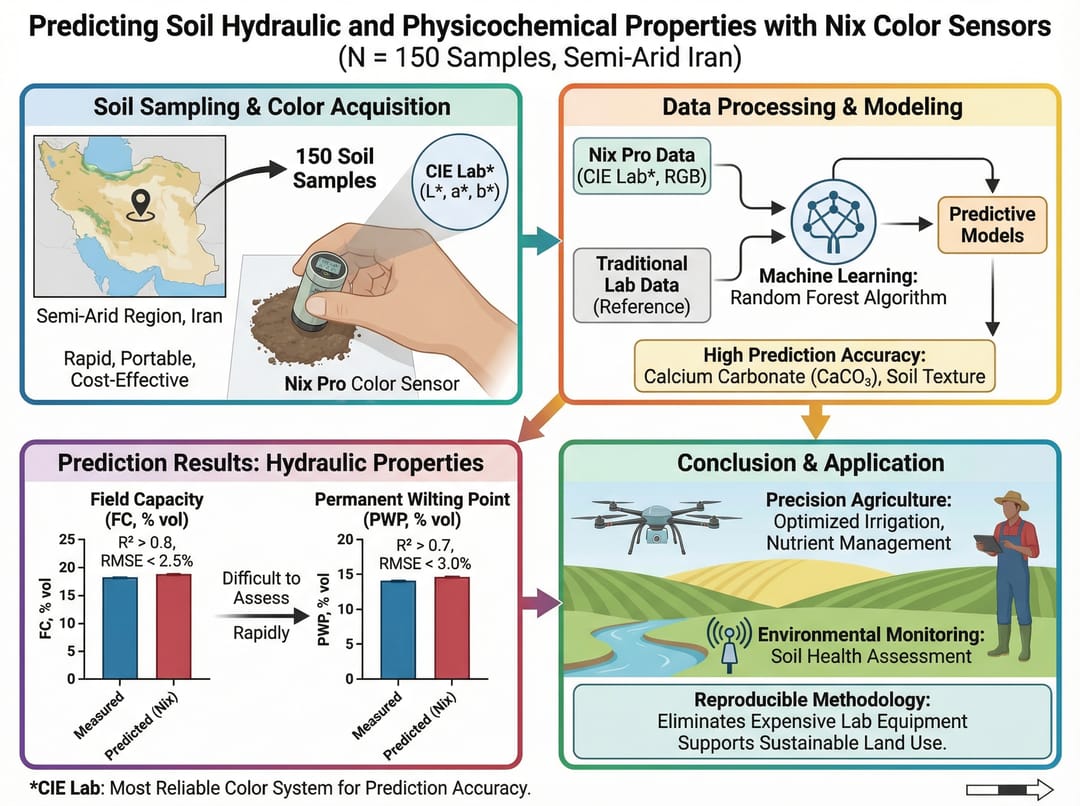 토양 특성 분석을 위한 Nix Pro 컬러 센서 — 방법론 프레임워크
토양 시스템 내의 바이오차
Biochar layer structure illustration.
Show gray, undulating biochar structure
embedded within soil profile.
Porous carbon matrix with micropores labeled,
nutrient adsorption sites (NH₄⁺, PO₄³⁻) indicated,
water retention capacity in pore spaces,
microbial colonization on biochar surfaces.
Soil amendment cross-sectional view,
environmental engineering journal style.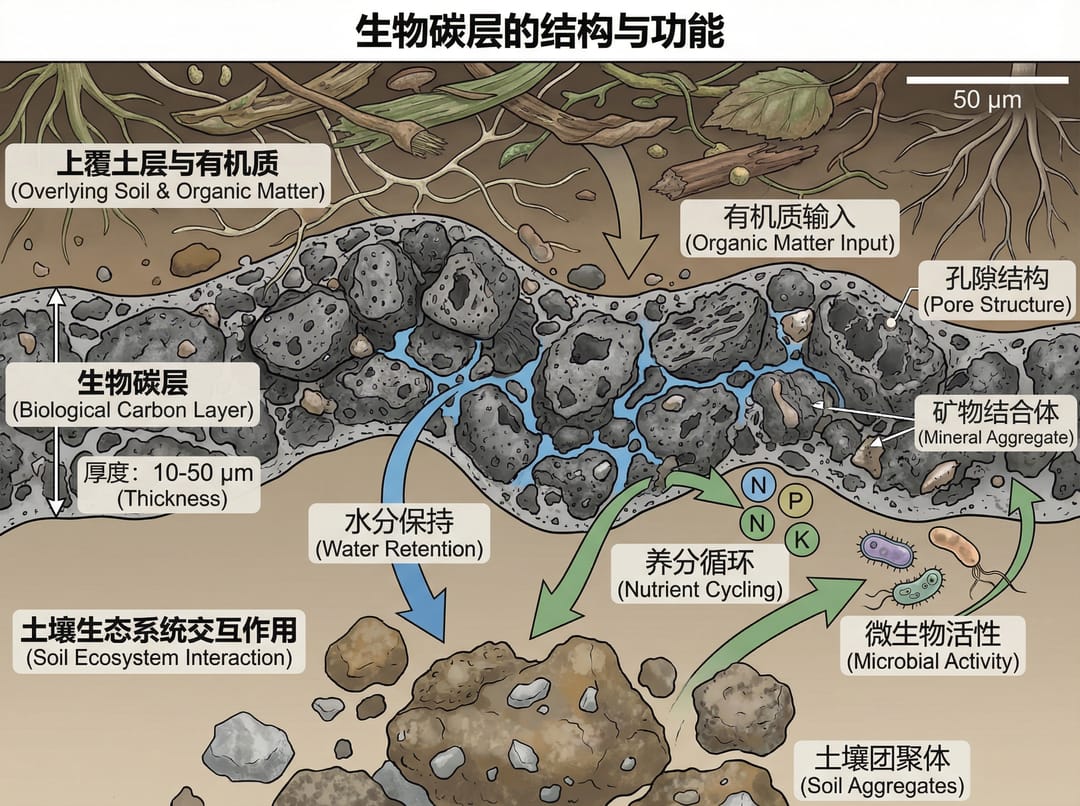 토양 프로필 내 바이오차 층의 특성
생지화학적 순환
탄소 및 질소 순환은 환경 과학 교육과 연구 논문 발표 모두에서 기본이 되는 요소입니다.
탄소 순환 생태계 도표
High-contrast, black and white diagram of the carbon cycle
suitable for photocopying.
Depict a moose, balsam fir, and aquatic plants in a lake,
alongside a volcano.
Illustrate: photosynthesis (CO₂ uptake by plants),
respiration (CO₂ release by animals),
decomposition in soil,
volcanic outgassing,
ocean-atmosphere CO₂ exchange,
fossil fuel formation pathways.
Arrows with labels for flux rates.
Ecology textbook illustration style.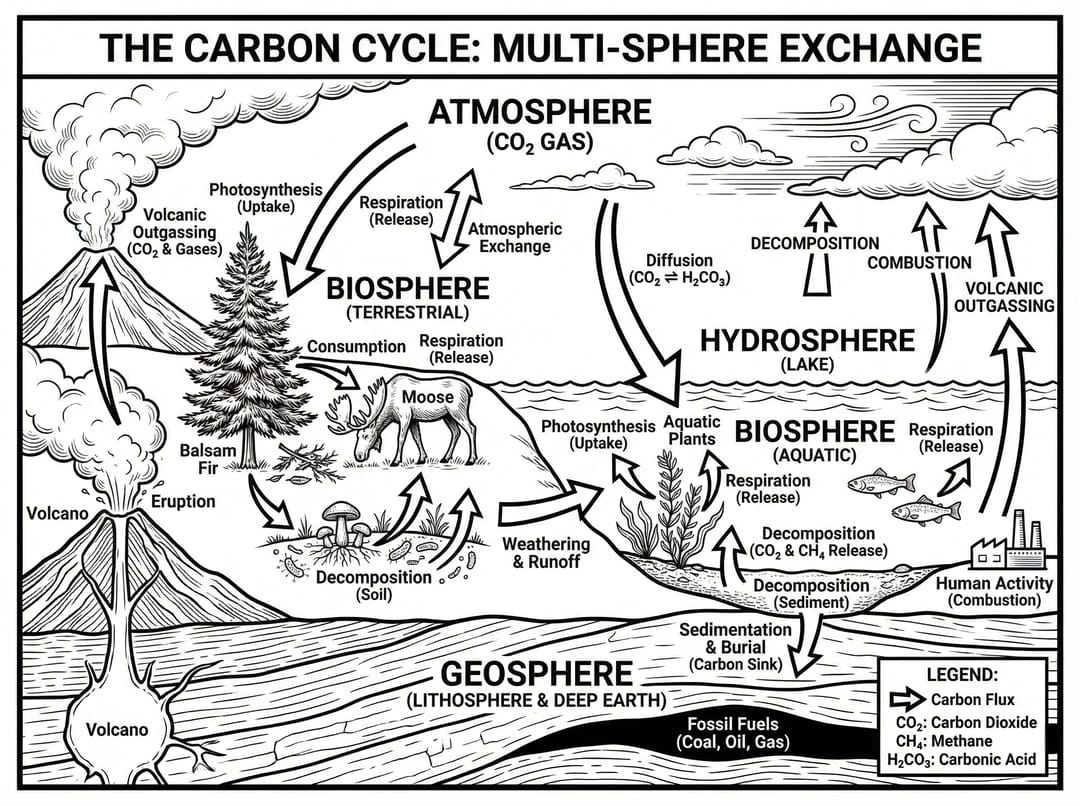 북방림 구성 요소를 포함한 탄소 순환 생태계 도표
질소 순환
Nitrogen cycle diagram incorporating
a moose and balsam fir as biotic components.
Show: atmospheric N₂ fixation (biological and lightning),
nitrification (NH₄⁺ → NO₂⁻ → NO₃⁻),
denitrification (NO₃⁻ → N₂O → N₂),
ammonification of organic N,
plant uptake and animal consumption,
leaching to groundwater.
Bacterial species labeled at key transformation steps.
Black and white suitable for photocopying.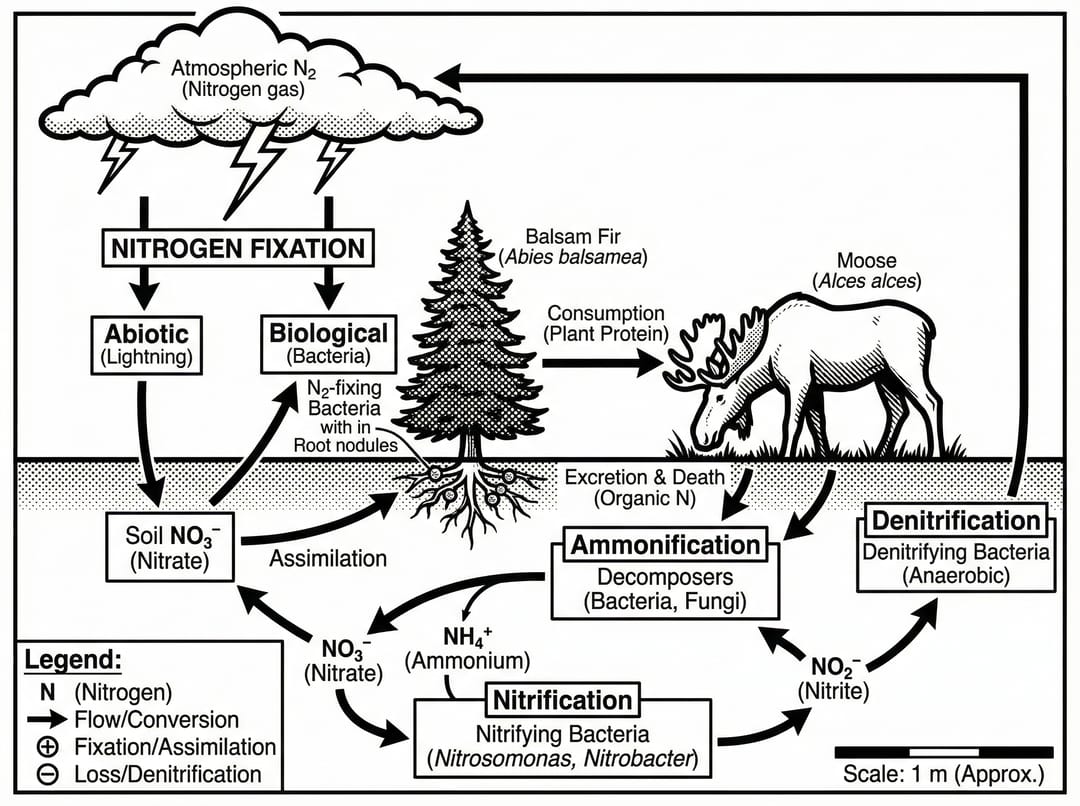 북방 생태계 구성 요소를 포함한 질소 순환
수처리 및 오염
수원에서의 플라스틱 제거
Flowchart illustrating process for plastic removal
from water sources (white background, line images):
1. Site Selection: major drainage outlets,
wastewater discharge points, stormwater drains
2. Sampling and Analysis: microplastic quantification
3. Treatment System Design: filtration stages
4. Implementation: boom barriers, filtration units
5. Monitoring: before/after comparison metrics
Sequential flowchart with icons at each step.
Environmental engineering journal style.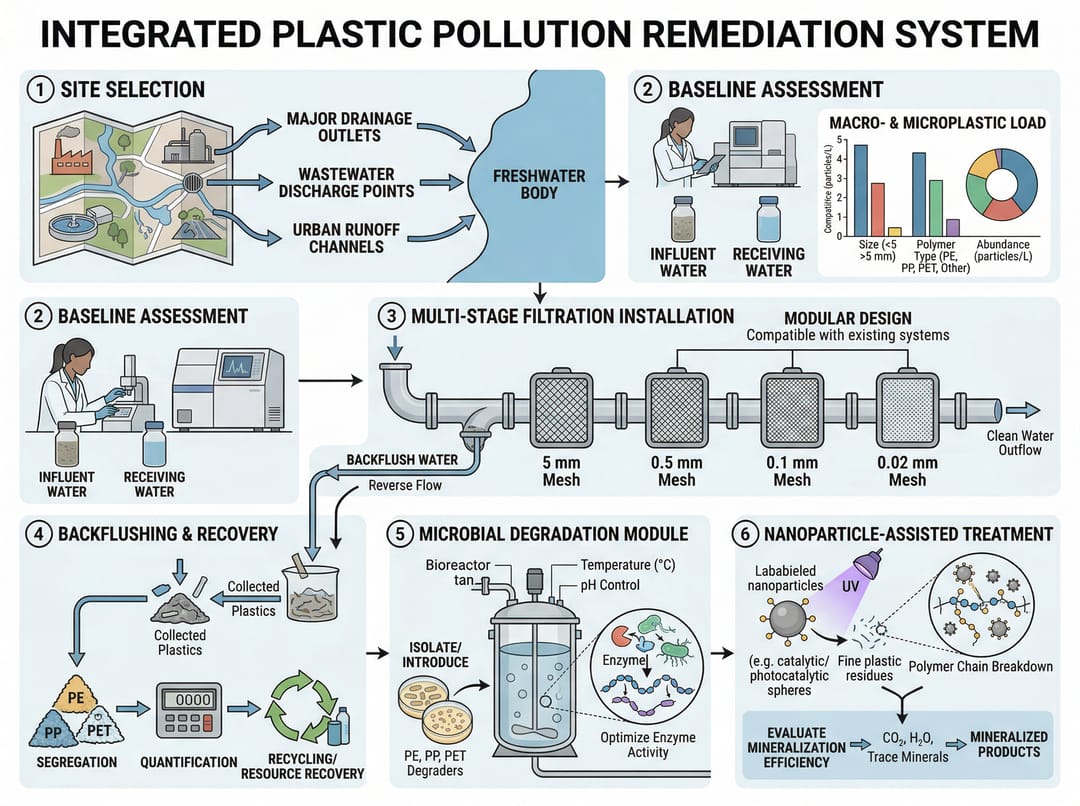 수원에서의 플라스틱 제거 과정 — 순차적 워크플로우
석탄 화력 발전소 오염 물질 경로
Operation of coal-fired power plants and pollutant pathways
into river ecosystems.
Show: wastewater discharge from coal combustion facilities,
waste landfill leachate pathways,
atmospheric deposition of particulates,
pollutant transport through soil to groundwater,
bioaccumulation in aquatic food chain.
Multiple entry points converging on river system.
Environmental impact assessment style,
suitable for Environmental Science & Technology journal.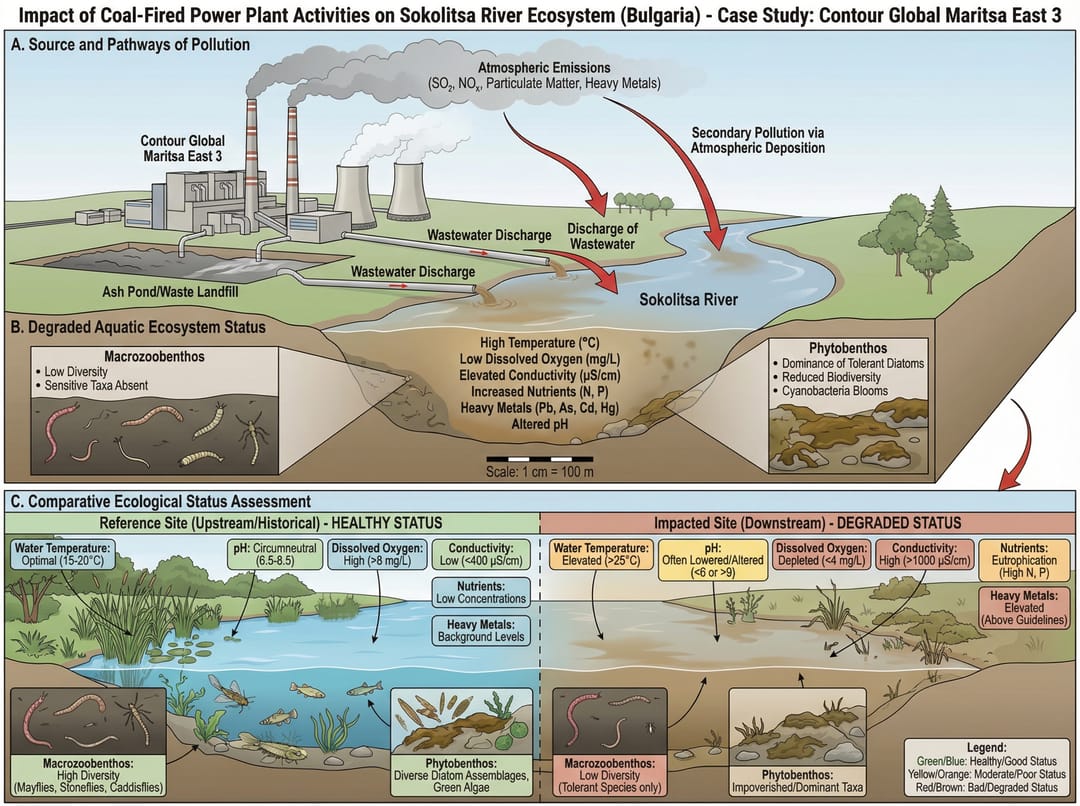 석탄 화력 발전소 오염 물질의 하천 생태계 유입 경로
기후 및 생태계 영향
기후 변화와 식량 안보
Highlights visualization for climate change
and food security research in Africa.
Key threats: increasing temperatures,
inconsistent rainfall patterns, extreme weather events.
Show: climate drivers (top) →
agricultural impacts (crop yield decline, livestock stress) →
food security outcomes (malnutrition, economic loss) →
adaptation strategies (drought-resistant crops, irrigation).
Vulnerable populations highlighted.
Infographic style for policy communication.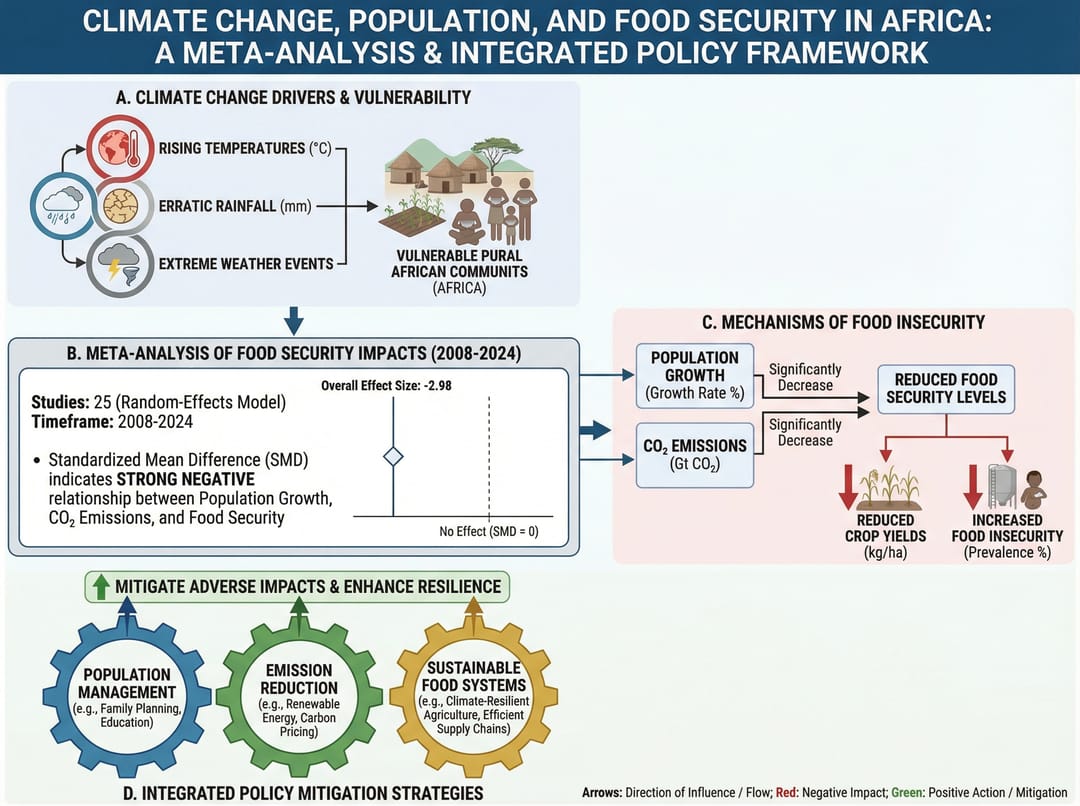 기후 변화가 아프리카 식량 안보에 미치는 영향
CO₂ 주입 및 지질 역학
Illustration depicting the damage mechanism
of high-temperature CO₂ injection into coal rock.
Show: injection well and CO₂ flow pathway,
thermomechanical stress on coal matrix,
fracture propagation patterns,
mineral dissolution and pore structure changes,
permeability enhancement zones.
Cross-sectional geological view with depth indicators.
Energy geoscience journal style.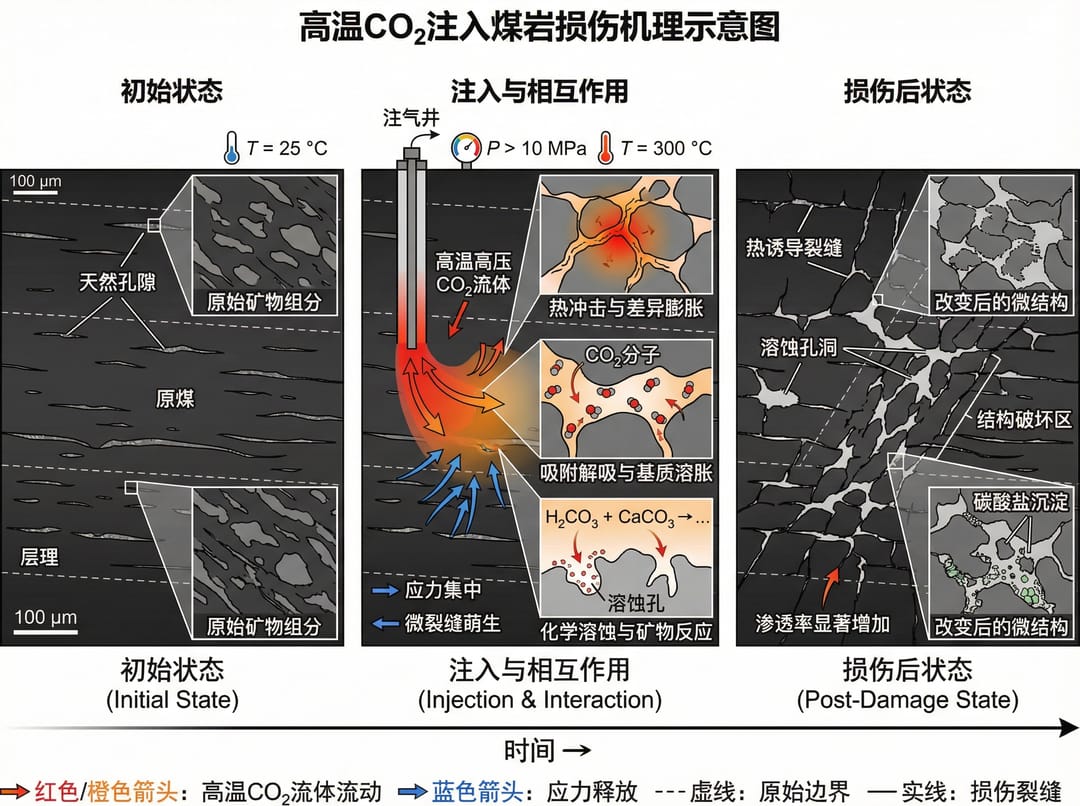 석탄암 내 고온 CO₂ 주입의 손상 메커니즘
연구 프레임워크 도표
다층 연구 로드맵
환경 연구는 종종 이론, 방법론, 결과를 연결하는 다층 프레임워크 도표를 필요로 합니다.
Three-layer logical research framework,
landscape orientation, technical roadmap style.
Blue-green color scheme.
Logic flow: "Background Analysis" →
"Methodology Development" → "Application & Validation."
Layer 1: Problem identification and literature review
Layer 2: Experimental design and data collection
Layer 3: Model development and prediction
Each layer with 3-4 sub-components connected by arrows.
SCI paper technical roadmap style.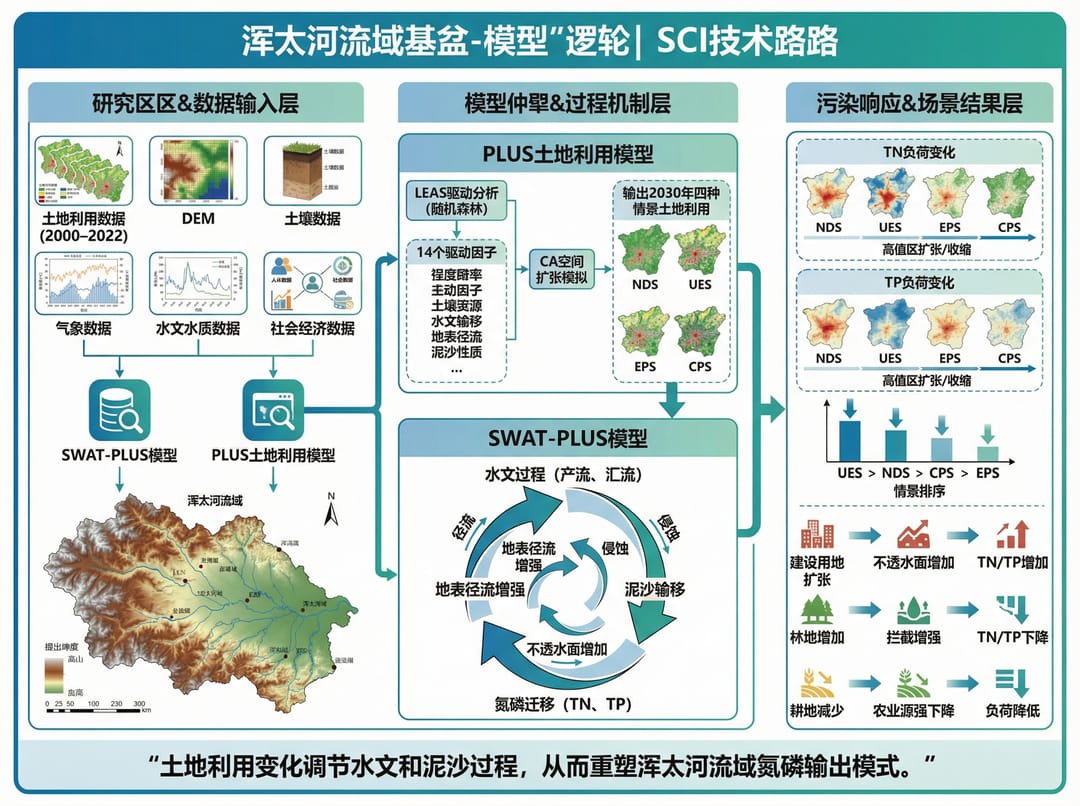 청록색 배색의 3층 연구 프레임워크
체계적 문헌 고찰 프로토콜
Systematic Review Protocol using SPICE Framework.
Research objectives for Knowledge Management
in Subtropical Forestry.
Portrait or square layout.
Show: Setting → Perspective → Intervention →
Comparison → Evaluation.
Search strategy: databases (Web of Science, Scopus, CNKI),
inclusion/exclusion criteria flowchart,
PRISMA flow diagram integration.
Forestry and environmental management journal style.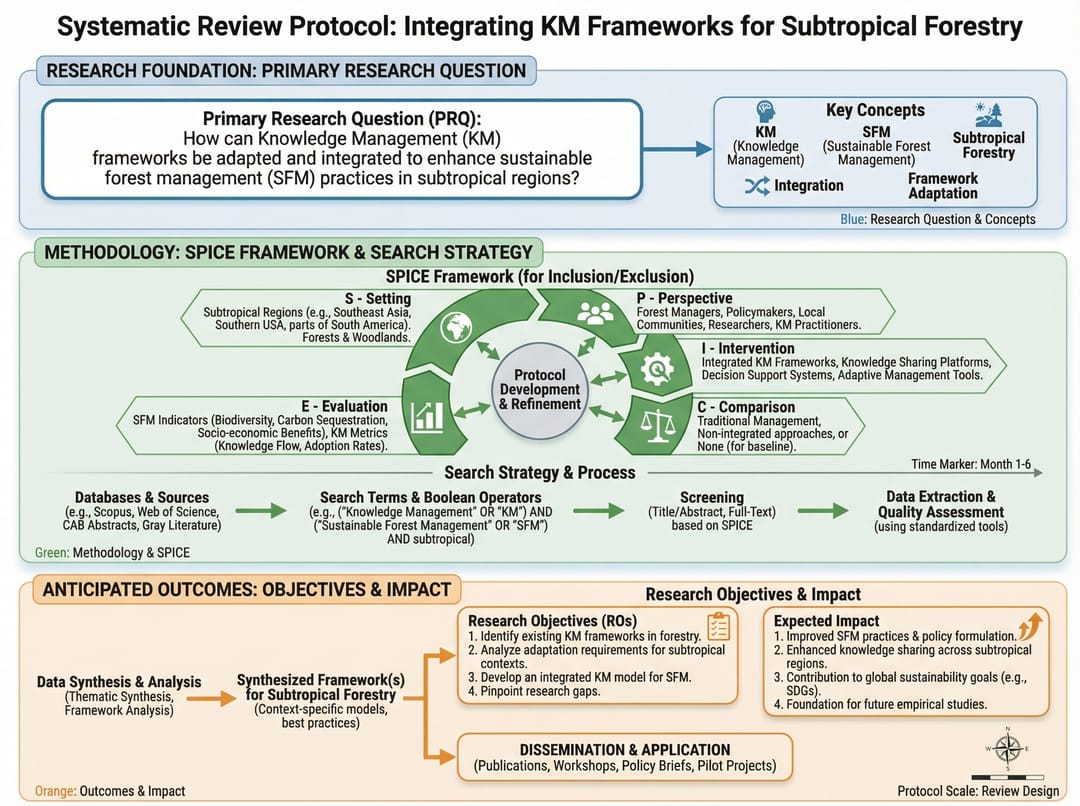 아열대 임업 연구를 위한 SPICE 프레임워크 체계적 문헌 고찰 프로토콜
환경 과학을 위한 프롬프트 작성 팁
효과적인 환경 프롬프트의 구성 요소
302개의 환경 프롬프트를 분석한 결과, 가장 성공적인 프롬프트에는 다음이 포함됩니다:
| 요소 | 빈도 | 예시 |
|---|---|---|
| 구획 라벨 (Compartment labels) | 22% | "soil", "water", "atmosphere" |
| 과정 명칭 (Process names) | 17% | "nitrification", "photosynthesis" |
| 규모 지표 (Scale indicators) | 12% | "ecosystem level", "molecular scale" |
| 흐름 방향 (Flux directions) | 14% | arrows, "leading to", "resulting in" |
| 종/생물 (Species/organisms) | 10% | "mycorrhizal fungi", "moose", "balsam fir" |
성공적인 프롬프트의 공통 패턴
- "Schematic diagram illustrating" — 가장 흔한 시작 문구 (20회 이상 등장)
- "This study" — 일러스트레이션을 특정 연구와 연결 (37회 등장)
- 교차 구획 연결 — 대기-토양-수계 상호작용 표시
- 전/후 비교 — 처리 효과, 계절적 변화
- 머신러닝 통합 — 환경 모델링에서 점점 더 흔해지는 추세
피해야 할 사항
- 공간적 맥락 누락: 항상 지상부와 지하부를 구분하여 표시하세요.
- 지나치게 단순화된 순환: 적어도 주요 변환 단계는 포함해야 합니다.
- 규모 참조 부재: 독자가 분자, 현장, 또는 글로벌 규모 중 무엇을 보고 있는지 이해할 수 있어야 합니다.
- 피드백 루프 망각: 환경 시스템은 본질적으로 서로 연결되어 있습니다.
환경 과학 일러스트레이션 만들기 시작하기
환경 연구 시각화를 혁신해 보세요:
- SciDraw AI Drawing을 방문하세요.
- Mechanism Illustration 또는 Experimental Workflow 템플릿을 선택하세요.
- 환경 시스템, 과정 및 구획을 설명하세요.
- 논문에 바로 사용할 수 있는 고품질 도표를 생성하세요.
토양 탄소 역학부터 기후 영향 평가까지, AI는 복잡한 환경 시스템을 명확하고 정밀하게 전달할 수 있도록 도와줍니다.
관련 기사: