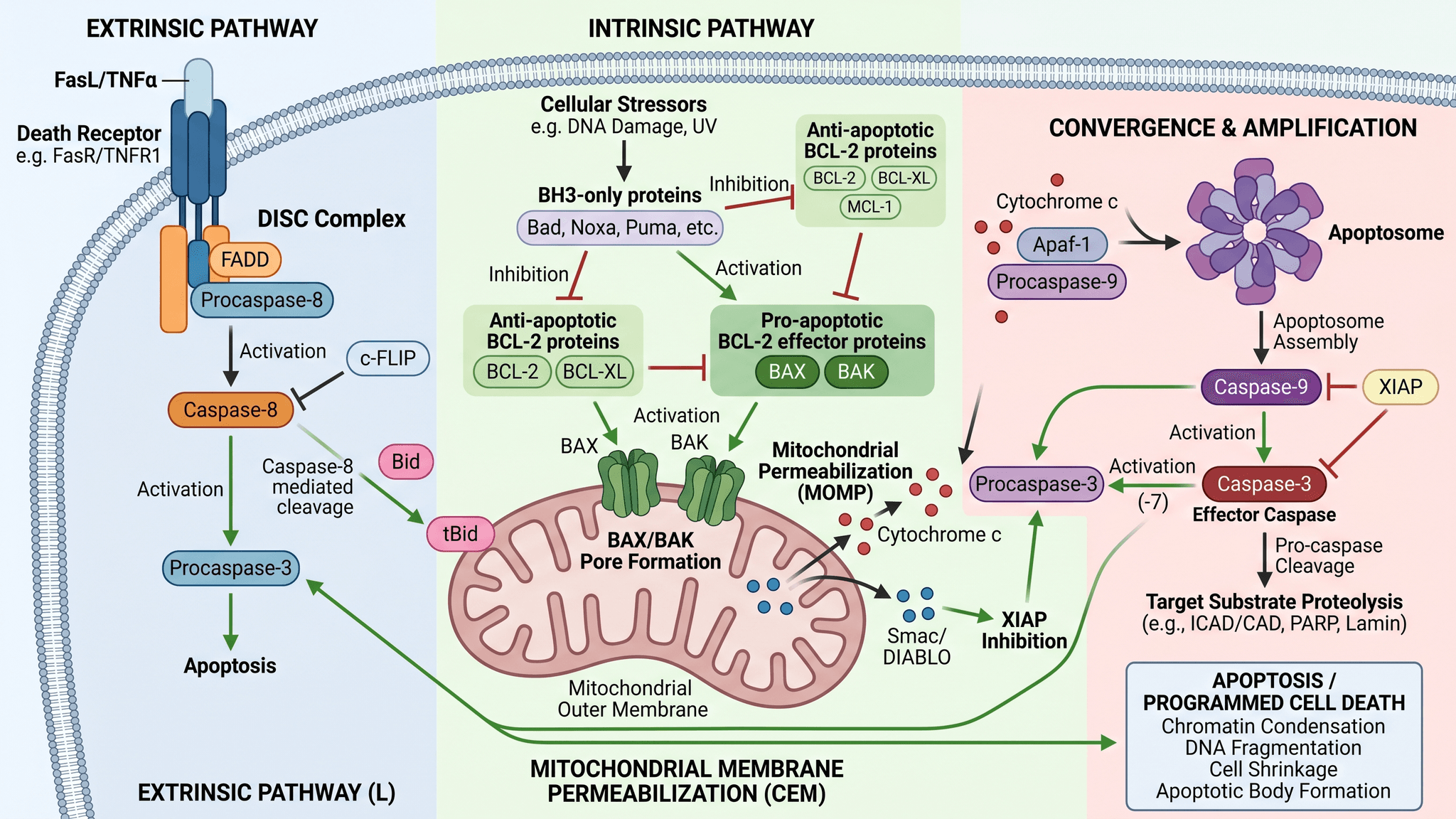
AI 科学イラストの時代において、出力の品質は入力の品質に完全に依存します。洗練されたプロンプトは、出版に耐える図と使い物にならない凡庸な画像の差を生み出します。
徹底的なテストと最適化を通じて、Nature、Science、Cell などのジャーナルに適した高品質科学イラストを安定して生み出す「8 つの中核原則」を特定しました。このガイドでは、プロフェッショナルな学術図を生成するプロンプトの書き方を正確に解説します。
なぜ良いプロンプトが重要なのか
凡庸な科学イラストと優れた科学イラストの違いは、プロンプトの具体性に尽きます。「細胞図を作る」といった一般的なプロンプトは、一般的な結果しか生みません。明確なパラメータ、ラベル、文脈を含む具体的なプロンプトは、出版品質の図を生成します。
学ぶこと:
- 効果的な AI プロンプトのための 8 つの実証済み原則
- 完全なプロンプトテンプレートを含む実例
- 避けるべきよくある間違い
- プロンプト品質のためのクイックチェックリスト
AI 生成科学イラストを変革する原則に飛び込みましょう。
原則 1: アスペクト比を正確に指定する
なぜ重要か: 異なる出版フォーマットは異なる画像寸法を要求します。ジャーナルカバーはポートレート向き(3:4)を必要とし、TOC グラフィックはランドスケープ(4:3)が最適で、図パネルは 16:9 がよく使われます。
適用方法: プロンプトに aspect-[width/height] 形式または具体的な寸法でアスペクト比仕様を常に含めます。
プロンプト例:
Multi-panel statistical analysis figure for clinical trial, 4:3 landscape format,
2×2 grid layout showing "A. Kaplan-Meier Survival Curve", "B. Forest Plot Meta-Analysis",
"C. Violin Plot Biomarkers", "D. ROC Curve AUC=0.89", sample size "n=324" labeled,
confidence intervals "95% CI" visible, p-values "*p<0.05, **p<0.01, ***p<0.001" annotated,
color-coded groups "Treatment vs Control", professional medical journal figure style,
clean white background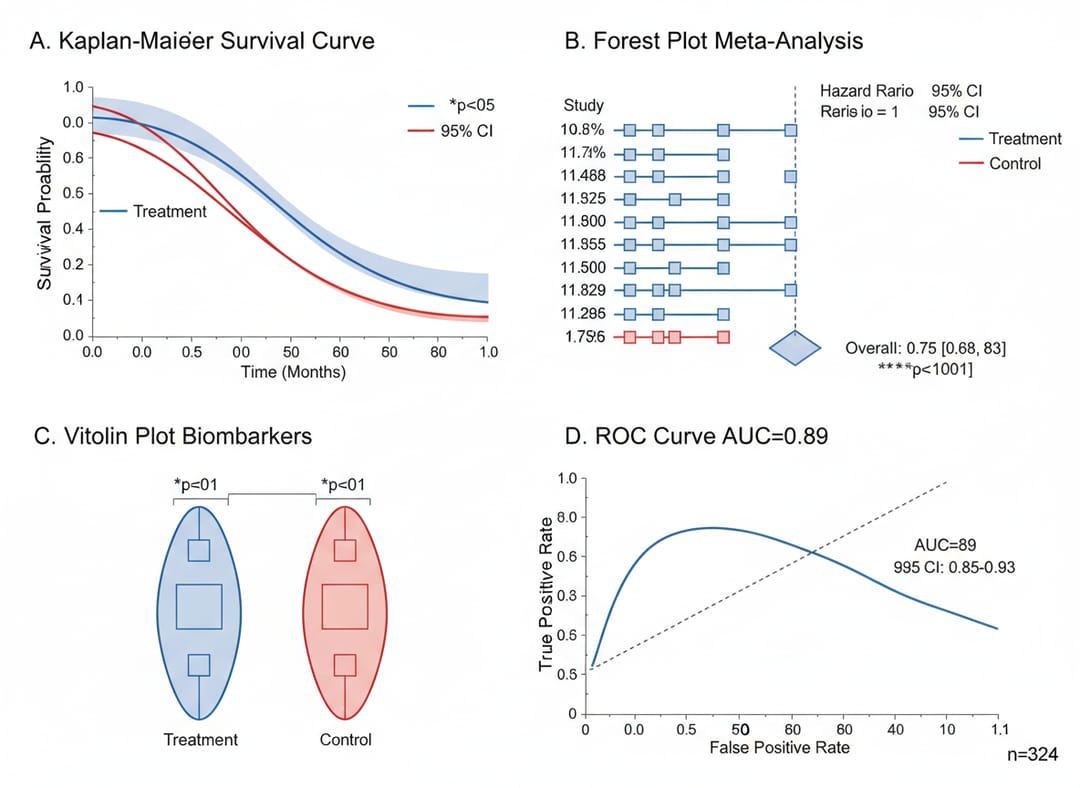
要約: ランドスケープ図には 4:3、ジャーナルカバーには 3:4 または 9:16、ワイドプレゼンテーションには 16:9 を指定します。
原則 2: コンテンツがフレームを埋めるようにする
なぜ重要か: 空のスペースは貴重な図の領域を無駄にします。科学ジャーナルは、明瞭さを保ちながらコンテンツを最大化する高密度情報図を好みます。
適用方法: プロンプトに「filling entire frame」「no empty space」「edge-to-edge」「dense layout」「comprehensive」といったキーワードを使います。
プロンプト例:
Comprehensive metabolic pathway network diagram, 4:3 landscape, dense interconnected
pathways filling entire frame, glycolysis pathway left side labeled "Glucose→Pyruvate,
ATP+2, NADH+2", TCA cycle center with "Citric Acid Cycle, 8 steps", electron transport
chain right showing "Complex I-IV, ATP Synthase", amino acid metabolism branches,
lipid pathways connected, enzyme names labeled "Hexokinase, Phosphofructokinase,
Citrate Synthase", metabolite structures shown, energy values "ΔG°" marked, color-coded
pathways (blue=carbohydrate, red=lipid, green=protein), no empty space, biochemistry
textbook style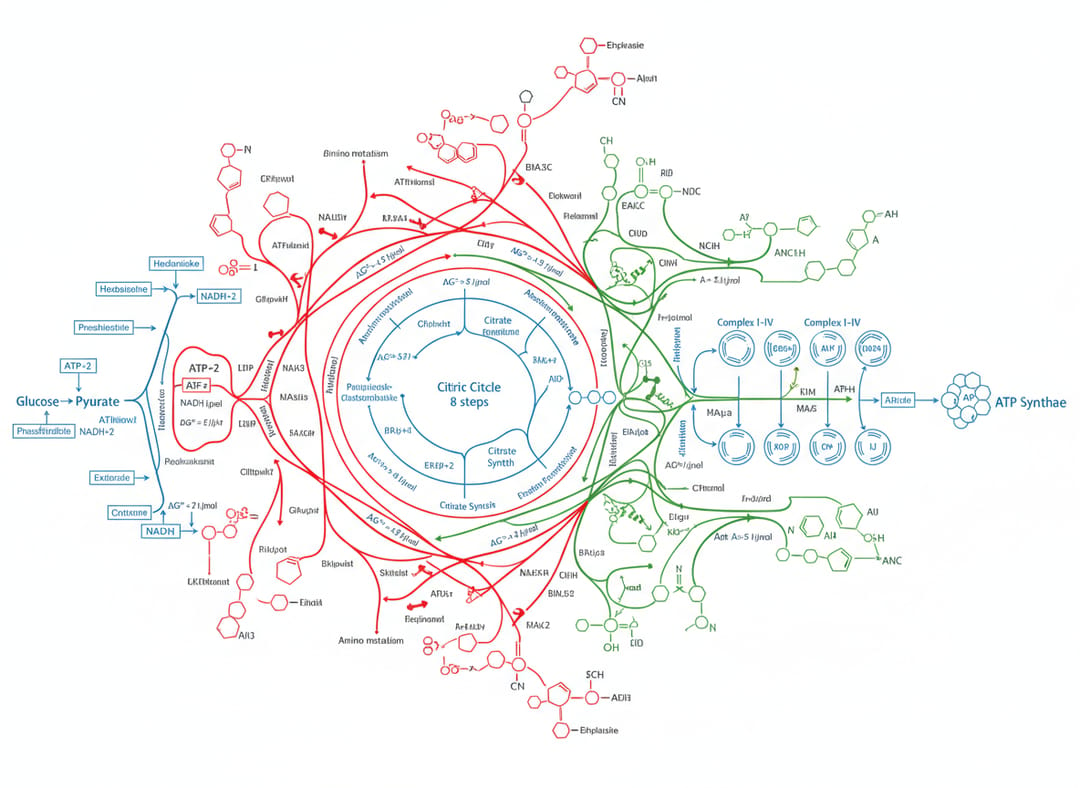
要約: 画像のすべての領域にコンテンツを記述することで、大きな空白背景を避けます。
原則 3: 具体的な英語学術ラベルを使う
なぜ重要か: 「protein A」や「molecule」のような曖昧なラベルは信頼性を低下させます。適切な単位を伴う実際の科学用語は図を出版可能にします。
適用方法: 具体的な名前、測定値、単位、統計記号を英語で含めます。標準略語(μm, kDa, mM, °C など)を使います。
プロンプト例:
Plant cell cross-section illustration, 4:3 horizontal composition, detailed organelles
with English labels "Chloroplast", "Mitochondria", "Cell Wall", "Nucleus", "Vacuole",
"Endoplasmic Reticulum", "Golgi Apparatus", cutaway view showing internal structures,
magnification "×15,000" noted, scale bar "5 μm", biology textbook style with clear
colors (green chloroplasts, purple nucleus), educational scientific illustration,
high detail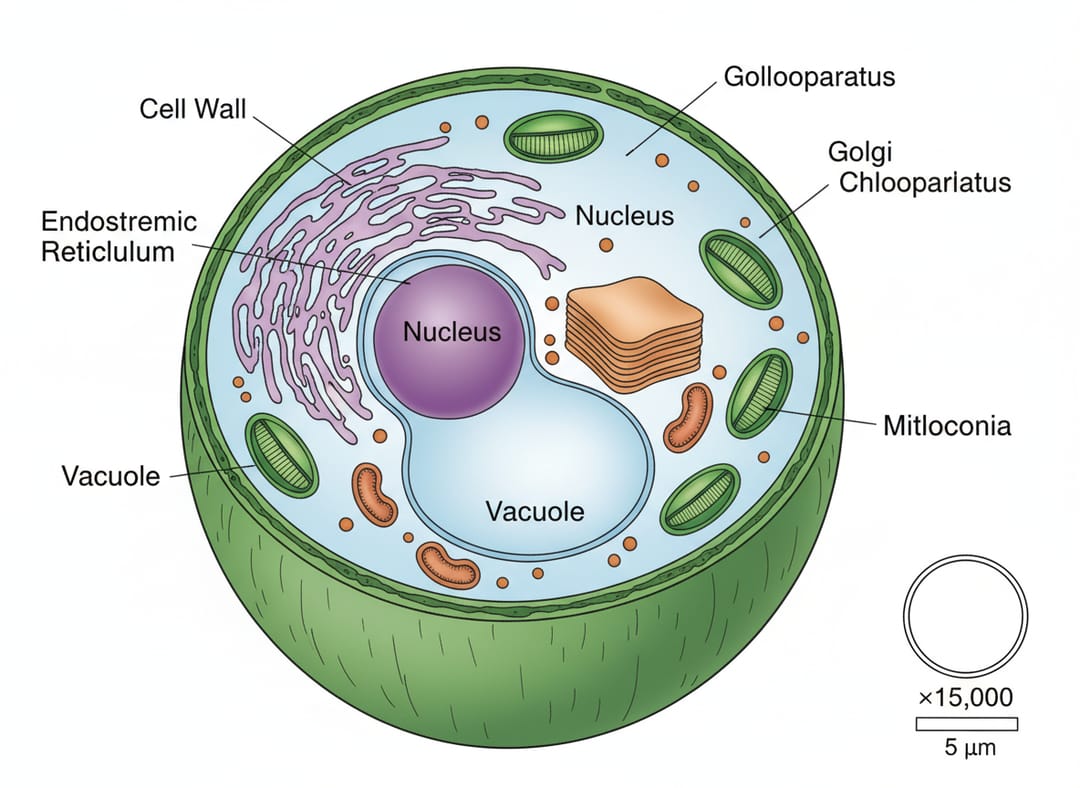
要約: 常に正確な測定値(50 μm、「小さい」ではない)、統計値(p<0.001、「有意」ではない)、適切な科学命名法を指定します。
原則 4: 明確な応用シナリオを定義する
なぜ重要か: 異なる出版文脈は異なるビジュアルスタイルを要求します。Nature カバーは芸術的な工夫を、メソッド図は技術的な明瞭さを必要とします。
適用方法: 意図する用途を明示的に述べます:「Nature journal cover」「TOC graphical abstract」「experimental workflow diagram」「supplementary figure」など。
プロンプト例:
Nature journal cover design showing cancer immunotherapy mechanism, T-cell attacking
tumor cell in center, glowing CAR-T receptor labeled "CAR-T Cell", tumor antigens
marked "CD19", cytokines arrows labeled "IL-2, IFN-γ", deep blue medical background,
professional scientific illustration, labels in white sans-serif font,
"Volume 625 | Issue 7993" text, ultra-detailed, Nature magazine style, 3:4 portrait format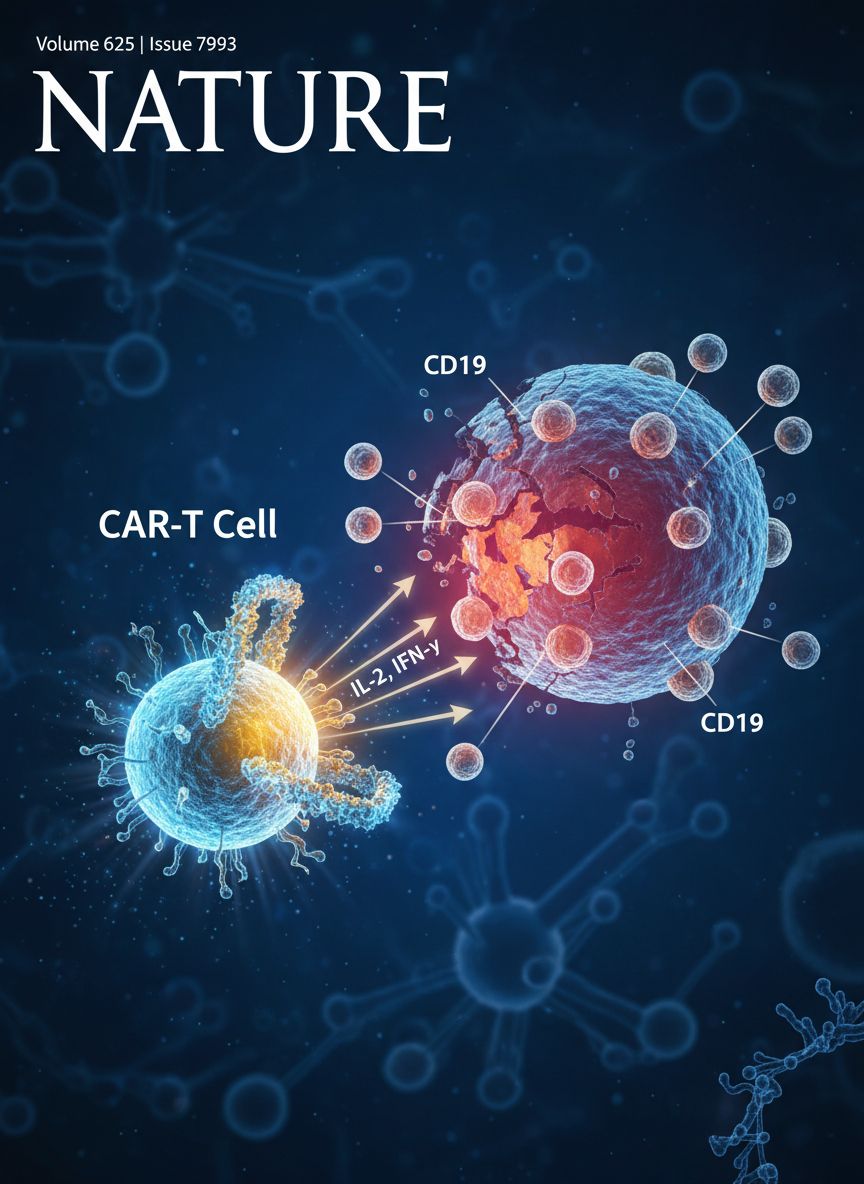
要約: ビジュアルスタルをターゲット出版フォーマットに合わせます—カバーは芸術的、メソッドは技術的、TOC は概念的です。
原則 5: 学術命名規則に従う
なぜ重要か: 正確な科学用語を使うことは厳密さを示し、図を査読者と読者が直ちに理解できるようにします。
適用方法: 適切な遺伝子名(イタリック表記 TP53)、タンパク質命名法(CD8+, HSP70)、化学式(H₂O, CO₂)、標準略語を使います。
プロンプト例:
CRISPR-Cas9 workflow diagram with 4 sequential steps connected by arrows, labeled
"1. sgRNA Design", "2. Plasmid Construction", "3. Cell Transfection", "4. Genotype
Verification", each step shows detailed illustration, gene names "TP53, BRCA1, KRAS"
visible, timeline "Day 0, 7, 14, 21" marked, icons for lab equipment, modern flat
design with blue-purple gradient, annotations in Arial font, 4:3 landscape format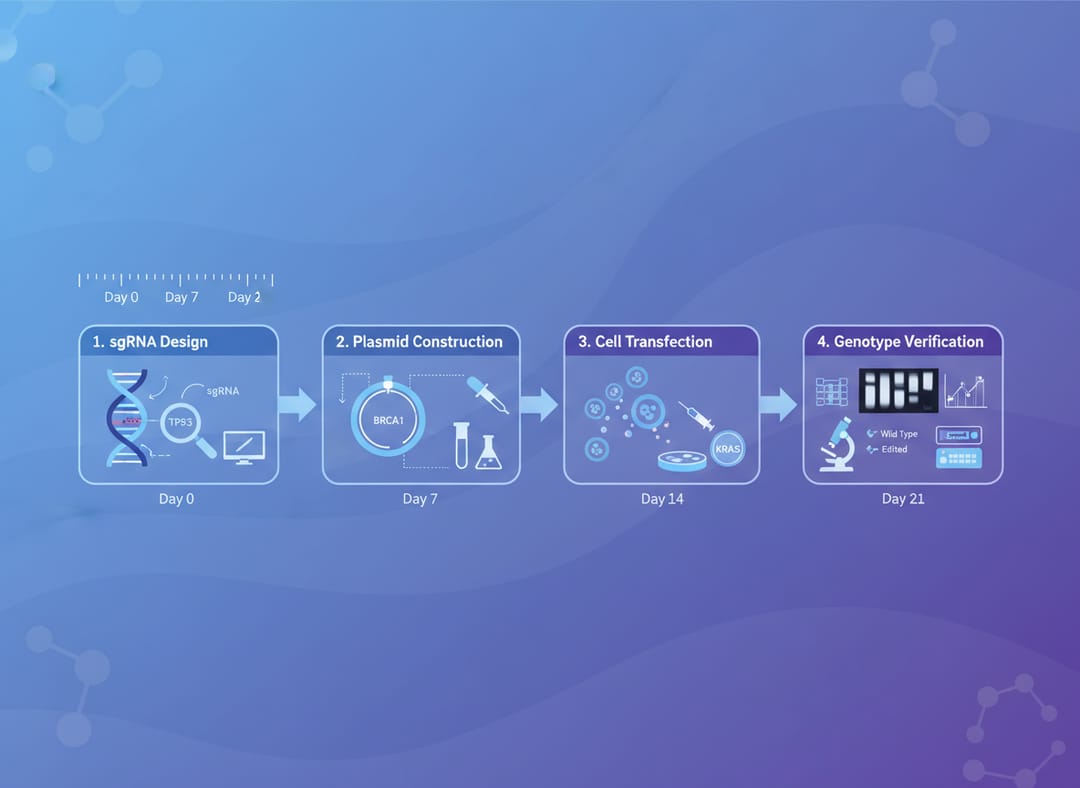
要約: 分野の適切な用語を調査し、プロンプト全体で一貫して使います。
原則 6: 多層情報を設計する
なぜ重要か: 最高の科学図は、構造図、定量的データ、注釈、視覚的強調を単一のまとまりのある画像に結合します。
適用方法: 異なる情報タイプを重層化:メインイラスト+データ曲線+ラベル+凡例+インセット。各層を明示的に記述します。
プロンプト例:
Cardiac electrophysiology and ECG correlation, 4:3 horizontal layout, left side detailed
heart anatomy with conduction system labeled "SA Node, AV Node, Bundle of His, Purkinje
Fibers", action potential phases shown "Phase 0-4, Na+/K+/Ca2+ channels", center ECG
trace with labeled waves "P wave (atrial depolarization), QRS complex (ventricular
depolarization), T wave (repolarization)", timing intervals "PR 120-200ms, QT 350-440ms",
right side pathological ECGs "Atrial Fibrillation, Ventricular Tachycardia, STEMI",
ion concentrations noted, complete cardiology reference diagram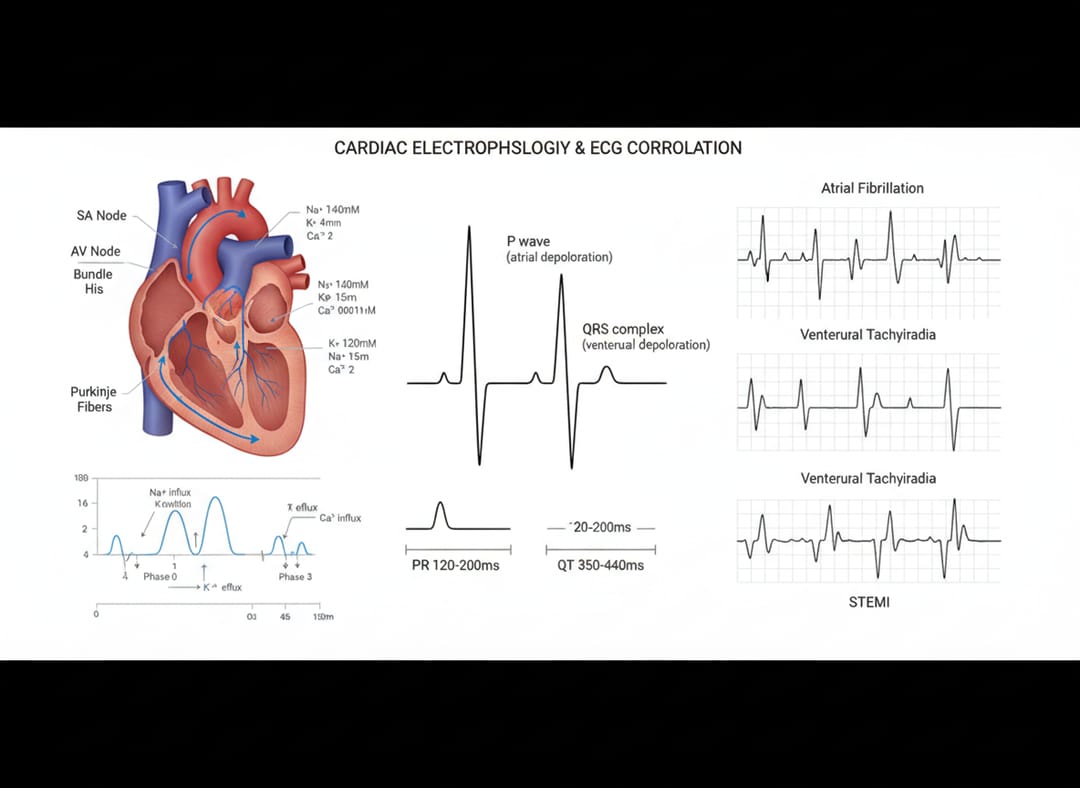
要約: 構造情報、定量的データ、ラベル、ビジュアルガイドを単一の総合的な図に組み合わせます。
原則 7: 戦略的カラーコーディングを実装する
なぜ重要か: 色は科学図で強力な視覚整理ツールとして機能します。色の戦略的な使用は読者が関係とカテゴリを素早く理解するのに役立ちます。
適用方法: パスウェイ、グループ、条件、またはデータタイプに対して色の割り当てを明示的に定義します。
プロンプト例:
RNA splicing mechanism and spliceosome assembly, 4:3 horizontal format, pre-mRNA
structure top with exons/introns labeled "Exon 1-2-3, Intron 1-2", splice sites
marked "5' Splice Site GU, 3' Splice Site AG, Branch Point A", spliceosome components
U1/U2/U4/U5/U6 snRNPs color-coded (U1=red, U2=blue, U4/U6=green, U5=yellow) and
positioned, stepwise assembly stages E→A→B→C complexes shown, lariat intermediate
structure illustrated, catalytic reactions "Transesterification Step 1 & 2", mature
mRNA product bottom, alternative splicing variants displayed, regulatory proteins
SR/hnRNP marked, comprehensive molecular biology diagram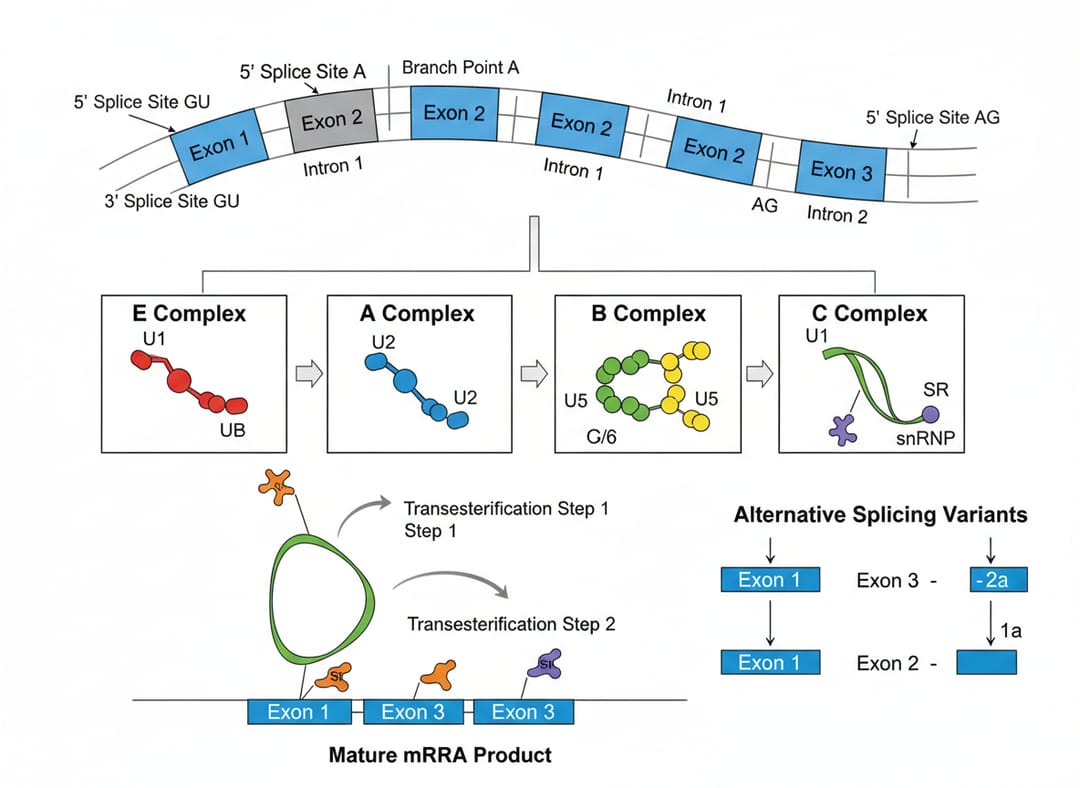
要約: カラースキームを前もって定義し、一貫して適用します(例:「blue=glycolysis, red=lipid metabolism, green=protein synthesis」)。
原則 8: 曖昧な一般的記述を避ける
なぜ重要か: 「scientific diagram」や「molecular structure」のような用語は広すぎます。AI は正確で出版品質の出力を生成するために具体的な詳細を必要とします。
適用方法: 一般的な用語を正確な仕様に置き換えます。「protein」の代わりに「spike protein trimer with RBD domain」を。「process」の代わりに各ステップを明示的に記述します。
悪い例: "Create a scientific figure about immune response"
良い例:
Bacterial infection and immune response panorama, 4:3 aspect ratio, complete scene
from left to right: pathogen entry through epithelium labeled "Bacterial Invasion,
Streptococcus", innate immunity activation showing "Macrophages, Neutrophils, NK cells",
cytokine storm with molecules "IL-1β, IL-6, TNF-α, IFN-γ", adaptive immunity right
side "B-cells producing IgG/IgM, T-cells CD4+/CD8+", antibody-antigen binding
illustrated, complement cascade "C3a, C5a", memory cell formation labeled, timeline
"0h→24h→72h→7days", every inch filled with cellular and molecular details, immunology
journal quality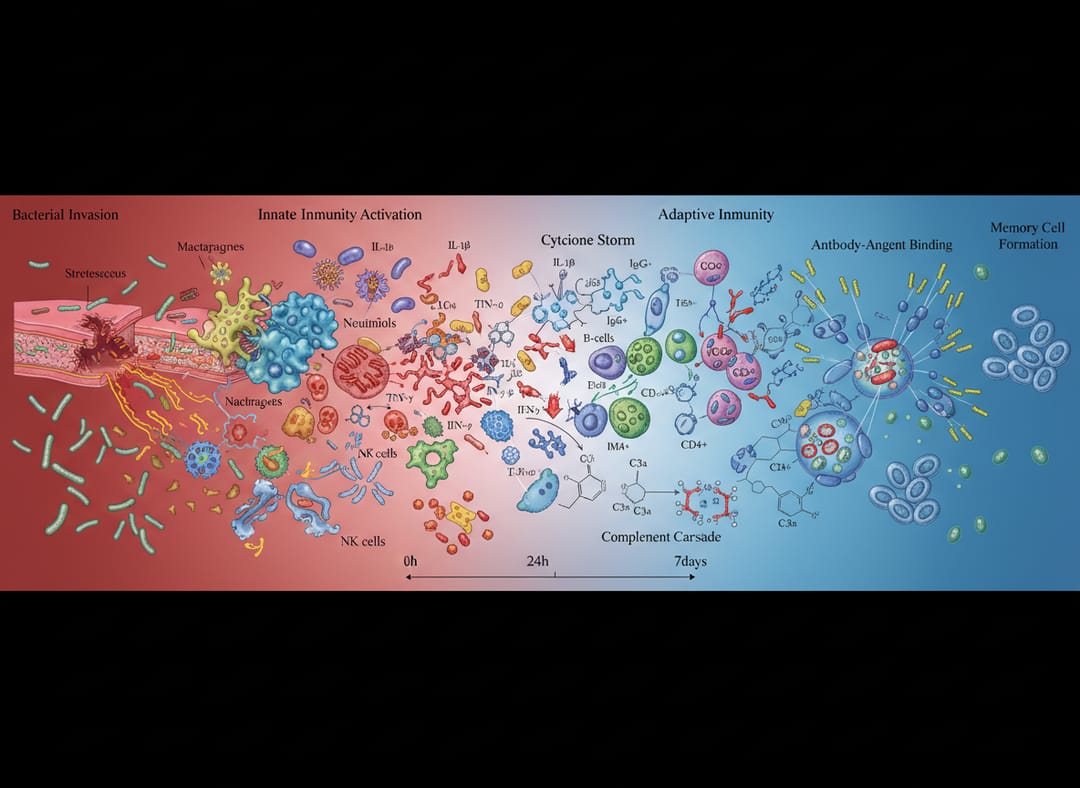
要約: 徹底的に具体的にします。すべての要素に名前を付け、すべての関係を定義、すべてのパラメータを指定します。
クイック品質チェックリスト
プロンプトを送信する前に確認:
- アスペクト比が指定されている(4:3, 3:4, 16:9 など)
- コンテンツがフレームを埋める(大きな空領域なし)
- 英語ラベルが含まれ適切な単位がある
- 応用文脈が述べられている(ジャーナルカバー、TOC、図パネル)
- 正確な命名法がある(遺伝子名、タンパク質、化学物質)
- 複数の情報層がある(構造+データ+ラベル)
- カラースキームが定義されている(色を使う場合)
- 具体的な詳細がある(「molecule A」や「generic structure」なし)
- 品質キーワードがある(professional, high-detail, publication-ready)
- ターゲット解像度がある(4K, 8K, ultra-detailed など)
科学イラストの作成を始める
これらの原則を SciDraw AI で適用: