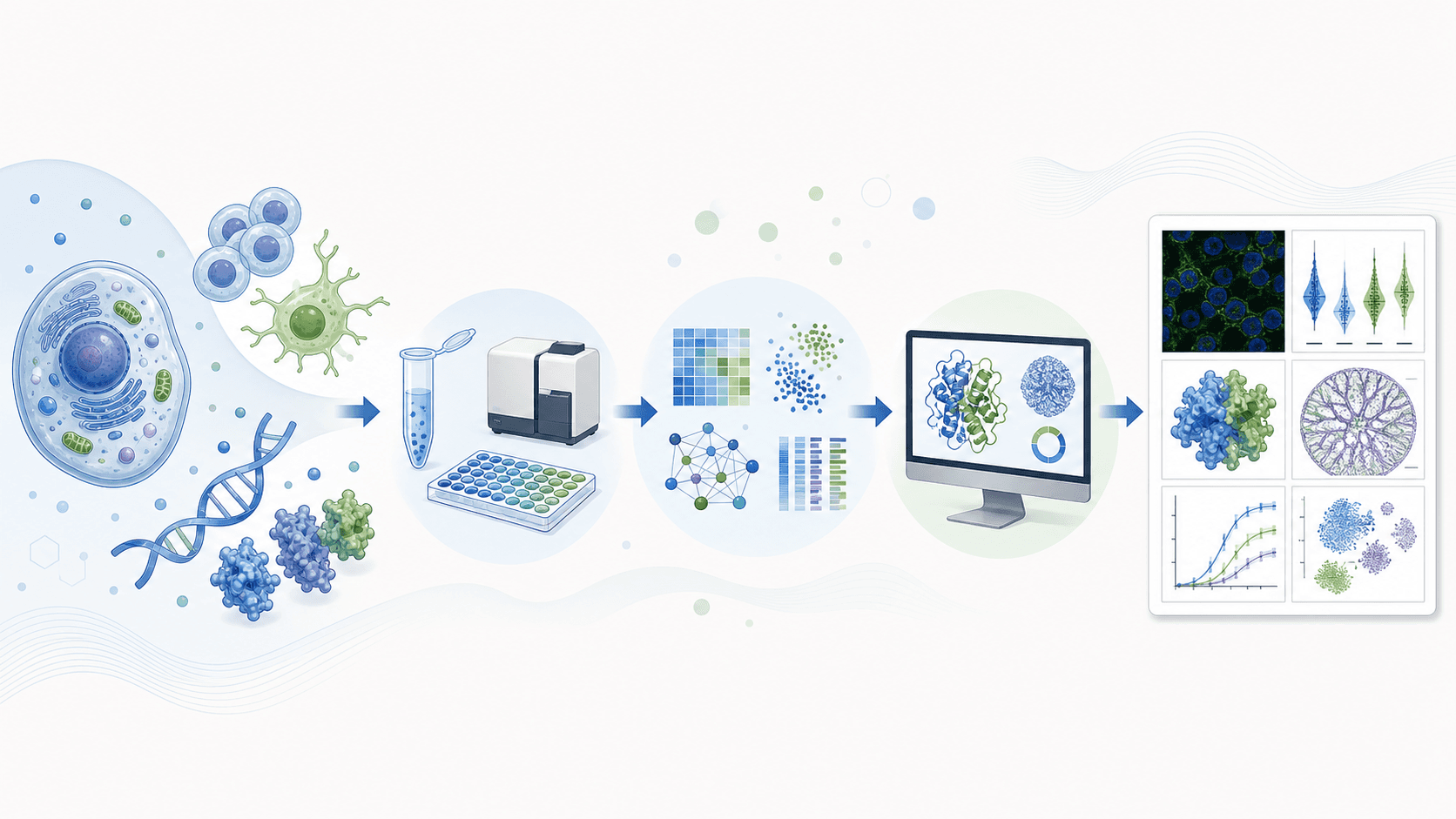
实验流程图对于清晰地传达你的研究方法至关重要。一个精心设计的流程图可以取代大量的文字描述,帮助读者快速理解你的实验方法。
本指南将教你如何创建专业的流程图,以增强你的方法部分并提高论文的可读性。
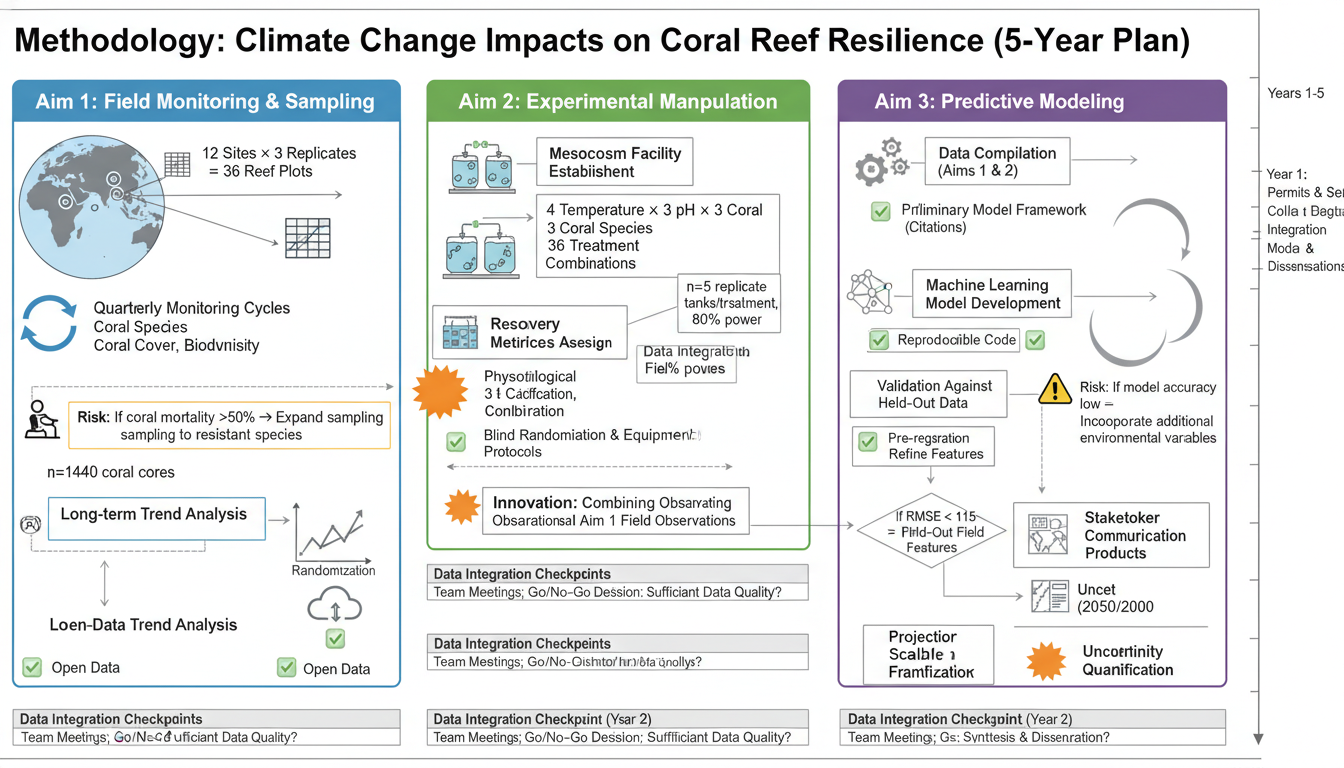
清晰的流程图使方法一目了然
为什么流程图很重要
有效的流程图:
- 简化复杂的方法:可视化表示胜过冗长的文本
- 提高可重复性:清晰的步骤帮助其他人重复你的工作
- 帮助审稿人理解:更快的理解 = 更顺畅的审阅
- 增加引用次数:方法清晰的论文被引用的频率更高
实验流程图的类型
1. 线性顺序流程
简单的逐步过程:
Step 1 → Step 2 → Step 3 → Step 4 → Result最适合: 具有清晰进展的简单协议
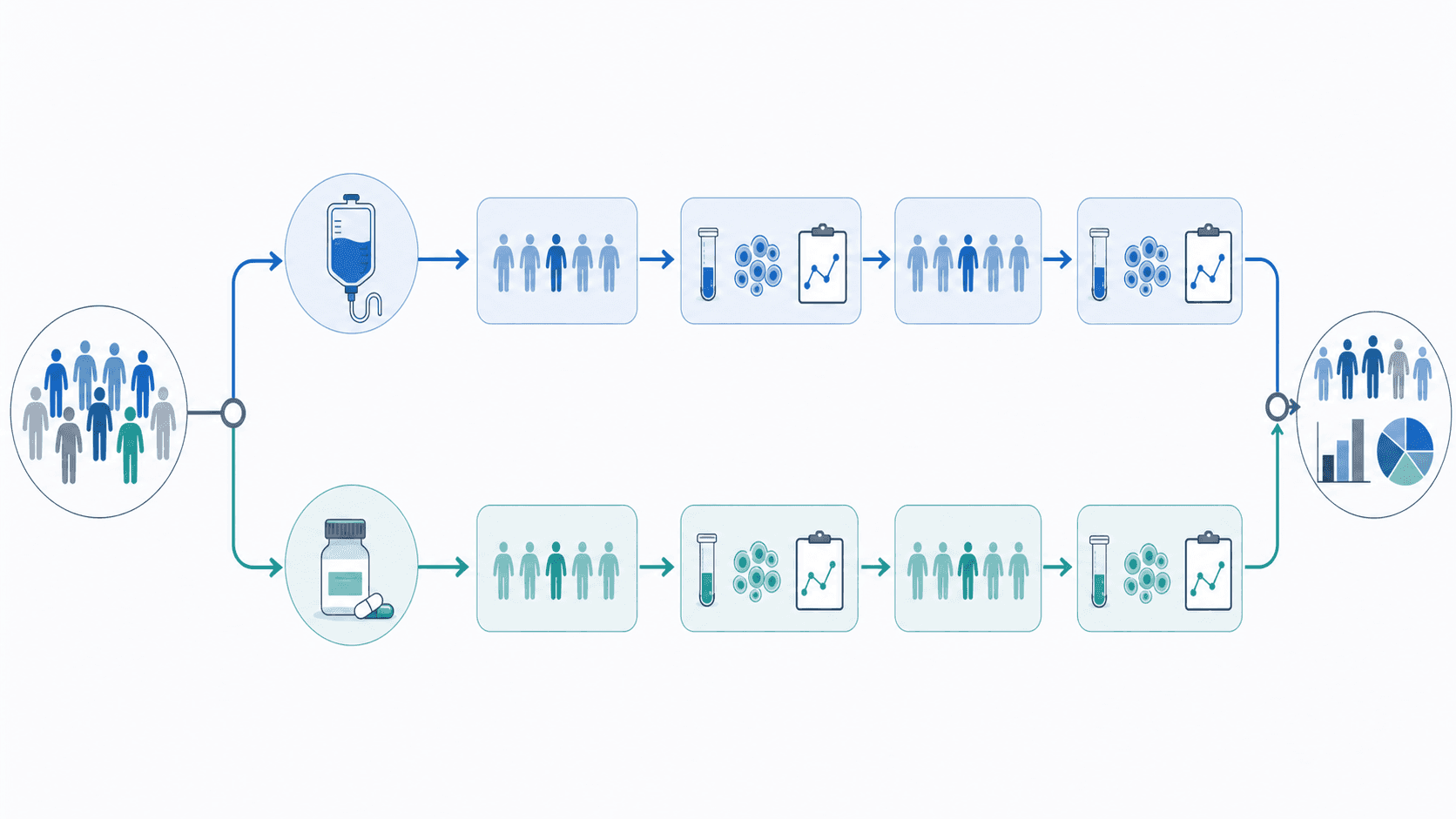
2. 分支流程
具有决策点或并行路径的过程:
→ Path A →
Start → → Result
→ Path B →最适合: 具有条件或多种样品类型的方法
3. 循环流程
迭代或反馈过程:
Step 1 → Step 2 → Step 3
↑ ↓
←←←← Repeat ←←←←←最适合: 优化程序、迭代分析
4. 多阶段流程
具有不同阶段的复杂过程:
[Sample Prep] → [Treatment] → [Analysis] → [Data Processing]最适合: 多日协议、复杂的实验设计
设计原则
视觉层次结构
- 主流程: 突出、中心定位
- 关键步骤: 用图标或颜色突出显示
- 细节: 较小的文本,次要元素
- 时间线: 在相关时指示
方向流程
推荐的模式:
- 从左到右(最常见)
- 从上到下(替代方案)
- 始终如一的方向
避免:
- 混合方向
- 不清晰的箭头方向
- 循环混乱
信息密度
包括:
- 仅基本步骤
- 关键参数(时间、温度)
- 关键试剂
- 决策点
排除:
- 次要细节(在文本中代替)
- 明显的步骤
- 过多的技术术语
按领域创建流程图
生物学和生命科学
细胞培养实验:
Experimental workflow for cell biology,
cell seeding → treatment (24h) → harvest → analysis,
specific cell line "HeLa" indicated,
treatment conditions "Drug X, 10 μM" labeled,
timeline bar below showing days,
analysis methods: "Western blot, qPCR, Flow cytometry",
life sciences publication style动物研究流程:
In vivo experiment workflow diagram,
animal model → treatment groups → intervention → endpoints,
"C57BL/6 mice, n=10/group" indicated,
treatment arms shown in parallel,
sacrifice time points marked,
tissue collection and analysis specified,
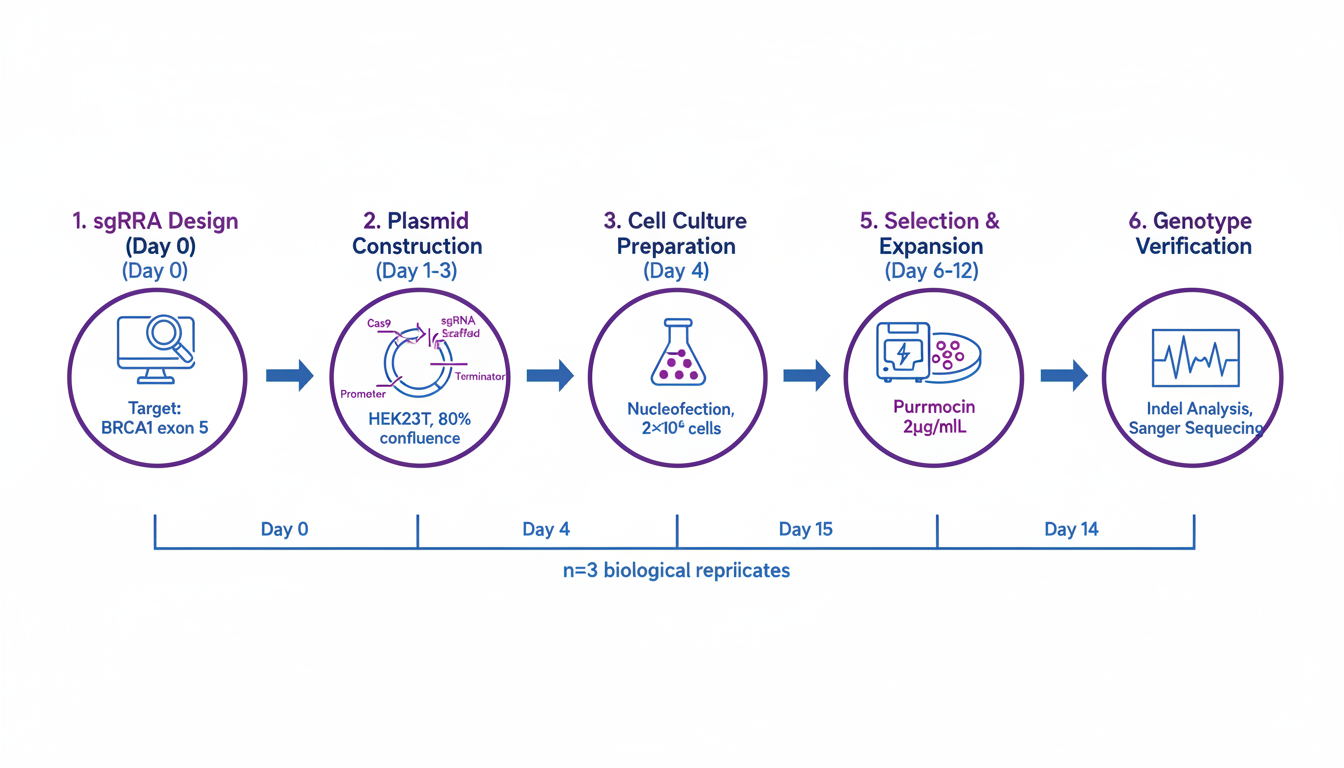
preclinical research style分子生物学协议:
Molecular cloning workflow,
PCR amplification → gel extraction → ligation → transformation,
vector and insert icons,
colony screening step,
sequence verification endpoint,
molecular biology methods figure style
分子生物学流程受益于标志性表示
化学
合成流程:
Multi-step synthesis workflow diagram,
starting material → intermediate 1 → intermediate 2 → product,
reaction conditions above each arrow,
purification methods noted (column, recrystallization),
yield percentages at each step,
organic chemistry methods style分析协议:
Analytical chemistry workflow,
sample collection → preparation → measurement → data analysis,
specific techniques labeled,
quality control steps included,
instrument parameters noted,
analytical methods figure format材料科学
材料合成:
Nanomaterial synthesis workflow,
precursor preparation → reaction → purification → characterization,
reaction conditions (temperature, time, atmosphere),
characterization techniques listed,
scale indicated,
materials science methods style器件制造:
Device fabrication workflow diagram,
substrate preparation → deposition → patterning → testing,
layer-by-layer steps shown,
equipment/techniques at each step,
cleanroom requirements noted,
engineering methods figure format临床和医学研究
临床试验流程:
Clinical study workflow diagram,
patient screening → enrollment → randomization → intervention → follow-up,
inclusion/exclusion criteria summarized,
treatment arms in parallel,
assessment time points marked,
CONSORT-style diagram elements样品处理:
Biospecimen processing workflow,
collection → transport → processing → storage → analysis,
sample types indicated,
time constraints noted,
temperature requirements shown,
biobank protocols style用于流程图的 AI 提示
基本流程模板
Experimental workflow diagram for [field] research,
[number] main steps: [list steps],
left to right flow with arrows,
icons representing each major step,
key parameters labeled,
timeline indicated below,
publication-ready methods figure style详细协议流程
Detailed experimental protocol workflow,
[your experiment type] methodology,
Step 1: [description with parameters],
Step 2: [description with parameters],
[continue for all steps],
critical steps highlighted,
QC checkpoints marked,
reproducibility-focused design比较流程
Comparative experimental workflow showing two methods,
Method A (left/top) vs Method B (right/bottom),
shared steps in center,
differences highlighted with color,
time/cost comparison indicated,
methods comparison figure style高通量流程
High-throughput screening workflow diagram,
library/sample input → primary screen → hit identification,
secondary validation → lead selection,
numbers at each stage (e.g., "10,000 → 500 → 50 → 5"),
funnel visualization style,
drug discovery/screening format设计元素
图标和符号
常见的流程图标:
- 🧪 试管(反应)
- 📊 图表(分析)
- 🔬 显微镜(成像)
- 💻 计算机(数据处理)
- ⏱️ 时钟(时间点)
- 🌡️ 温度计(温度)
使用图标来:
- 快速识别步骤类型
- 增加视觉趣味
- 打破文本繁重的区域
- 创建一致的风格
颜色编码
功能颜色:
- 蓝色:样品/材料流动
- 绿色:生物过程
- 橙色:化学反应
- 紫色:分析/测量
- 灰色:质量控制
阶段颜色:
- 浅色:早期阶段
- 深色:后期阶段
- 一致的进展
连接器和箭头
箭头类型:
- 实线:主流程
- 虚线:可选/条件步骤
- 双线:可逆过程
- 分支:决策点
最佳实践:
- 一致的箭头样式
- 清晰的方向性
- 尽可能避免交叉
- 用时间/条件标记
布局模板
线性模板
┌────────┐ ┌────────┐ ┌────────┐ ┌────────┐
│ Step 1 │───→│ Step 2 │───→│ Step 3 │───→│ Step 4 │
└────────┘ └────────┘ └────────┘ └────────┘
Day 0 Day 1 Day 3 Day 7分支模板
┌────────┐
────→│ Path A │────┐
┌────────┐ │ └────────┘ │ ┌────────┐
│ Start │────┤ ├───→│ Result │
└────────┘ │ ┌────────┐ │ └────────┘
────→│ Path B │────┘
└────────┘多阶段模板
┌─────────────────────────────────────────────────────┐
│ Phase 1: Setup │
│ ┌──────┐ ┌──────┐ ┌──────┐ │
│ │ Prep │──→│ Treat│──→│ Check│ │
│ └──────┘ └──────┘ └──────┘ │
└─────────────────────────────────────────────────────┘
↓
┌─────────────────────────────────────────────────────┐
│ Phase 2: Analysis │
│ ┌──────┐ ┌──────┐ ┌──────┐ │
│ │Collect│──→│Analyze│──→│Report│ │
│ └──────┘ └──────┘ └──────┘ │
└─────────────────────────────────────────────────────┘常见错误
1. 细节过多
问题: 包括每个次要步骤 解决方案: 总结常规步骤;仅详细说明关键点
2. 流程不清晰
问题: 读者无法理解流程 解决方案: 使用清晰的箭头;保持一致的方向
3. 缺少关键信息
问题: 遗漏重要参数 解决方案: 包括时间、温度、浓度
4. 风格不一致
问题: 混合图标、字体、颜色 解决方案: 创建风格指南;一致应用
5. 复杂度级别错误
问题: 对于受众来说太简单或太复杂 解决方案: 使细节级别与读者专业知识相匹配
用于创建流程图的工具
AI 驱动
- SciDraw: 从描述生成完整的流程
- 最适合快速原型设计和构思
传统软件
- Illustrator/Inkscape: 完全控制设计
- PowerPoint: 快速且熟悉
- Lucidchart/draw.io: 专门用于图表
- BioRender: 专注于生命科学
推荐流程
- 使用 AI 起草: 使用 SciDraw 生成概念
- 优化结构: 根据实际协议进行调整
- 润色: 添加特定标签和参数
- 导出: 格式化以满足期刊要求
开始创建流程图
使用清晰的流程图转换你的方法部分:
- 访问 SciDraw AI Drawing
- 描述你的实验流程
- 生成和自定义
- 导出可用于出版的图形
你的方法值得用可视化方式使其立即被理解。
相关文章:
- Scientific Figure Generator for Research Papers(科研论文的科学图形生成器)
- Nature and Science Figure Requirements(《自然》和《科学》的图形要求)
- How to Write Effective AI Prompts(如何编写有效的 AI 提示)