Free Body Diagram Maker
Generate a labeled force diagram from plain text
Describe your object and the forces acting on it, and AI draws a clean free body diagram with labeled vectors for gravity, normal force, friction, tension, and applied forces — ready for physics homework, problem sets, and lab reports.
Free body diagram examples
Click any example to load its prompt, or use it as a starting point for your own force diagram.
What is a free body diagram?
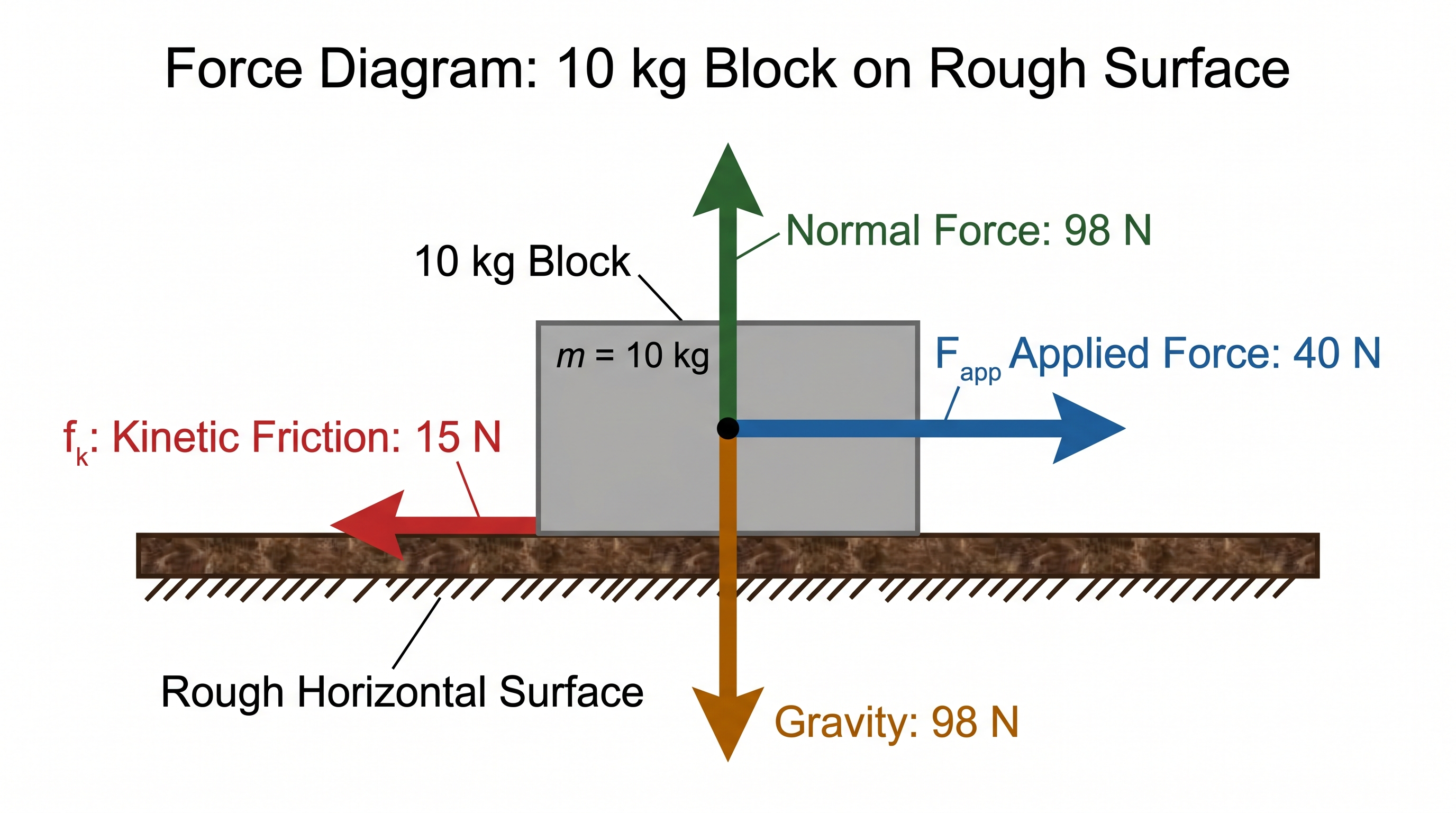
A free body diagram (FBD), also called a force diagram, is a simplified physics drawing that isolates a single object and shows every force acting on it as a labeled arrow (vector). The object is reduced to a point or simple box, and each push, pull, or field force becomes an arrow pointing in its direction. This free body diagram maker takes your plain-text description of the object and its forces and draws a clean, labeled FBD for you. It lays out and labels the force vectors you describe — it does not compute net force or guarantee the physics is correct, so you stay in control of the analysis.
Why use a free body diagram generator
- Free body diagrams are the foundation of Newtonian mechanics — every physics course from high school through university relies on them.
- Drawing neat, proportional force vectors by hand or in generic software is slow and easy to get crooked.
- A clearly labeled FBD makes it far easier to see which forces oppose each other and set up your equations.
- Students and tutors need quick, presentable force diagrams for problem sets, slides, and study guides.
- Redrawing from a text prompt is much faster than dragging arrows and retyping labels every time the scenario changes.
How to draw a free body diagram
First pick the object of interest and mentally isolate it from everything around it. List every force acting directly on that object — gravity (weight), the normal force from any surface, friction, tension from strings or ropes, applied pushes or pulls, and field forces such as buoyancy. Note each force's direction and, if you know it, its magnitude. Describe all of this in your prompt, including any scenario such as an inclined plane, pulley, or stacked block, and the AI draws and labels each vector. Finally, check that every arrow points where you intended and that the labels match your problem values.
Parts of a free body diagram
- Object — shown as a single dot or simple box at the center, representing the body you are analyzing.
- Weight (Fg) — the gravity vector pointing straight down, with magnitude mg.
- Normal force (FN) — the contact force perpendicular to the supporting surface, pointing away from it.
- Friction (Ff) — the surface force parallel to the contact surface, drawn opposite to motion or impending motion.
- Applied and tension forces (Fa, T) — pushes, pulls, and rope or cable tensions, each directed along its line of action.
- Labeled arrows and directions — every vector carries a clear label and points the way you specified, with an optional net force arrow.
Free Body Diagram Maker FAQ
What is a free body diagram?
A free body diagram (FBD), or force diagram, is a simplified drawing that isolates one object and shows all the external forces on it as labeled arrows. It is the primary tool for applying Newton's laws, and this maker draws and labels the FBD from your description.
How do I draw a free body diagram online?
Describe the object and every force acting on it — weight, normal force, friction, tension, and any applied forces — along with their directions. The AI then lays out a labeled FBD with each force as an arrow. You can regenerate or refine the description until the diagram matches your scenario.
Can it draw an inclined plane, pulley, or block scenario?
Yes. Just describe the situation, such as a block on a ramp inclined at 30 degrees, a mass hanging over a pulley, or stacked blocks. The AI draws and labels the force vectors you specify for that scenario. It lays out the diagram you describe rather than computing the force components for you.
Does it label all the forces?
Yes. Each force you describe is drawn as a labeled arrow — for example Fg, FN, Ff, T, and any applied force — pointing in the direction you give. You can also ask for a net force arrow. The tool labels and lays out the vectors; it does not verify that the physics is correct, so review the result against your problem.
Is it free?
Each generation uses a small number of credits, and new accounts receive free credits, so you can draw a free body diagram without any subscription. Heavier use is covered by affordable paid plans.
Can I use it for physics class or homework?
Yes. It produces clean, labeled free body diagrams suitable for problem sets, lab reports, slides, and exam prep, including AP Physics and college mechanics. Always check the force directions and labels against your own setup before submitting, since the tool draws rather than solves.
Writing a paper, thesis or grant?
SciDraw AI also makes publication-ready research figures: graphical abstracts, mechanism figures, workflows and conceptual frameworks.
Explore More Tools
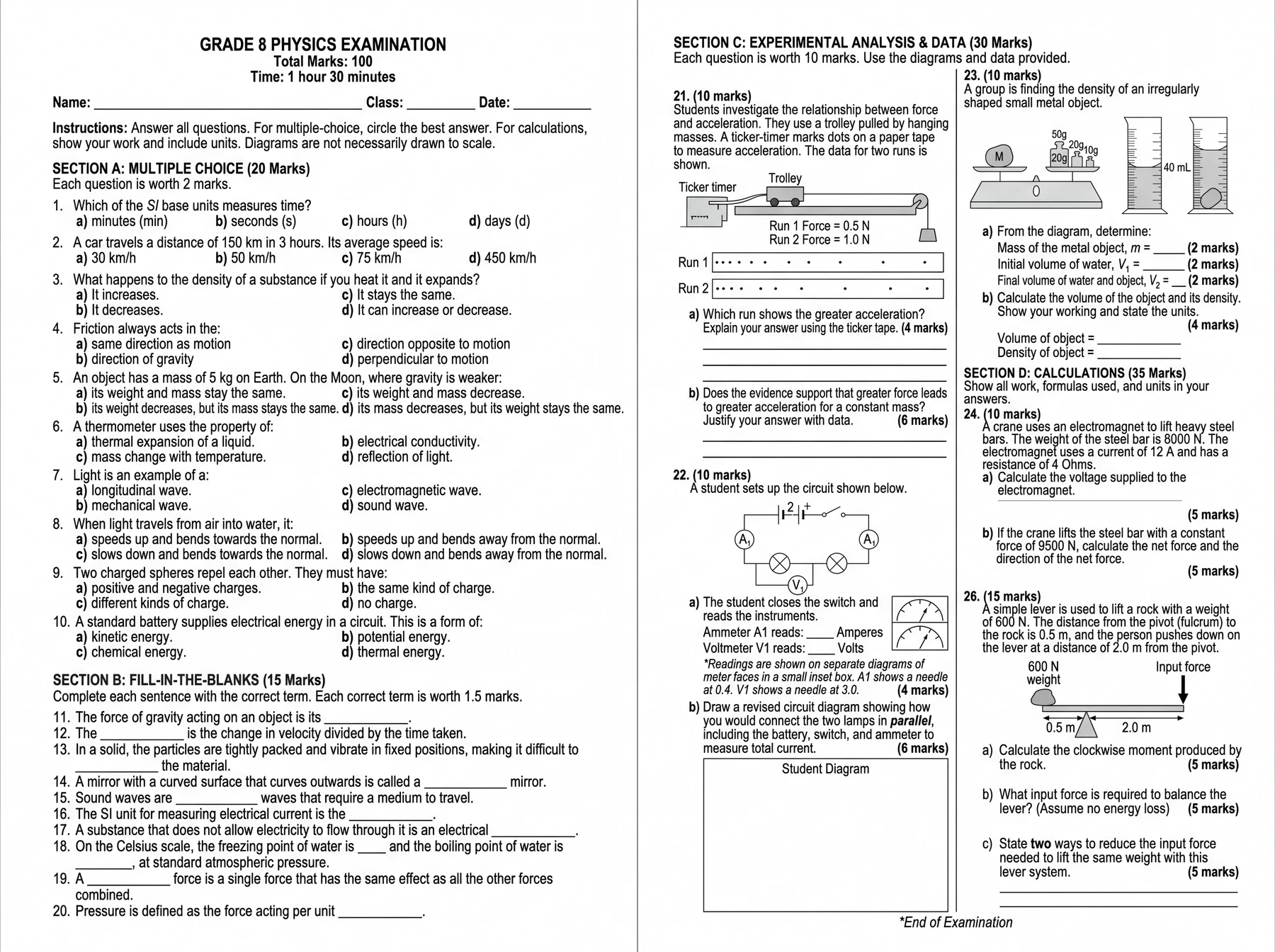
AI Exam & Worksheet Generator
Describe an exam and generate a complete A3 or A4 paper.
Try it free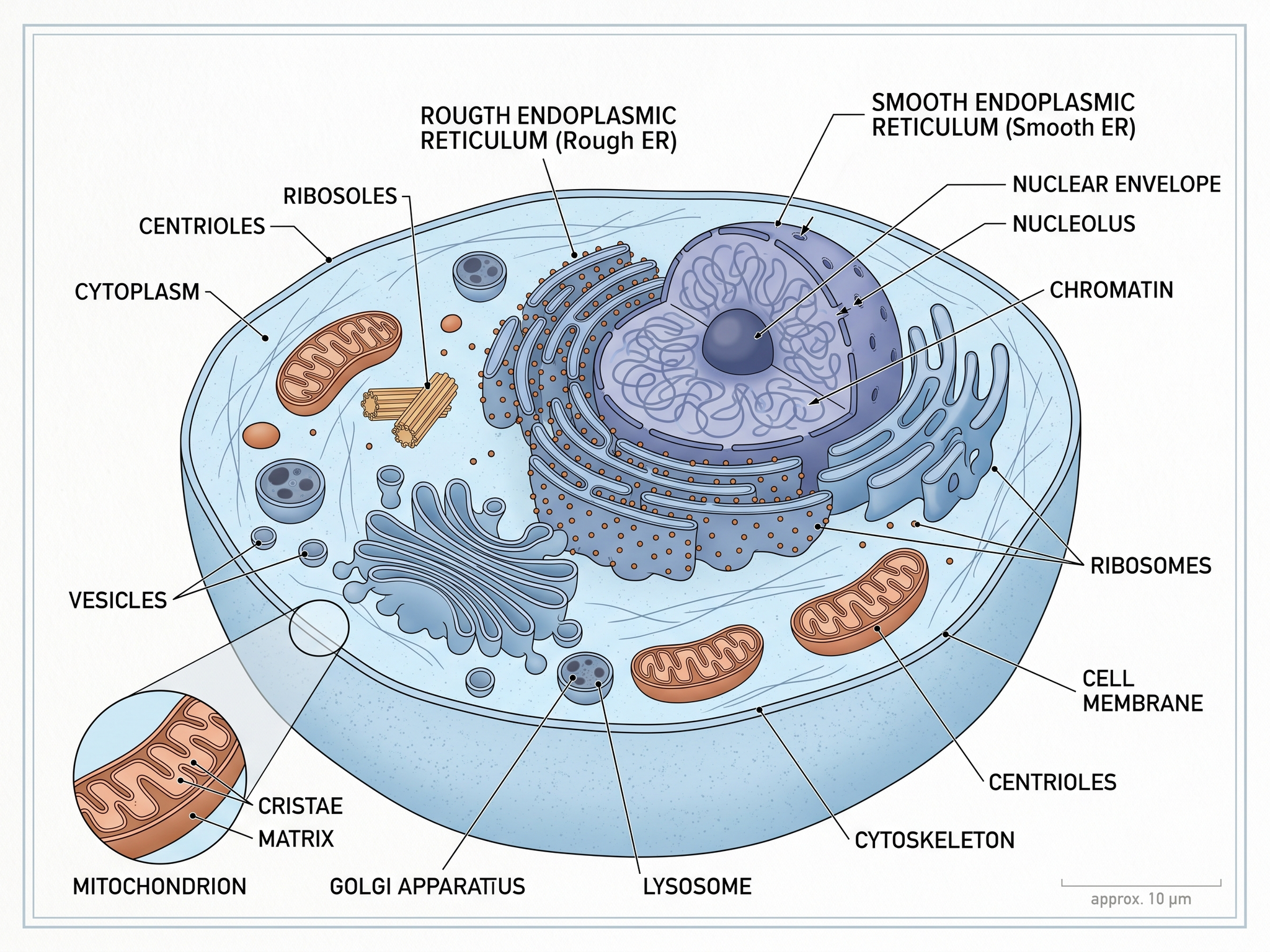
Textbook Illustration Maker
Illustrations tailored for textbooks and learning materials
Try it free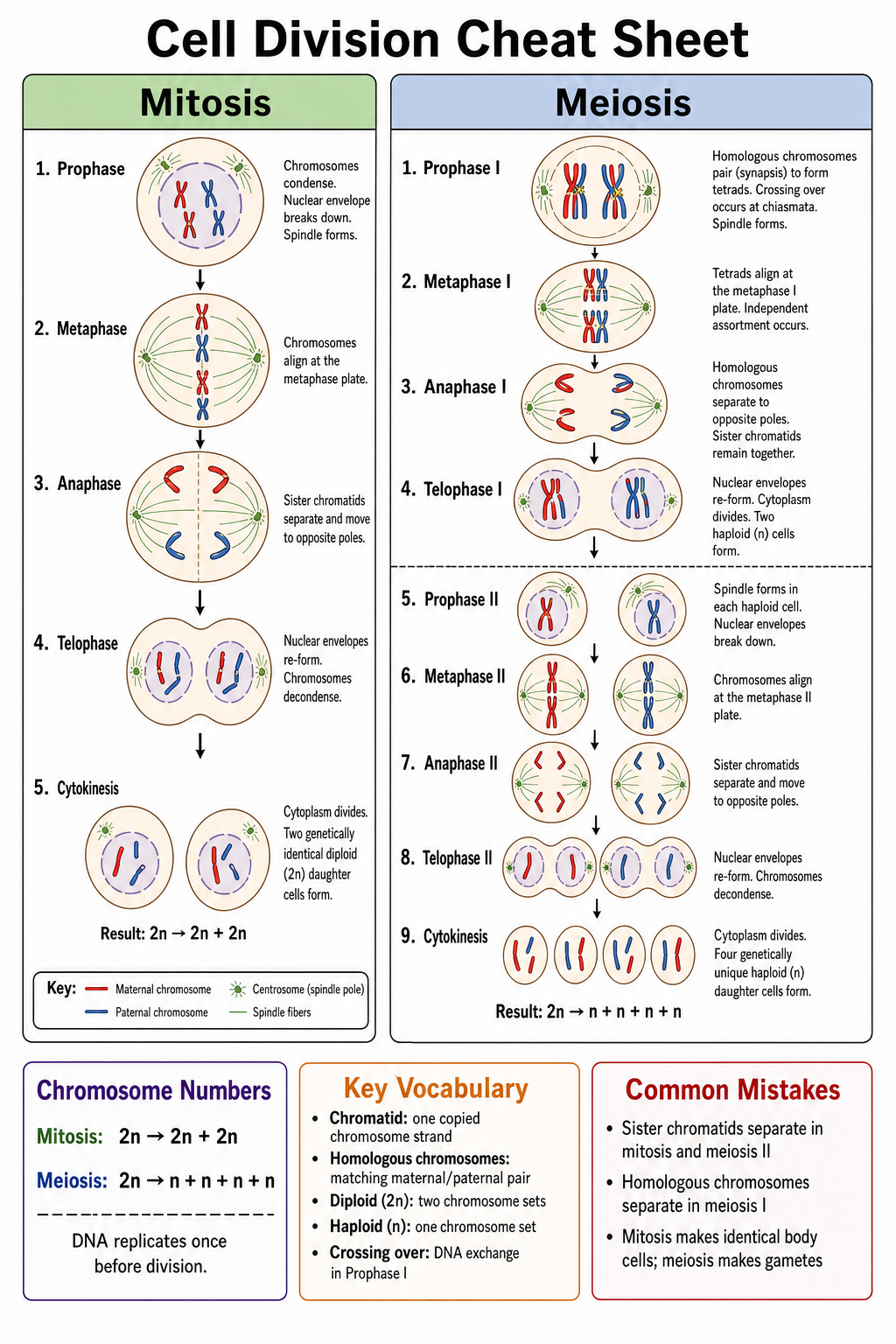
AI Cheat Sheet Maker
Turn a topic or your notes into a one-page visual study sheet for revision and exams.
Try it freeNeed other physics diagrams?
Generate circuit diagrams, wave diagrams, motion graphs, and more with SciDraw AI.