Free Syntax Tree Generator
Build a labeled phrase-structure tree from plain text
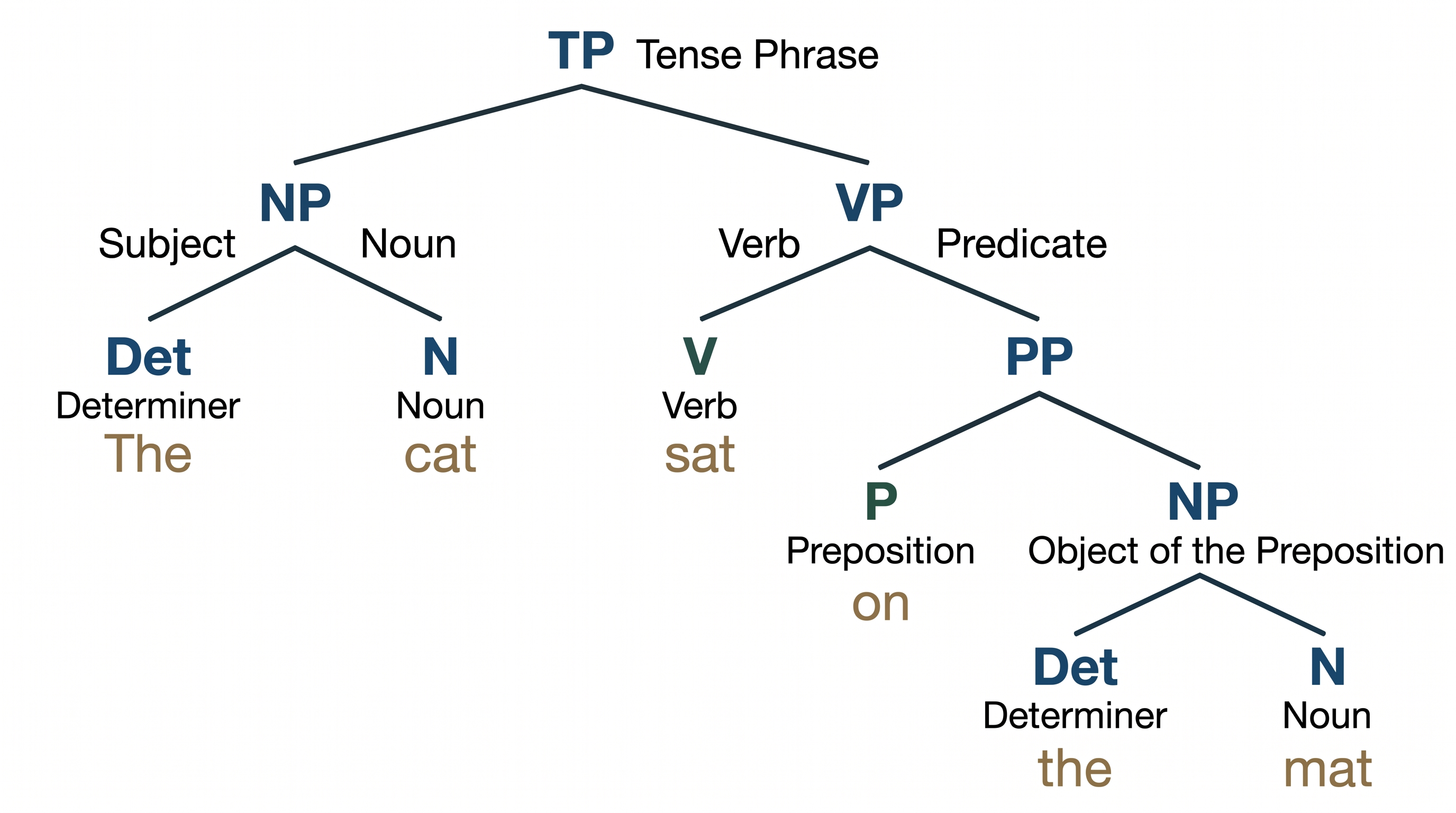
Enter a sentence and describe its phrase structure, and AI draws a clean, hierarchical syntax tree showing how NPs, VPs, and other constituents nest together — ready for linguistics homework, papers, and lectures.
Syntax tree examples
Click any example to load its prompt, or use it as a starting point for your own linguistics tree diagram.
What does this syntax tree generator do?
It turns a sentence and a description of its phrase structure into a clean, hierarchical syntax (parse) tree — the diagram linguists use to show how words group into constituents such as noun phrases (NP), verb phrases (VP), and clauses (TP/CP). You describe the sentence and the structure you want, and the AI draws labeled branching nodes arranged from the root (usually TP or S) down to the terminal words (leaves), so you get a tidy figure without manually aligning brackets or boxes in drawing software.
Why use a syntax tree generator
- Drawing syntax trees by hand or in generic tools is slow and error-prone when sentences become complex.
- Linguistics students need clear, correctly labeled trees for homework, exams, and syntax assignments every week.
- A precise tree makes hierarchical relationships — embedding, movement traces, specifier/head/complement — immediately visible.
- Researchers and instructors need presentable diagrams for papers, textbooks, and lecture slides.
- Regenerating from a text description is far faster than realigning nodes every time the analysis changes.
How to make a phrase-structure tree
Write out the sentence you want to analyze, then describe the phrase structure in plain language — name the root node (e.g. TP), the subject NP (with its determiner and head noun), and the predicate VP (with its head verb and any complements or adjuncts). Mention special constructions such as embedded clauses (CP), prepositional phrases (PP), or movement traces if relevant. Generate the tree, then check that every constituent is correctly labeled and nested. Refine the description and regenerate until the branching matches your analysis.
Parts of a syntax tree
- Terminals (leaves) — the individual words of the sentence at the bottom of the tree.
- Phrasal nodes — labeled constituents (NP, VP, AP, PP, CP, TP) grouping words into phrases.
- Head — the central word of each phrase that determines its category (N in NP, V in VP, etc.).
- Specifier — the phrase in the outer-left position of an X-bar structure (e.g. determiner in NP).
- Complement — the phrase selected by the head and occupying the inner sister position.
- Root node — the topmost node (usually TP or S) dominating the entire sentence.
Syntax Tree Generator FAQ
What is a syntax tree?
A syntax tree (also called a phrase-structure tree or parse tree) is a hierarchical diagram that shows how the words of a sentence combine into progressively larger constituents — phrases and clauses — according to the grammar of a language.
What is the difference between a syntax tree and an X-bar tree?
A basic phrase-structure tree labels constituents with categories like NP and VP. An X-bar tree adds an extra layer of structure (X′ / X-bar) between the head and the full phrase, making specifier, head, and complement positions explicit. Specify which style you need in your prompt and the AI will match it.
Can I show movement (traces) and empty categories?
Yes — describe the movement in your prompt (e.g. 'show wh-movement of the object to SpecCP with a trace t in the base position') and the generated tree will include the trace and the moved element at its landing site.
How do I label nodes for minimalist/Minimalist Program trees?
Describe the functional projections you need (vP, TP, CP, AgrP, etc.) in your prompt. You can specify any theoretical framework — GB, Minimalism, HPSG-style PS rules — and the AI will follow your labeling conventions.
Is it suitable for linguistics courses and assignments?
Yes. It produces clean, labeled trees suitable for syntax homework, term papers, and handouts. Always verify the structural analysis against your own grammar judgment and course framework before submitting.
Is it free?
Each generation uses a small number of credits. New accounts receive free credits, so you can generate a syntax tree without any subscription.
Explore More Tools

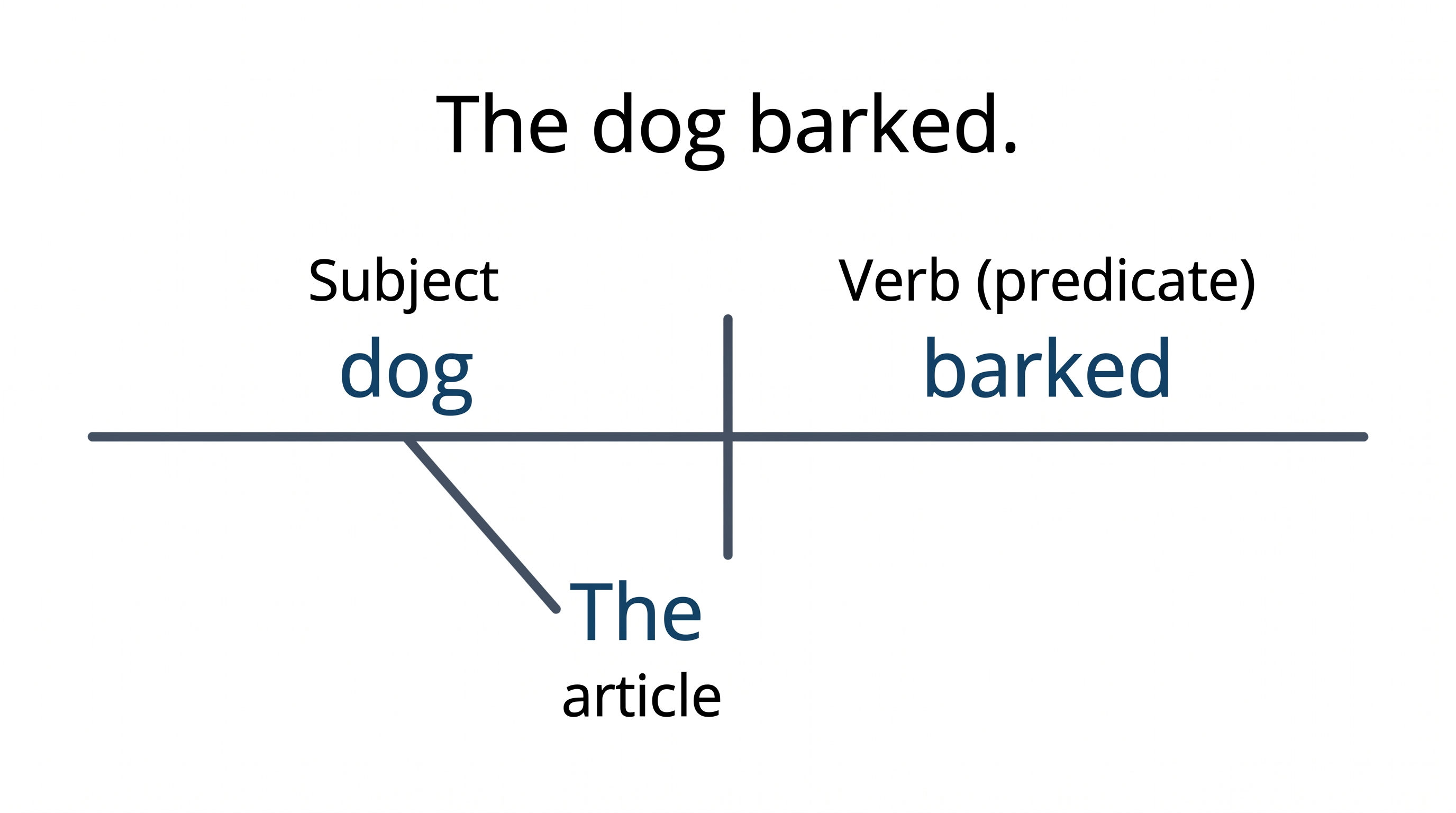
Sentence Diagram Generator
Diagram any sentence in Reed-Kellogg style instantly with AI.
Try it free
Graphical Abstract Maker
Create stunning graphical abstracts for journal submissions
Try it free
Manuscript to Figure Generator
Create manuscript to figure visuals for abstracts, methods, results, study workflows, graphical abstracts, and multi-panel paper figures.
Try it freeNeed other linguistics or education diagrams?
Generate semantic trees, morphology charts, IPA phoneme tables, and more with SciDraw AI.