Publikationen in der Materialwissenschaft erfordern präzise Visualisierungen von Kristallstrukturen, mechanischen Eigenschaften, Charakterisierungstechniken und Verarbeitungsmethoden. Dieser Leitfaden stellt 35 bewährte KI-Prompts aus der realen Materialforschung vor, die Ihnen helfen, publikationsreife Diagramme für Fachzeitschriften und Präsentationen zu erstellen.
Was Sie in diesem Leitfaden finden:
- Prompts für Bautechnik und Baumaterialien
- Illustrationen zur Oberflächencharakterisierung und Benetzbarkeit
- Diagramme zur Synthese und Verarbeitung von Nanomaterialien
- Visualisierungen für mechanische Prüfungen und Schadensanalysen
1. Bautechnische Materialien
1.1 Erdbebensichere Entwurfssysteme
Prompt: Tragwandsysteme (EC8-Normen)
Technical infographic on buildings with structural wall systems according to
EC8-1/2004 updated to 2026. Illustrate the following:
- Reinforced concrete shear wall configuration
- Lateral load distribution paths
- Ductility class requirements (DCM, DCH)
- Connection details at wall-slab interfaces
- Seismic force reduction factors
Use a professional engineering diagram style with section views.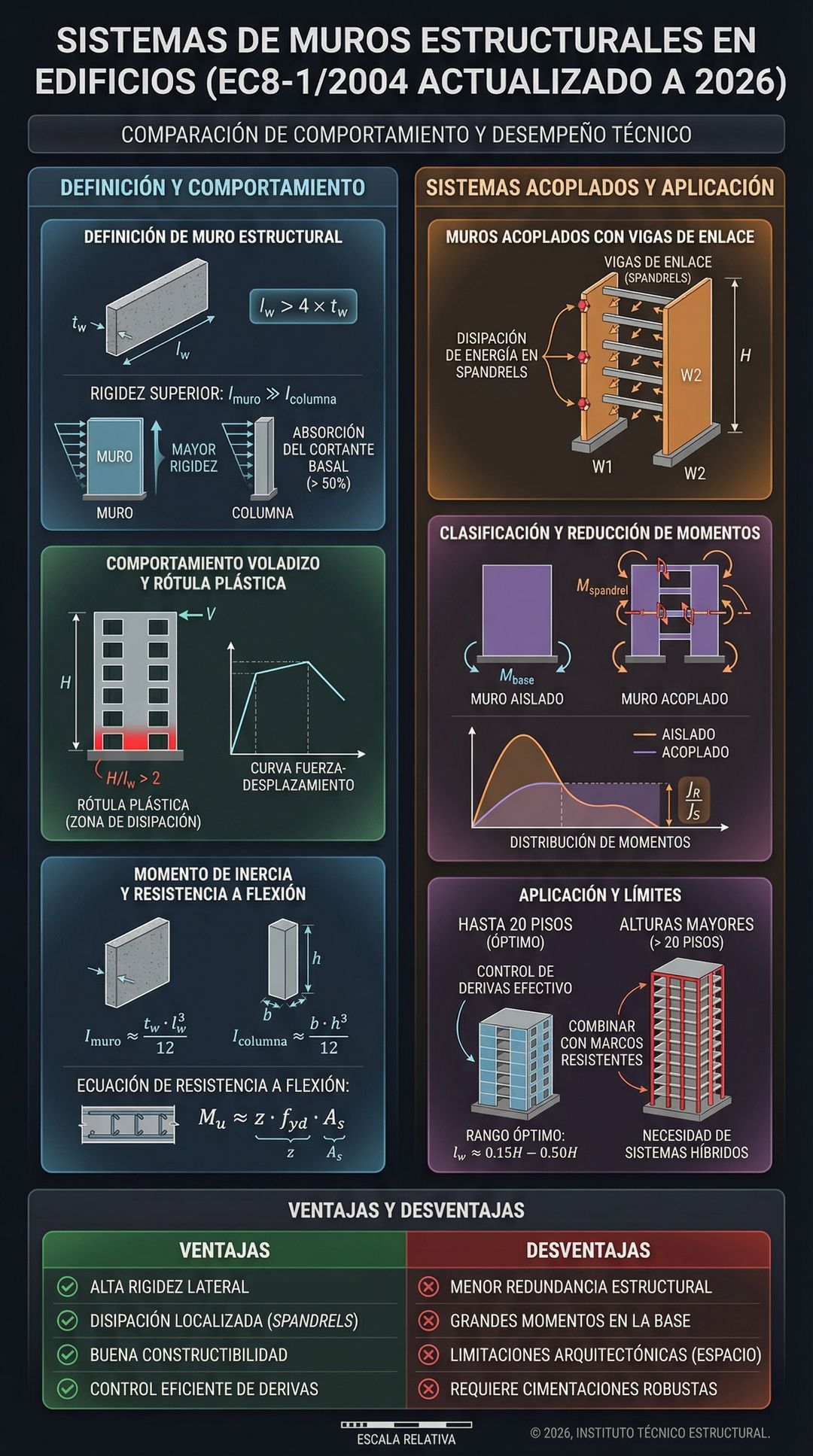
Prompt: Duale Tragsysteme
Technical infographic on buildings with dual systems according to EC8-1/2004.
Illustrate the combination of structural walls and moment-resisting frames:
- Wall contribution to lateral resistance (>50%)
- Frame contribution to lateral resistance
- Interaction between systems
- Load path diagrams
- Typical floor plan layouts
Include Eurocode compliance annotations.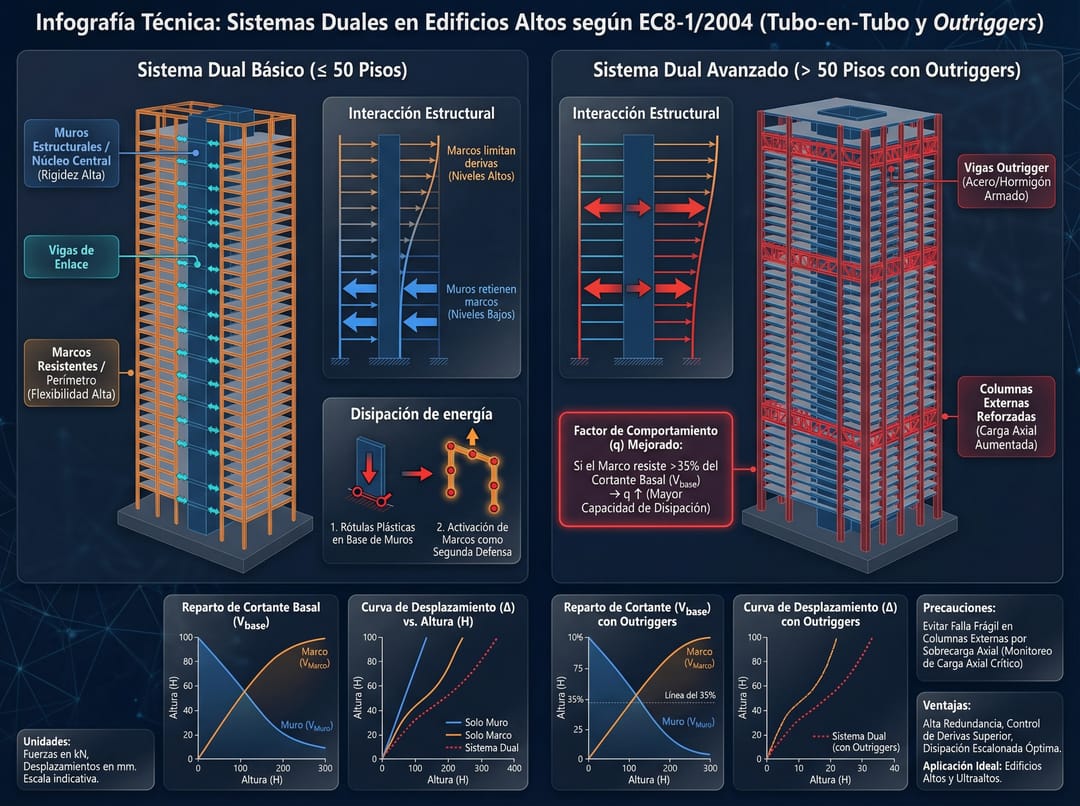
1.2 Fortschrittliche Gebäudesysteme
Prompt: Kombination aus Flachdecken und Wandscheiben
Technical infographic detailing building designs incorporating flat slab systems,
shear walls, and moment-resisting frames. Show:
- Flat slab punching shear reinforcement details
- Shear wall placement optimization
- Column-slab connection behavior
- Progressive collapse resistance measures
- Construction sequence considerations
Use WinUI3 style clean graphics with annotation callouts.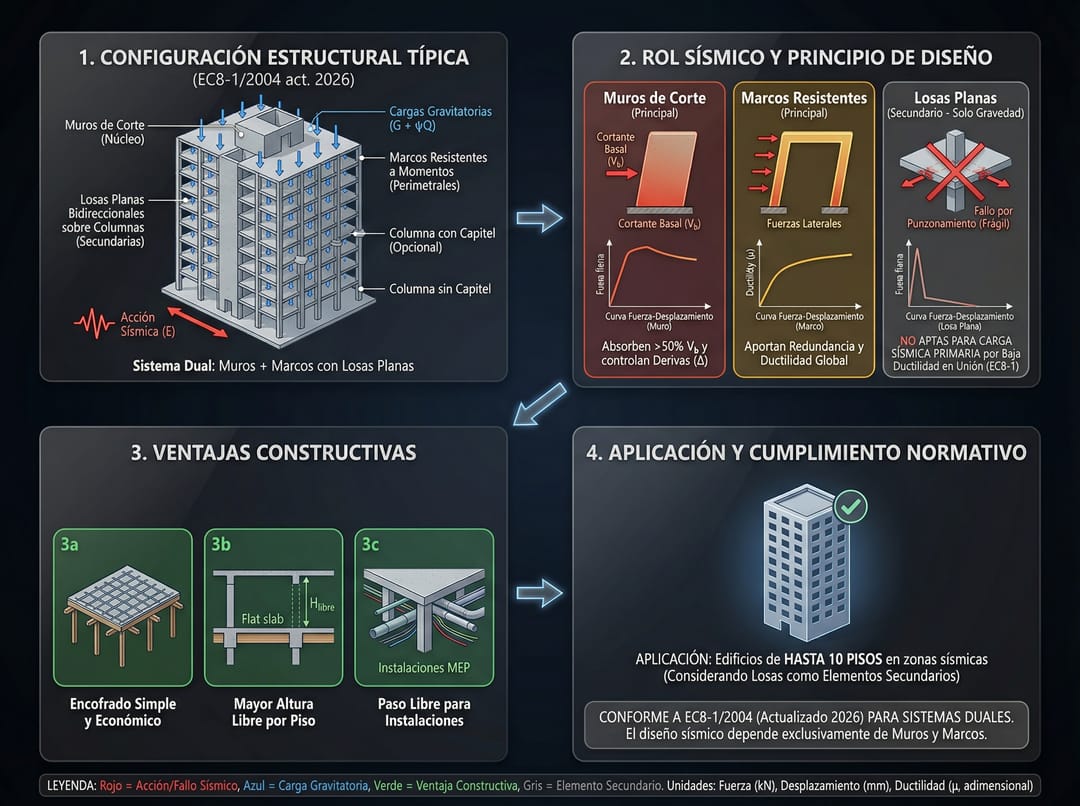
2. Oberflächenwissenschaft und Charakterisierung
2.1 Kontaktwinkelmessungen
Prompt: Tropfenbildung auf Glassubstrat
Illustrate the formation of a liquid droplet on a glass substrate, explaining
the principles of contact angle measurement:
- Young's equation diagram with force vectors
- Sessile drop geometry
- Advancing and receding contact angles
- Hysteresis visualization
- Measurement technique (goniometer setup)
Include mathematical notation for surface energies.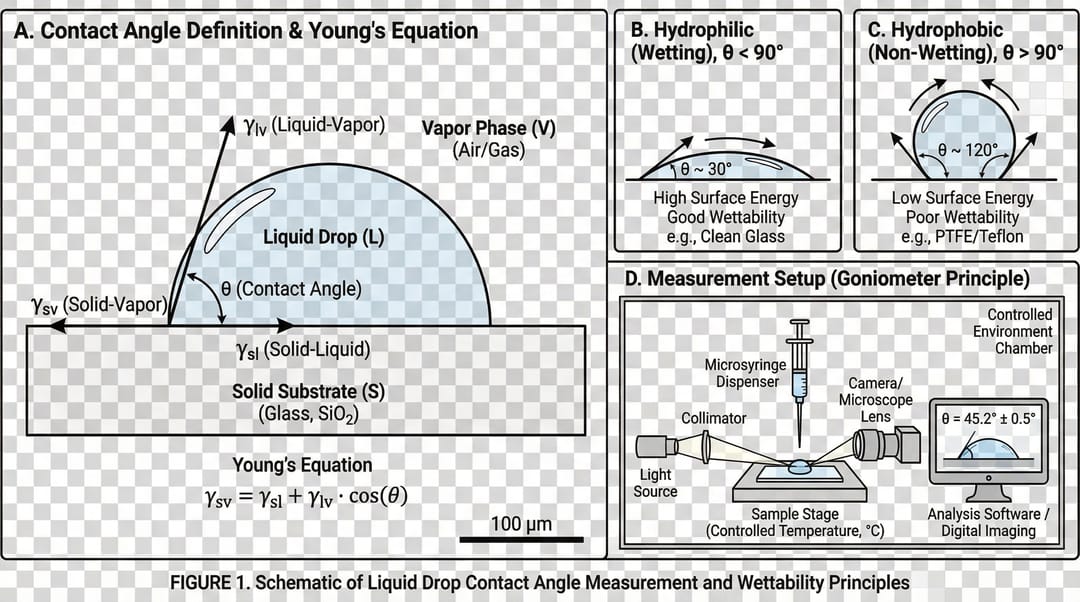
Prompt: Benetzbarkeit organischer Filme
Draw a figure illustrating a droplet on a glass substrate containing an organic
film. The droplet is used to measure the contact angle to assess the organic
film's surface properties. Show:
- Substrate layered structure (glass + organic coating)
- Water droplet with contact angle marked
- Surface energy components (polar, dispersive)
- Comparison of hydrophilic vs hydrophobic surfaces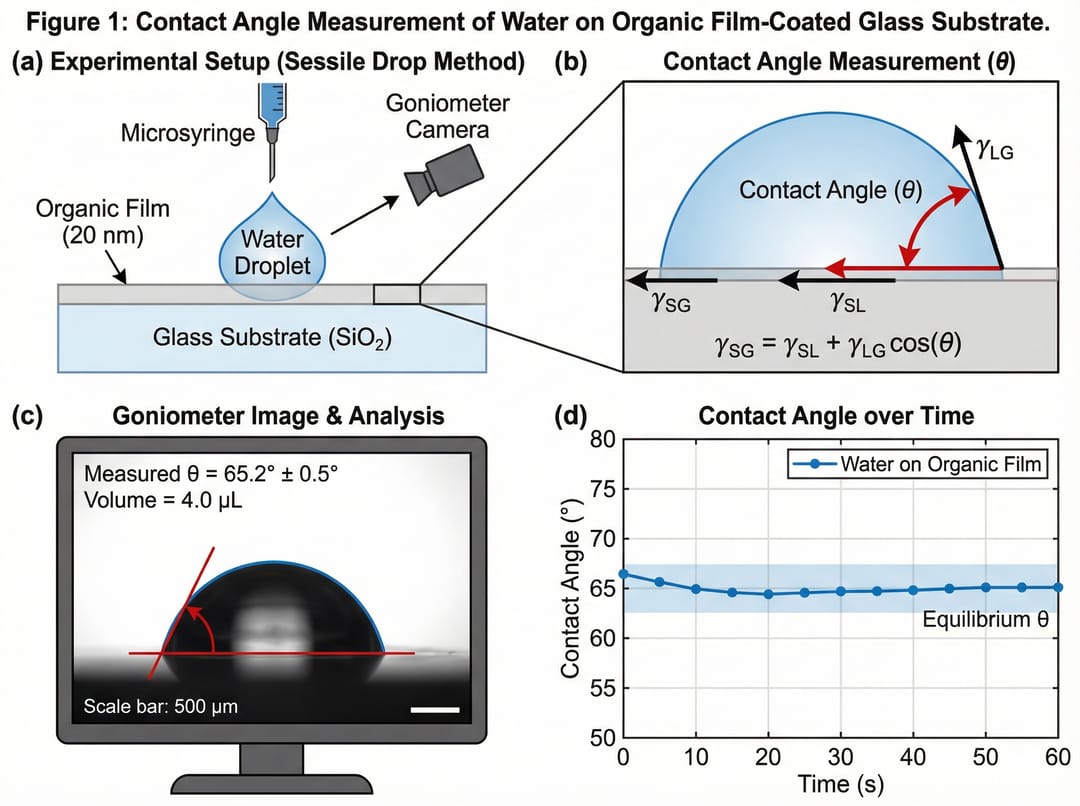
3. Nanomaterialien und fortschrittliche Verarbeitung
3.1 Aerogel-Synthese
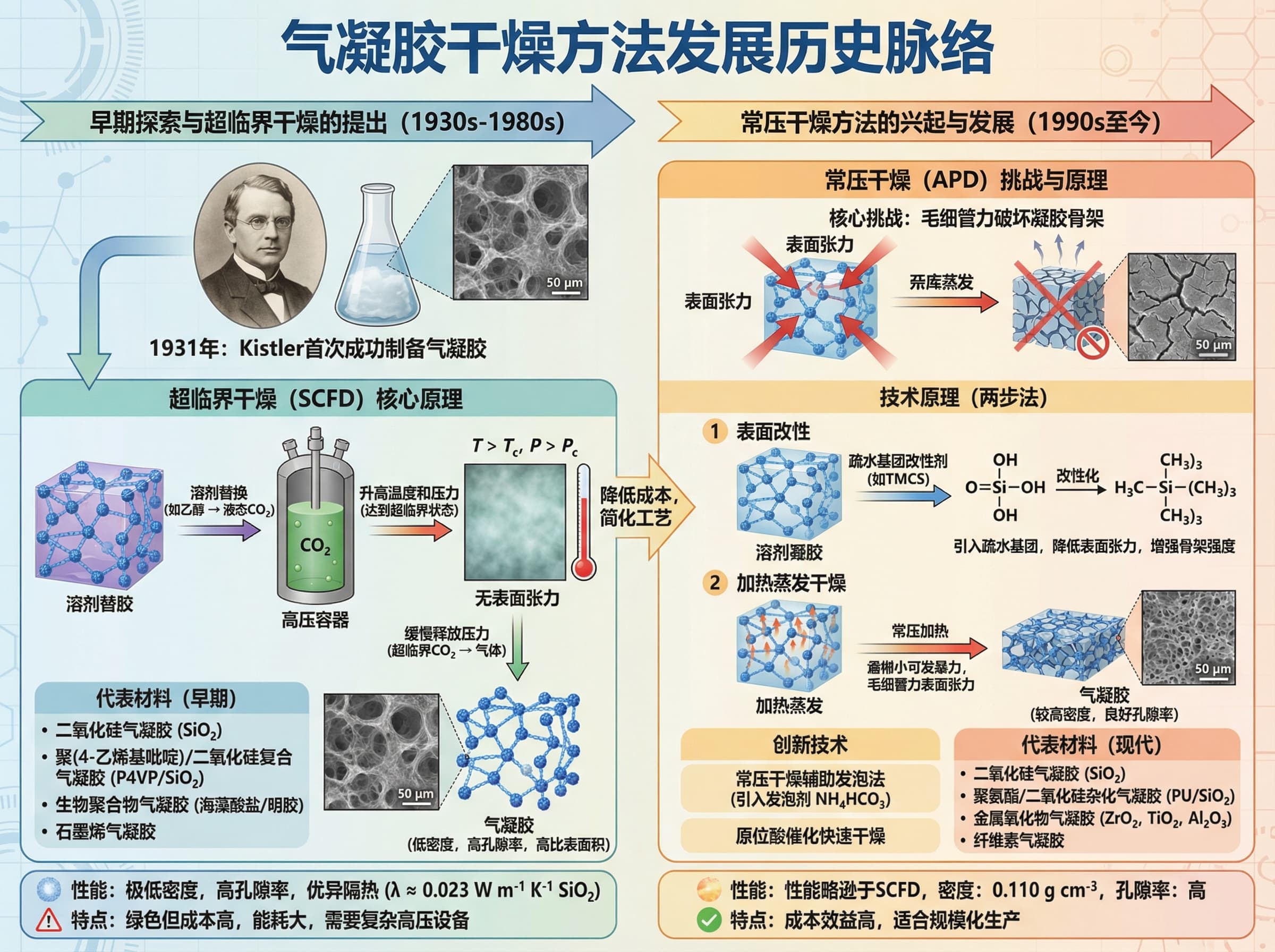
Prompt: Historische Entwicklung von Aerogel-Trocknungsmethoden
Historical Development of Aerogel Drying Methods

Create a timeline-style infographic showing:
- Early Exploration and the Introduction of Supercritical Drying (1930s)
- Development of ambient pressure drying techniques
- Freeze drying innovations
- Modern hybrid approaches
- Key researchers and breakthroughs at each stage
Include process diagrams for each drying method.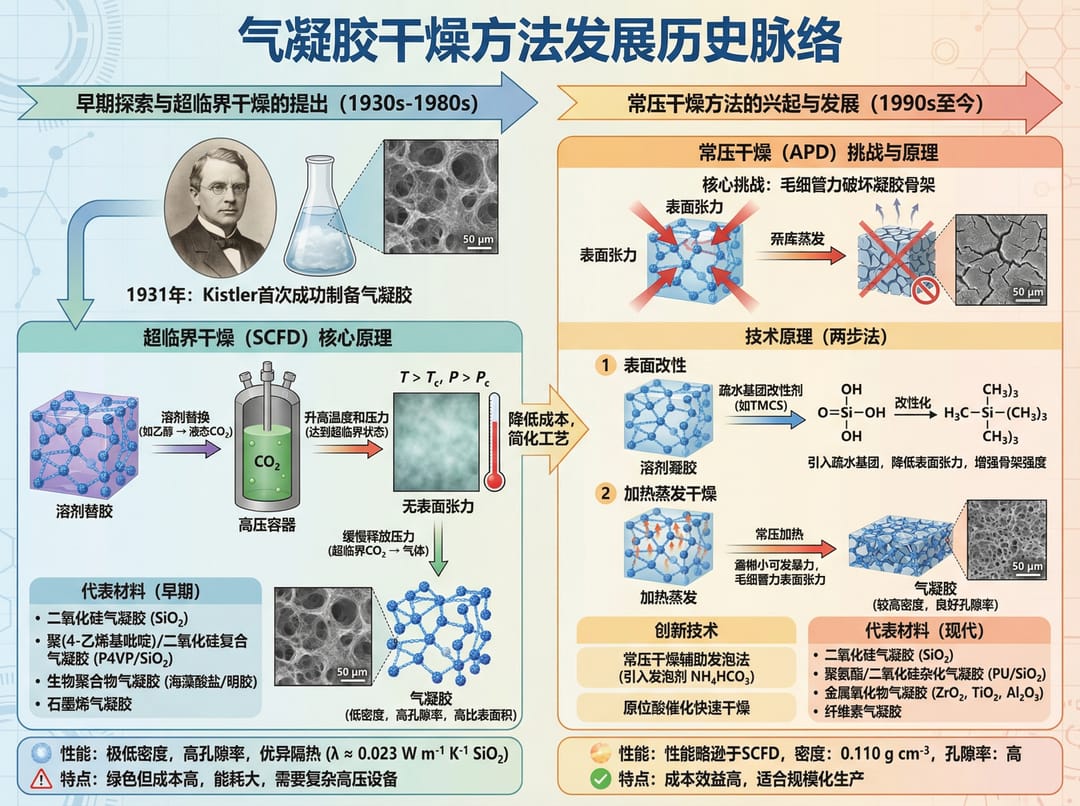
3.2 Multi-Panel-Abbildungen für die Wissenschaft
Prompt: Multi-Panel-Abbildung für SCI-Journale
This is a multi-panel scientific illustration suitable for an SCI journal,
presented in a clean 3D modeling style. Create:
- Panel A: Material synthesis schematic
- Panel B: Characterization results (XRD, SEM)
- Panel C: Performance testing setup
- Panel D: Comparison with benchmarks
Use consistent color scheme, clear panel labels (A, B, C, D), and
professional scientific illustration quality.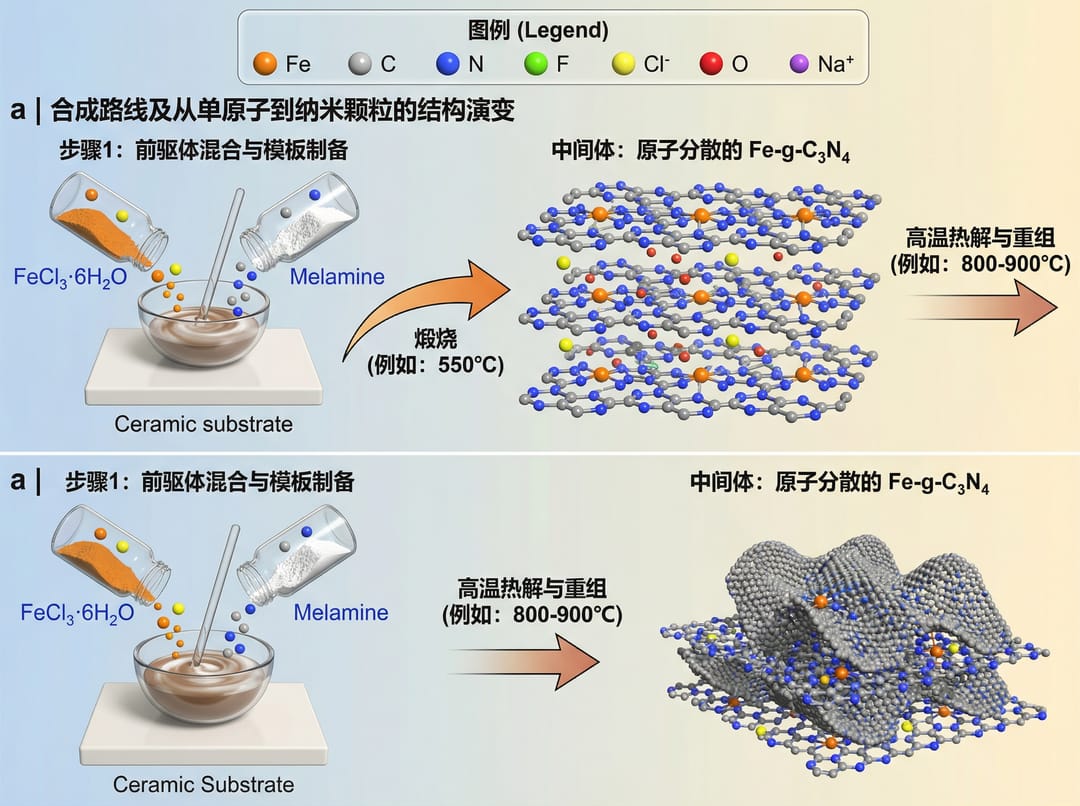
4. Mechanische Prüfung und Analyse
4.1 Faserverstärkte Verbundwerkstoffe
Prompt: Duktilitätsstudie zu Hybridfaserbeton
I have conducted an analytical study using a MATLAB program to investigate
the ductility and failure patterns of a hybrid fiber reinforced concrete beam.
Create a figure showing:
- Beam cross-section with fiber distribution
- Load-deflection curve with key points labeled
- Crack pattern progression at different load levels
- Ductility index calculation visualization
- Comparison between hybrid and mono-fiber systems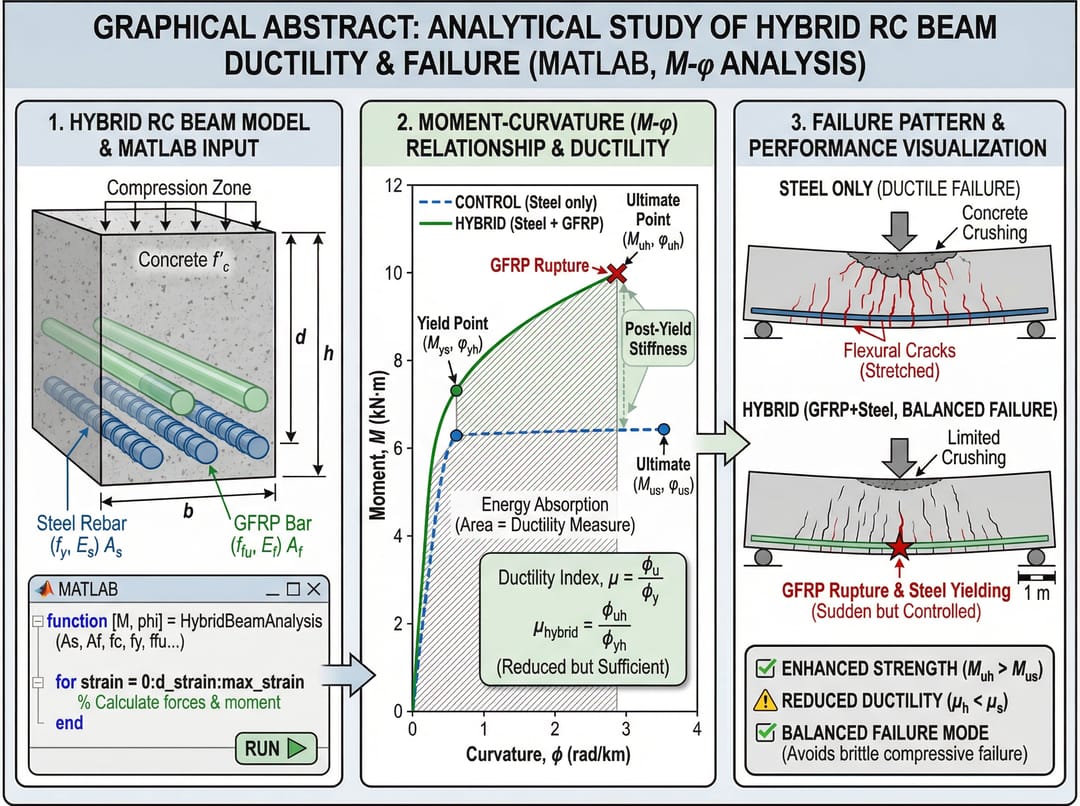
5. Best Practices für materialwissenschaftliche Diagramme
Wichtige Elemente nach Diagrammtyp
| Diagrammtyp | Wesentliche Komponenten |
|---|---|
| Bautechnik | Lastpfade, Bewehrungsdetails, Normenbezüge, Abmessungen |
| Oberflächencharakterisierung | Maßstabsbalken, Messgeometrie, Notation der Oberflächenenergie |
| Nanomaterialien | Größenverteilungen, Synthesebedingungen, TEM/SEM-Maßstab |
| Mechanische Prüfung | Probengeometrie, Belastungsbedingungen, Versagensmodi |
Tipps für materialwissenschaftliche Prompts
- Maßstabsinformationen einbeziehen: Entscheidend für Illustrationen im Nano- und Mikrobereich.
- Referenznormen angeben: Spezifikationen nach ASTM, ISO oder Eurocode.
- Verarbeitungsbedingungen zeigen: Temperatur, Druck, Atmosphäre.
- Materialphasen kennzeichnen: Kristallstruktur, Korngrenzen.
- Charakterisierungstechniken beschriften: XRD, SEM, TEM, AFM.
Beginnen Sie mit der Erstellung Ihrer materialwissenschaftlichen Diagramme
Testen Sie diese Prompts mit den KI-Illustrationstools von SciDraw AI:
- Materialwissenschaft-Diagramm-Generator — Materialwissenschaftliche Charakterisierungs- und Synthesediagramme mit KI erstellen
- Erstellen Sie Ihr Diagramm →
- Beispiele für Materialien durchsuchen →