Une interne a préparé une fiche d'information patient sur l'arthroscopie du genou. Le service juridique l'a stoppée avant diffusion — pas à cause du texte, mais parce que l'illustration montrait un patient souriant sortant du bloc avec le pouce levé. Le texte n'a jamais promis une récupération rapide ; l'image l'a fait. Toute la fiche a dû être refaite.
L'illustration clinique est l'endroit où l'IA t'avance le plus vite et te blesse le plus vite. Un brouillon est super. Un brouillon non révisé qui arrive aux patients est une faute médicale en attente. Ce guide montre comment utiliser l'IA pour produire des visuels cliniques qui passent revue médicale et juridique — et lesquels nécessitent encore un illustrateur médical humain.
Erreurs courantes qui rendent les illustrations cliniques dangereuses
- Suggérer des résultats que les mots n'affirment pas. Patient souriant en post-op, « avant/après » sans données source, lignes de temps de récupération comme barres de progression. L'image devient une revendication marketing.
- Photoréalisme pour les gestes. Une scène chirurgicale photoréaliste se lit comme documentation d'un cas réel. Style schématique pour que la figure soit clairement éducative.
- Anatomie générique qui ne colle pas au protocole. L'IA invente vaisseaux, nerfs, repères. Si ton geste dépend d'une relation anatomique exacte, le modèle se trompera.
- Imagerie effrayante dans le matériel patient. Sang, tissus exposés, expressions alarmées. Les visuels patient demandent un ton clinique calme — pas dramatisé.
- Pas de revue réglementaire ou juridique. Tout ce qui va aux patients, régulateurs ou marketing doit être revu par un clinicien et la compliance. L'IA est plus rapide que la revue ; la revue reste obligatoire.
Mauvais prompt vs. meilleur prompt
Vrai avant/après sur une fiche patient pour arthroscopie du genou :
Trop court — produit une image hors-ton, marketing-esque :
Draw an illustration of a knee arthroscopy for a patient handout.Restructuré — produit un brouillon que le juridique peut valider :
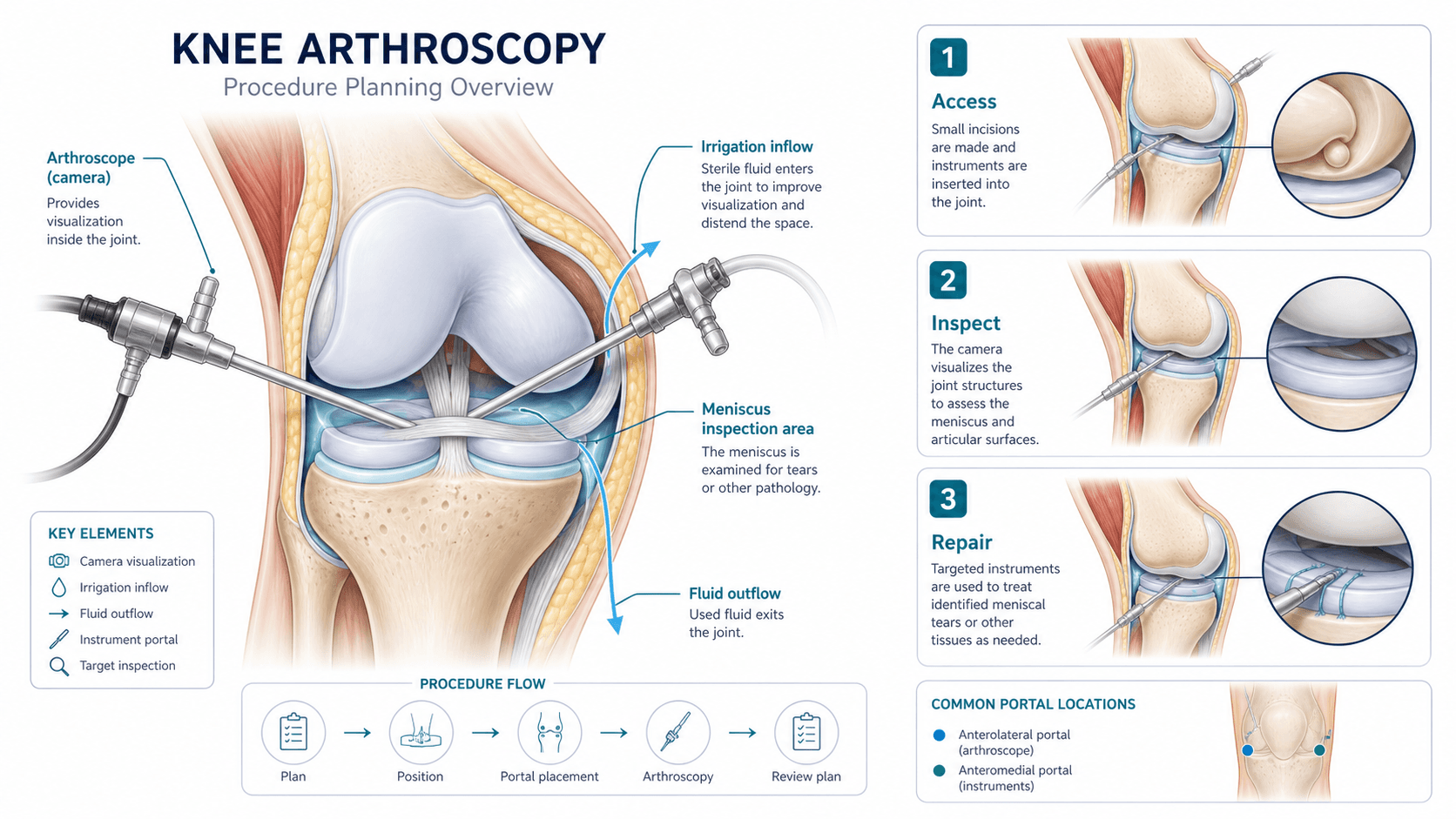
Create a neutral medical education illustration of knee arthroscopy for a patient pre-procedure handout.
Show three labeled stages: (1) instrument insertion through arthroscopic portals, (2) intra-articular view of the joint with the arthroscope, (3) repair of the meniscal tear with a single suture.
Use a schematic style, not photorealistic. Calm clinical color palette (muted blue and gray). No blood, no exposed tissue, no facial expressions, no recovery imagery, no body language implying outcome.
Label only: portal site, arthroscope, meniscus, suture. No outcome text, no timeline, no statistics.
This is a draft intended for clinician review before patient distribution.
Le second prompt rend la gestion du ton explicite. Les modèles tendent par défaut vers « ça doit impressionner » — la neutralité doit être demandée.
Note : les prompts restent en anglais. Les modèles d'image actuels répondent le plus stablement aux tokens anglais. Texte en français, prompt en anglais est la pratique courante.
Comment les illustrations cliniques sont évaluées en revue
Cliniciens et reviewers compliance vérifient en général les mêmes quatre points. Construis tes prompts pour les satisfaire :
| Le reviewer demande | Ce qu'il faut mettre dans le prompt |
|---|---|
| L'image suggère-t-elle une affirmation clinique non étayée ? | Interdire imagerie de résultats, timelines de récupération, avant/après, patients souriants. |
| L'anatomie est-elle correcte pour notre protocole ? | Lister chaque structure à inclure et celles à omettre. Prévoir une revue anatomique humaine sur le final. |
| Le ton convient-il à l'audience ? | Préciser l'audience (patient, interne, sénior) et exiger un style éducatif médical neutre. |
| Les labels peuvent-ils être édités pour traduction ou correction ? | Exiger SVG en calques avec texte sur un calque dédié. |
Image d'exemple
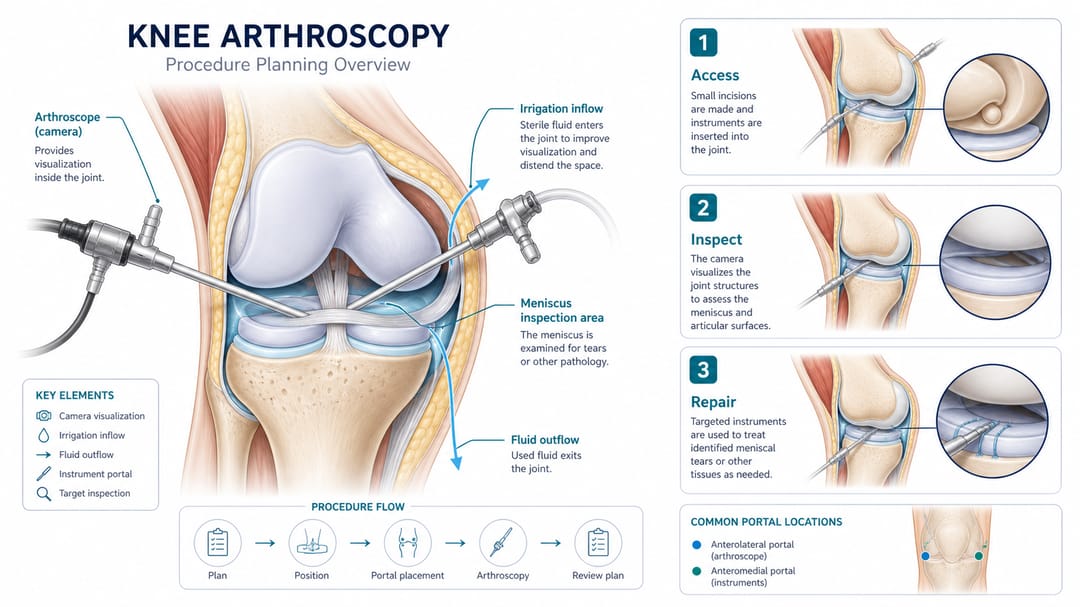
À observer : la figure se concentre sur accès, inspection, réparation ; pas de patient post-op représenté ; pas de sourire, pas de scène de récupération ; les labels ne pointent que les éléments procéduraux ; le ton enseigne, ne vend pas.
Modèles prêts à coller par objectif clinique
Remplace le texte entre crochets par ton cas. Ajoute audience et contraintes de ton à chaque prompt.
1. Étapes du geste pour formation d'internes ou fiche pré-opératoire
Create a neutral medical education illustration of [procedure] for [audience: resident teaching / patient pre-procedure handout].
Show [3–5 labeled stages, listed in order]. For each stage, name only the anatomical structures and instruments that appear in our protocol.
Style: schematic, not photorealistic. Calm clinical palette. No blood, no exposed tissue, no facial expressions, no recovery imagery, no body language implying outcome.
Labels: anatomical structures and instruments only. No outcome text, no timeline, no statistics.
Output as layered SVG. This is a draft for clinician review before any distribution.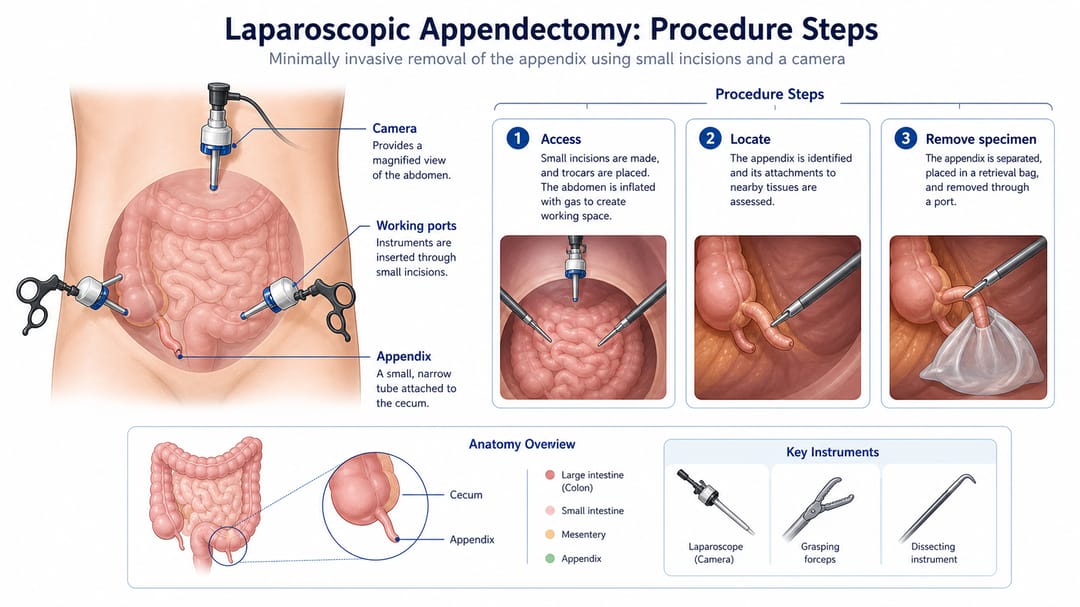
2. Figure de cas clinique pour soumission à une revue
Create a clinical case figure for a journal case report on [condition / presentation].
Panel A: [anatomical finding at presentation, with the specific imaging or exam landmark].
Panel B: [diagnostic view, e.g. cross-section, endoscopic view, or imaging plane].
Panel C: [intervention with anatomical detail].
Panel D: [post-intervention state — neutral, no outcome claim, no patient affect].
Style: schematic medical illustration suitable for a case report. Labels match journal terminology.
Do not invent histology, biomarkers, or imaging features that we have not provided.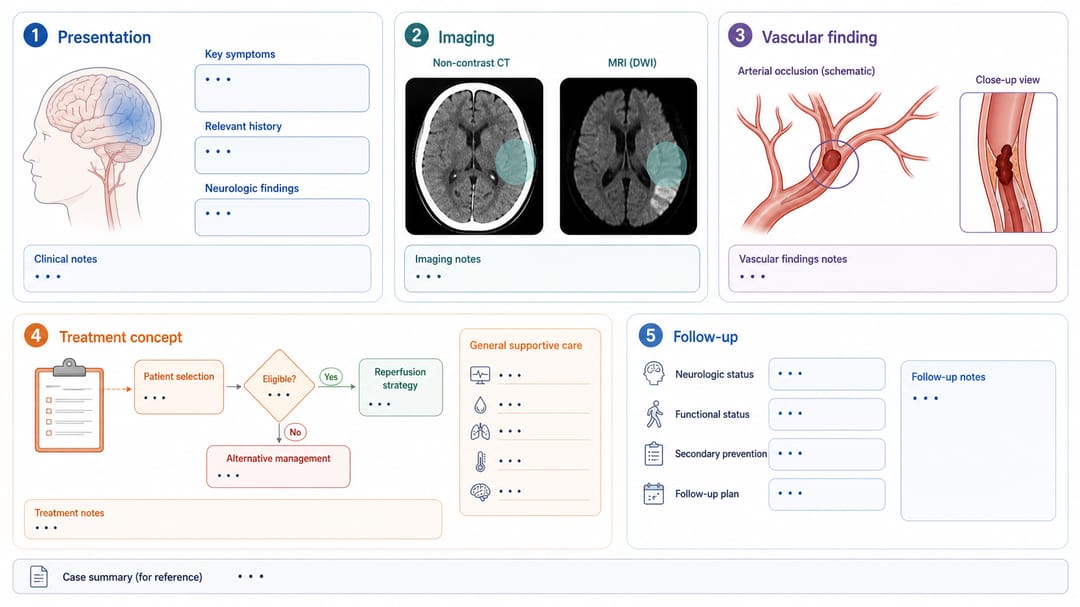
3. Explication anatomique pour patient
Create a patient-facing anatomical diagram explaining [condition or procedure] for an adult lay audience.
Simplify anatomy to the structures the patient needs to recognize.
Plain-language labels (no Latin, no abbreviations). Use leader lines, not arrows pointing into the body.
Calm clinical palette. Non-graphic style. No blood, no facial expressions.
Make no claim about results, recovery, success rates, or pain.
Layered SVG so labels can be translated for our multilingual patient population.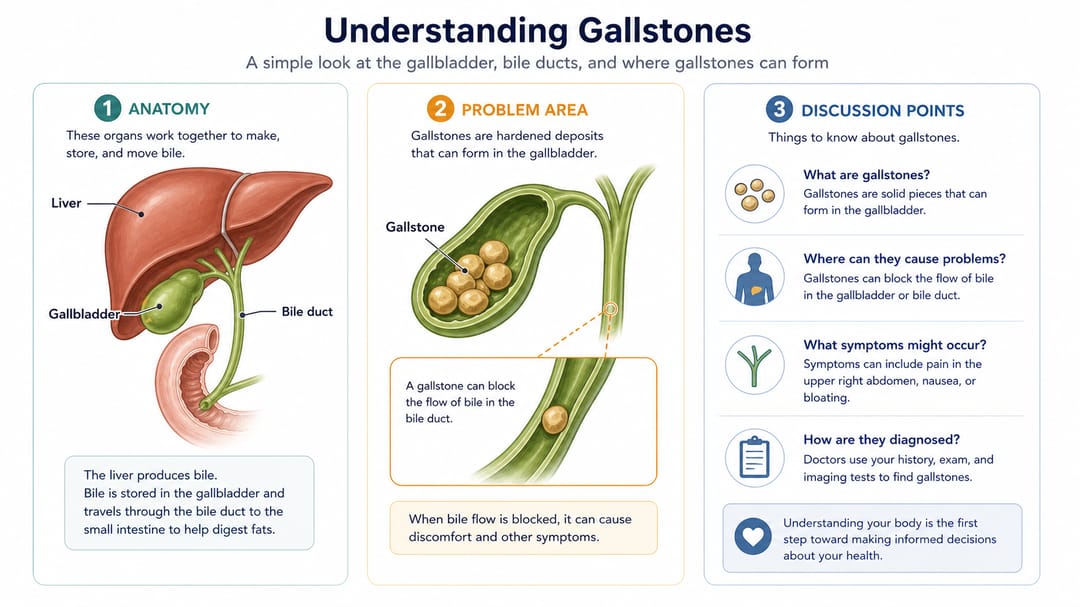
4. Illustration de soins post-opératoires
Create a post-procedure aftercare illustration for [procedure] for adult patients.
Show three labeled blocks: (1) wound or site care, (2) activity restrictions or movements to avoid, (3) when to contact the clinic.
Use icons or schematic figures, not real-person depictions. Plain-language labels.
Do not depict recovery progress (no calendar, no progress bar, no before/after).
Tone: instructional, calm, non-alarming. Layered SVG.
Comment utiliser ce guide selon le rôle
- Interne ou chef de clinique pour matériel d'enseignement : modèle 1. Faire signer l'anatomie par un sénior avant de la montrer aux internes plus jeunes.
- Clinicien préparant un cas clinique : modèle 2. La précision anatomique compte le plus ; un illustrateur médical devrait relire la version finale si le cas est inhabituel.
- Équipe éducation patient / communication de l'hôpital : modèles 3 et 4. Chaque brouillon passe par compliance et clinicien. Si l'institution a des guidelines de littératie en santé, les coller dans le prompt.
- Illustrateur médical avec brouillons IA : modèles 2 ou 3 pour composition et étiquetage, redessine l'anatomie finale toi-même. L'IA est rapide pour le layout, peu fiable pour les structures cliniquement critiques.
- Marketing ou RP d'une clinique : ne pas utiliser d'illustrations cliniques IA en matériel d'acquisition patient sans relecture clinique explicite et mention « illustratif ». Suggérer un résultat est un risque réglementaire.
Workflow réaliste dans SciDraw AI
- Écris l'affirmation clinique en une phrase d'abord. « Explication pré-opératoire de réparation méniscale arthroscopique — aucune affirmation de résultat. » Si tu n'arrives pas à l'écrire, la figure n'est pas prête.
- Choisis le modèle selon l'audience. Formation interne, cas clinique, patient, post-op.
- Ajoute des contraintes de ton explicites. Pas d'imagerie de résultat, pas de sourires, pas de progression de récupération, pas de statistiques. Les modèles ne les évitent pas par défaut.
- Génère une variante et passe-la par les quatre questions de revue avant toute seconde génération. Économise les crédits en améliorant le prompt, pas en regénérant avec le même.
- Exporte en SVG en calques. Le matériel patient se traduit ; les labels bougent ; les cliniciens annotent.
- Envoie à clinicien + compliance. Les deux, pas l'un. La compliance n'attrape pas les erreurs anatomiques ; les cliniciens n'attrapent pas toujours le risque réglementaire.
- Documente la revue. Conserve prompt, brouillon IA, commentaires clinicien et version finale approuvée. Si la figure est un jour contestée, tu as la traçabilité.
Checklist avant distribution
- Pas d'imagerie de résultat, pas de scènes de récupération, pas d'avant/après, pas d'affect patient.
- Structures anatomiques correctes pour la procédure telle que pratiquée chez nous.
- Labels exacts, dans la bonne langue, prêts à traduire (calque texte SVG).
- Ton enseignement/explication, pas promotionnel.
- Un clinicien a signé l'anatomie et les étapes montrées.
- Compliance / juridique a signé les affirmations et le ton.
- Prompt source, brouillon IA et version finale approuvée tous archivés.
Workflows SciDraw AI liés
Clinical Illustration Generator · Medical Illustration Generator · Medical Infographic Maker · Book Illustration Maker
FAQ
L'IA peut-elle remplacer un illustrateur médical ?
Pour brouillons, croquis, exploration de concepts : oui. Pour référence anatomique publiée, matériel patient régulé, formation chirurgicale où les rapports exacts comptent : non. Les illustrateurs médicaux comprennent l'anatomie et le contexte légal ; l'IA ne comprend ni l'un ni l'autre.
Qu'éviter dans les prompts cliniques ?
Tout vocabulaire sur douleur, récupération, taux de succès, satisfaction, résultats, avant/après ou patients souriants. Toute demande de photoréalisme. Tout « rendre professionnel » sans spécifier le ton éducatif clinique.
Quel niveau de détail anatomique ?
Uniquement les structures que l'utilisateur doit identifier ou cliniquement pertinentes à la procédure. Les structures additionnelles rendent la figure plus complète mais moins utilisable — et augmentent la probabilité qu'une hallucination IA passe la revue sans être détectée.
Sûr de publier directement des illustrations cliniques IA ?
Pas sans relecture clinique pour la précision anatomique et relecture compliance pour l'implication des affirmations. Le coût d'une erreur passée dans du matériel clinique dépasse largement celui d'un passage de revue.
Et pour les comités d'éthique ou les soumissions réglementaires ?
Traite les illustrations IA comme toute autre figure : déclare la source si le comité d'éthique ou le régulateur le demande, documente la relecture clinique anatomique, conserve prompt + brouillon dans tes dossiers.
Comment empêcher le modèle de dessiner un patient souriant ou un pouce levé ?
Contraintes négatives dans le prompt. Précisément : « No facial expressions, no body language implying outcome, no smiling patients, no thumbs-up, no recovery scenes. » Les modèles respectent mieux les contraintes négatives explicites que les demandes implicites de « neutralité ».
Puis-je montrer avant/après si j'ai de vraies données patient ?
Le vrai avant/après nécessite les images réelles du patient, avec consentement et étiquetées comme telles. L'avant/après IA à fins illustratives est presque toujours lu comme une revendication marketing et devrait être évité en usage clinique.